The Wind: A Dance Film Shaped by Landscape
A dance theatre work leaves the stage and enters the landscape. In mountains, beside waterfalls, on uneven ground, the body has to negotiate the world around it. Having seen both versions, Rainy J. reviews Ning Qiang's The Wind.
by Rainy J.
The Wind began as a dance theatre work, choreography by Ning QIANG premiere at Cangjiang Theatre in Xiamen, China, in January 2026. Its dance-film version was shown at Brighton Arts Fringe on 31 May 2026. On screen, the work is released into mountains, waterfalls, open sky and uneven ground. The result is a dance film that watches the body being changed by place.
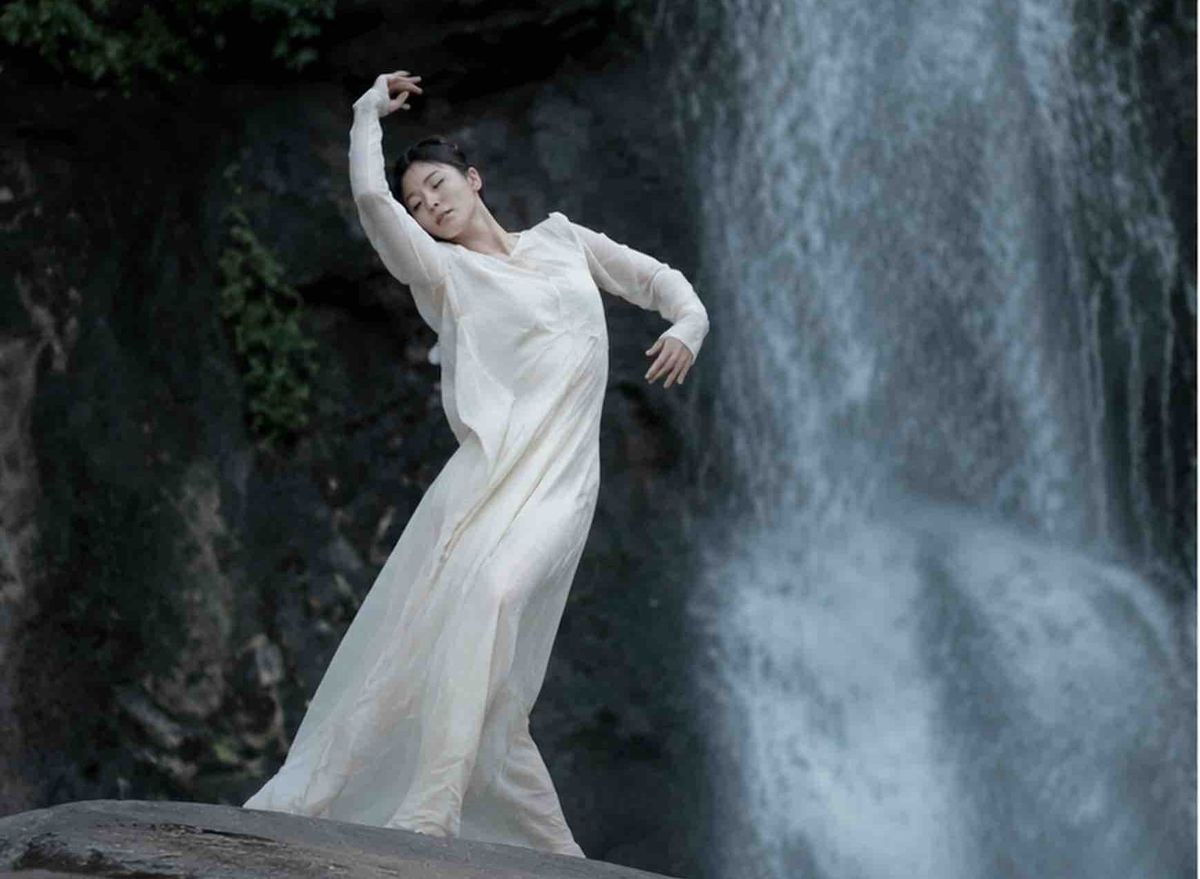
The film opens with a striking contrast: a dancer in white set against a broad natural landscape. She is immediately visible, yet the scale of the frame makes her appear small and exposed. This contrast gives the film its central tension. The body draws our attention, while the landscape seems to move and exist beyond it.
Ning’s choreography is strongest when movement arrives through small physical changes. An arm lifts and hangs for a moment in the air. The spine softens before the body turns. Weight drops into the ground, then travels sideways, as if the body has caught a current it did not create. The wind is felt through timing, delay and redirection.
The outdoor setting gives the movement a useful resistance. On rock and grass, balance cannot look too polished. The dancers have to negotiate the ground beneath them, and that negotiation becomes part of the choreography. A step searches for stability. A pause holds more tension because the body is standing inside an open and unstable environment. The film gains much of its texture from this contact with real terrain.
The waterfall scenes sharpen the contrast between human movement and natural force. The water falls continuously, indifferent and heavy. Beside it, the dancer’s movement is brief, careful and finely placed. A folding torso, an opening arm, a turn of the head: these gestures meet the waterfall through delicacy. The body appears most affecting when it accepts its own smallness.
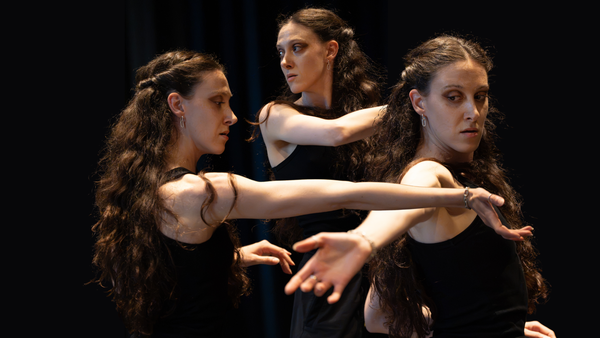
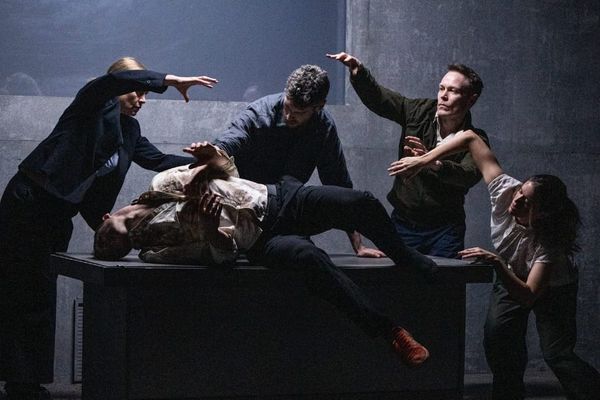
The duet passages between Lulu Zhu and Luoying LIANG bring the film closer to human relationship. Their contact work carries a quiet uncertainty. A shoulder receives weight; a hand redirects the body; one dancer leans in and the other adjusts just enough to keep the movement alive. Support is found, tested and withdrawn within seconds. The duet moves through dependence and separation with a restless, shifting quality.
Contact improvisation on natural ground has a different quality from contact work on a theatre floor. Grass, rock and uneven surfaces change the dancers’ balance and attention. The body cannot rely on the predictable smoothness of a stage. Each shift of weight has to listen to the ground first. This makes the duet feel more alert and more exposed. Zhu and Liang are responding more than each other’s bodies. They respond to slope, texture, air, distance and the changing conditions of the landscape. Touch becomes part of a larger sensory field, shaped by both human contact and the physical world around them. At its best, their contact improvisation feels like another form of weather: unstable, responsive and always in motion.
The camera work gives the work a strong cinematic quality. Close shots draw attention to details that might pass quickly in the theatre: a hand hesitating before touch, a shoulder softening under weight, a breath held just long enough to change the tone of a phrase. Wider shots place the dancers back into sky, water and mountains, allowing the choreography to expand beyond the body and into the surrounding landscape. The movement of the camera feels purposeful, never merely illustrative.
Having seen the theatre version, the film reads as more than a relocation of the same material. It is not a case of taking a stage work outdoors and recording it in a more picturesque setting. The camera, landscape and editing reshape the choreographic idea, giving it a new clarity. The film allows the viewer to see the original idea from another angle, with the natural environment making its emotional and physical logic more visible.
The dance film version gives the work a more exposed quality. The choreography has to live with distance, wind, light and uneven ground. These conditions affect how the dance is seen and how it seems to feel.A body held against the sky, two dancers testing weight through touch, a gesture placed beside falling water — these moments stay in the mind because they are physically specific. They give the film its meaning without forcing it into explanation.
The Wind finds its strength in attention: to weight, touch, rhythm, weather and scale. The body is shown as something temporary and responsive, shaped by the ground beneath it and the air around it. In this version of the work, choreography becomes a way of noticing how fragile, and how alive, a body can be when placed inside the natural world.
ABOUT THE WRITER
Rainy J. is a London-based dance reviewer and writer who has contributed to platforms including Theatre and Tonic, SeeingDance, London Pub theatres and others. Her writing focuses on contemporary dance, dance film, cross-cultural performance, and independent artists.