Rose Barbantan on What It Takes to Live in New York as a Dancer
What seven years in New York looks like, and what it asks of you

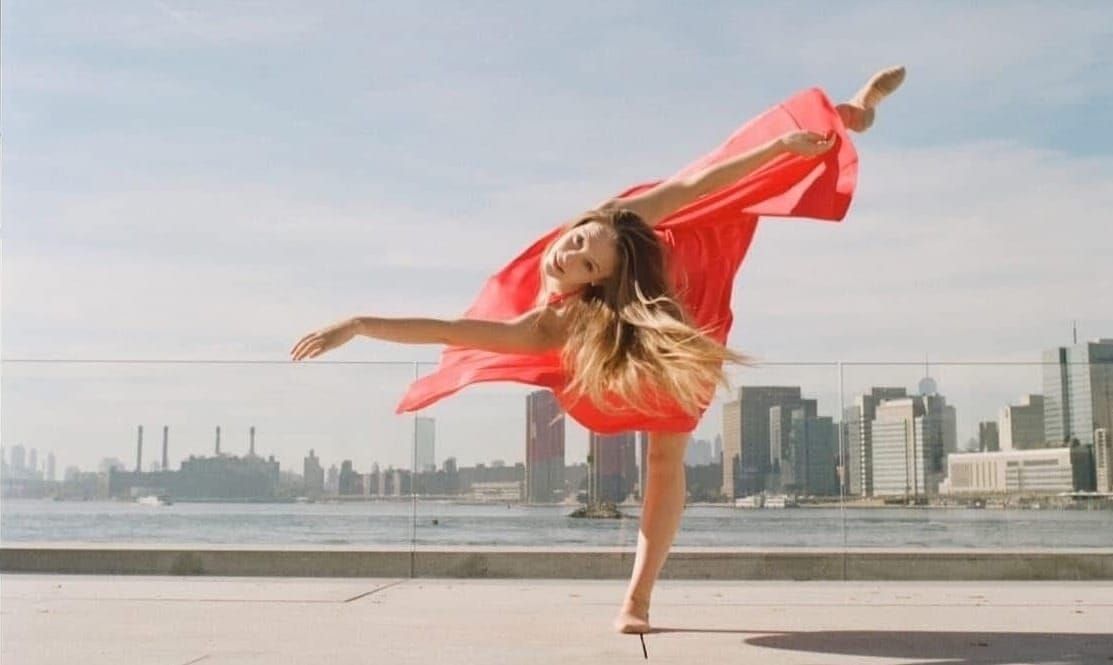
New York does not ease you in. For dancers especially, it is a city that offers everything: world-class training, a dense and restless artistic ecosystem, stages you dream of, and asks for everything in return. Thousands arrive every year from conservatories and companies across the world, drawn by the same idea.
Rose Barbantan was born in the south of France, moved to New York in 2018, first as a student at the Alvin Ailey School. Seven years later, she holds an O-1 visa, the American work permit reserved for people of extraordinary ability. That’s nearly a decade learning how to sustain a career in one of the most competitive dance cities in the world. She now performs and tours with three New York–based companies, teaches, directs rehearsals, and manages the considerable administrative infrastructure that holds all of it together.
We asked her a few questions about what it actually looks like to build a life in New York as an independent contemporary dancer.
Does New York still feel like a place you're figuring out, or one you've claimed?
Rose: New York is both a city I have learned to navigate and a place that still feels unfinished for me. I know it intimately through its studios, rehearsals, stages, and artistic communities, yet it continues to challenge me and push me to reinvent myself. I think that tension is part of the reason I stay. It is a city where you never quite reach a final sense of fulfillment. It always encourages you to go further. I arrived here young, and I sometimes say that I grew up here, both as an artist and as a person.
What does a typical week actually look like in terms of time, money, energy?
Rose: A typical week is a mosaic. I freelance between rehearsals, performances, touring, teaching, administrative work, and maintaining my visa career portfolio. Some weeks are financially strong, others are uncertain. Beyond dancing itself, many hours go into emails, applications, networking, and planning. The infrastructure behind an artistic career is invisible to most people. It takes as much out of you as the dancing does.
If the visa disappeared tomorrow, would you stay?
Rose: I would feel a profound loss, not only professionally but personally. My visa allows me to work, but this city has done something beyond that. It has shaped my artistic voice, challenged me, and become a place where I have grown in ways I did not expect. Leaving would not just mean losing a career. It would mean leaving behind a version of myself that only exists here.
What is the thing nobody told you that you had to learn the hard way?
Rose: Nobody told me how much of the career would happen outside the studio. I expected the challenge to be mainly artistic. I quickly learned that persistence, administration, networking, and self-advocacy are equally essential. Dance is a world of constant auditions, rejection, and intense competition, especially in New York, where artists from everywhere come to pursue the same dream. Talent matters, but it is rarely enough on its own. You learn to keep showing up, to handle disappointment, to adapt, to continue believing in your work even when opportunities don't come. Talent may open doors. Endurance is what keeps them open.
If you were advising someone who wanted to do exactly what you did, what's the first thing you'd tell them to do, and what's the first thing you'd tell them to stop believing?
Rose: Start building community and documentation immediately. Keep records, relationships, and evidence of your work from day one; you will need all of it later, and it is much harder to reconstruct than to maintain. And stop believing that success happens through a single breakthrough. Most careers here are built gradually, through consistency, collaboration, and showing up again and again. That is not a consolation, it is the actual method.
For more, follow Rose in Instagram