What an Auditorium Full of Pakistani Farmers Taught Me About Dance
Naween A. Mangi spent twenty years working in rural Sindh and assumed farming communities had no use for dance. A choreographer's tour through small towns proved her wrong, and changed how she thinks about what "community development" means.

An elderly woman dressed in her very best and clutching a small beaded purse a little too tightly fidgets in her seat in an air-conditioned auditorium on a hot, airless night in Dadu, a small town about 200 miles north of Pakistan's commercial capital of Karachi in the southern province of Sindh.
She spends her days farming wheat or rice, tending to buffalo and carrying out endless household chores. She has never watched a live theatre performance and has no idea what to expect.
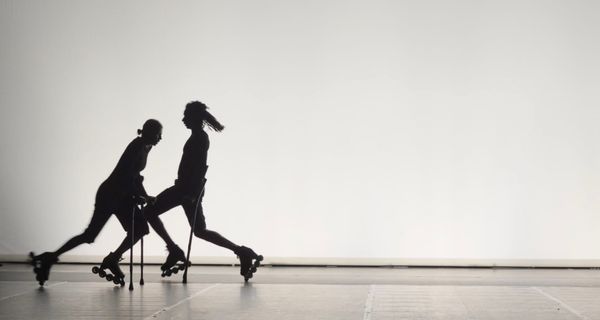
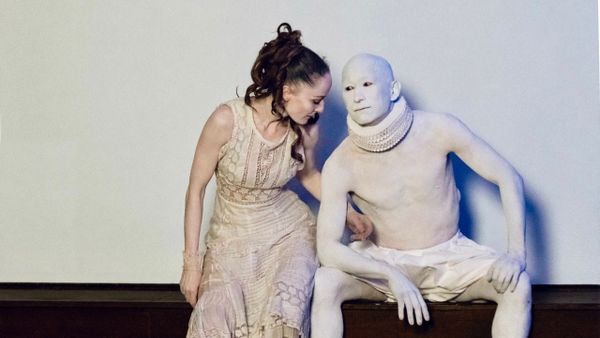
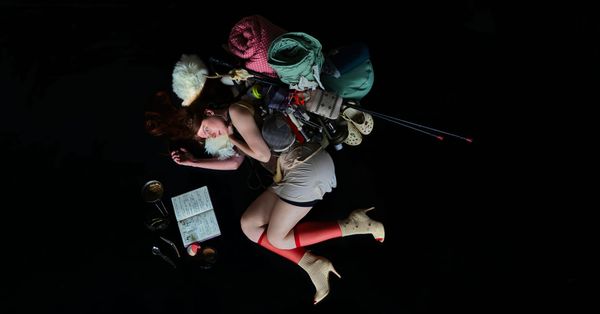
When Pakistani choreographer Mohsin Babar's 80-minute dance theatre production Khwaab—which means Dream—comes to an end, the woman who has travelled by bus from her farming village walks slowly toward the stage. She climbs the steps, her eyes fixed on Babar, whose production has just told an entire story of love, longing, grief and hope using nothing but movement.
She places both hands gently upon his head, a traditional gesture of blessing, and quietly tells him that her prayers are all she has to offer in return. He accepts with a bow, his hands on his heart. Then she turns toward Aisha, the lead female dancer. She embraces her tightly and says she feels chosen to have witnessed something so beautiful during her lifetime.
I watched in amazement. It was one of those moments that made everyone else in the room disappear.
Two days later, another hundred miles north in the historic city of Khairpur, the atmosphere could not have been more different.
Thousands of university students gathered before an outdoor stage. As Khwaab reached its conclusion, they erupted into cheers. They whistled, shouted, leapt to their feet and applauded for what felt like an eternity. When Babar stepped forward to address the audience, students chanted his name and scrambled onto the stage to take selfies with him.
The elderly farmer and the university students could scarcely have come from more different worlds. Yet both had responded with the same emotional intensity. Together, these experiences forced me to confront my own assumptions.
For more than twenty years, I have worked in hundreds of villages across rural Sindh on health, education and community development programmes. I believed I understood what rural communities wanted and what they lacked. Never—not once—did it occur to me that one of the things they had been deprived of was great art.
Looking back, I realised I had spent years asking villages what schools, clinics, roads and healthcare they needed. I had never asked whether they wanted beauty. Not because they didn't, but because I had unconsciously assumed the answer.
I had accepted the same assumption that much of Pakistan's cultural establishment has accepted: that sophisticated dance belongs in metropolitan theatres, appreciated by educated urban audiences, while rural communities would neither understand nor value it.
I was completely wrong.
The people we are most likely to believe have little interest in an ancient South Asian classical dance form such as Kathak often become its most attentive, emotionally invested audiences.
Dance occupies an uneasy place in Pakistan's cultural landscape. Despite rich traditions ranging from regional folk forms to Kathak, the art remains burdened by social stigma, receives little institutional support and struggles to attract sustained public or private funding. In this environment, Mohsin Babar has dedicated himself not only to performing, but to reviving the form.
The tours through Sindh suggested something I had never imagined.
Across dozens of performances in small towns and villages, audiences followed symbolism, metaphor and emotional nuance with remarkable attentiveness. They recognised themselves within the stories.
Watching these performances changed not only my understanding of audiences, but also my understanding of community development.
Those of us working in development often speak about roads, schools, clinics and healthcare. Yet culture is usually treated as an afterthought—a luxury to be considered only after "real" development has taken place. I no longer believe that.
Art is not separate from community development. It is community development.
Dance preserves memory, encourages empathy and gives communities a shared language through which to understand themselves, their history and one another.
That became even clearer when Babar used theatre to explore family planning, maternal health and women's agency in ten villages across Sindh. Rather than relying on lectures or pamphlets, the performances prompted audiences to stay behind, ask questions and begin conversations.
I found this remarkable. The performing arts were creating precisely the kind of dialogue that development practitioners often struggle to achieve.
Perhaps that is why the embrace from the farmer has remained with me more vividly than almost anything else. She did not analyse choreography. She did not discuss technique. She simply recognised that something profound had happened inside her.
The farming communities of Sindh reminded me that artistic curiosity is not determined by income, geography or formal education. Human beings have always been drawn to stories, symbolism and beauty when given the opportunity to encounter them.
The real barrier has never been the audience. It has been our lack of belief in them.
If Pakistan hopes to preserve its intangible cultural heritage, dance cannot remain confined to elite auditoriums in major cities. It must travel to villages, schools, public parks and university campuses, becoming visible again not as an exclusive cultural luxury, but as an essential part of civic life.
We so often underestimate rural communities, which is where more than 60 percent of Pakistanis live. What I witnessed across Sindh was an immense hunger for beauty, storytelling and shared cultural experience.
I now believe something I never expected to believe: bringing dance to a farming community can be as meaningful as building a classroom or running a health awareness programme. One strengthens the body of a community; the other strengthens its soul.
Development is not only about helping people survive. It is also about helping them imagine, remember and dream.
That, perhaps, is what the elderly woman in Dadu understood before I did.
Naween A. Mangi is the founder of the Ali Hasan Mangi Memorial Trust, a non-profit involved in rural development in Pakistan.