Against the Grain: How Mohsin Babar is Reclaiming Pakistani Dance After Decades of Neglect
"Dance chose me long before I chose dance." Choreographer Mohsin Babar on reclaiming Pakistani performance culture after decades of systemic neglect.

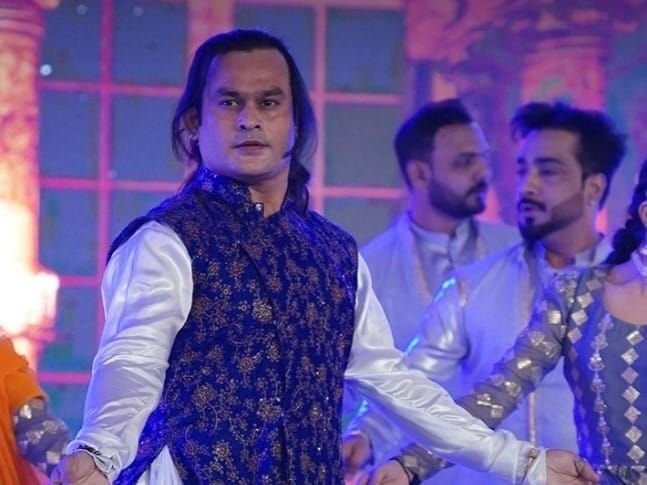
Mohsin Babar's training reads like a map of Kathak's living lineage. Trained by the late Ustad Hamid Hussain Shad Jaipuri and Ustad Shado Maharaj, he later completed a three-year programme at the National School of Drama under Ustad Rajendra Gangani, one of the world's foremost Kathak masters. He has since performed across Asia, Europe, the Middle East and North America. He is based in Karachi.
Pakistan has never meaningfully invested in dance as a profession, an art form or a cultural asset. Since the country's formation in 1947, dancers have built careers largely without institutional support, formal infrastructure or public recognition. Those who have achieved international visibility have done so almost entirely from outside the country. Babar has chosen to stay, teach, and build in the country.
He has been working in dance for more than twenty-seven years. In 2024 he established a production company and academy in Karachi, training young dancers, many of them free of charge, and taking performances beyond major cities to smaller towns and rural communities. He is currently presenting four original productions drawing from Kathak, Sindhi folk tradition and Sufi literary heritage. We spoke with him about tradition, survival and what it means to build something from almost nothing in a country that has never made it easy.
Pakistan is almost entirely absent from the international contemporary dance circuit. Do you feel that absence, and what do you think it reflects?
I feel that absence very strongly. The reality is that dance in Pakistan has never received the kind of institutional, social or governmental support that would allow it to develop a sustained international presence. Dance is still not widely regarded as a serious profession or skill. Unlike music or acting, which have achieved some degree of acceptance, dance continues to face deep social resistance.
As a result, Pakistan has produced very few pathways for dancers to train, gain recognition or represent the country internationally. There are no significant certification systems, very limited funding opportunities, and almost no long-term infrastructure for dance education.
So when Pakistan is absent from the international dance conversation, it is not because there is a lack of talent. It reflects decades of neglect. Those of us working in dance today are not simply creating performances; we are trying to build an ecosystem. We are fighting for the survival, legitimacy and future of dance itself. My hope is that the next generation of Pakistani dancers will be able to enter international spaces not as exceptions, but as representatives of a thriving artistic culture.
The artists from Pakistan who have gained international recognition built their careers largely outside the country. You have chosen to stay and work in Karachi. What does that decision cost you, and what does it give you?
The decision to stay has certainly come at a cost. After Partition, many great dance gurus came to Pakistan, but they received little support. Dance academies were never developed on the scale they could have been, and over time the art form became increasingly marginalised.
There were moments when I considered leaving. In 2013, after years of frustration, I moved to the United States. But I quickly realised that I could not live away from dance and away from the place where I felt I was needed. Dance chose me long before I chose dance.
Financially, staying has not been easy. I have spent most of my life investing in dance rather than building personal security. But what it has given me is something far more meaningful. When I established my production company and academy in 2024, Kathak occupied only a very small space in Pakistan's cultural conversation. Today it is being discussed, taught and performed more widely than at any point in my career.
The greatest reward has been seeing young people discover the form. Many of my students come from families with no connection to dance. Watching them embrace Kathak and carry it forward makes every sacrifice worthwhile.
Kathak, Sindhi folk music and Sufi poetry are often described as traditions. You describe them as living and evolving. But some would argue that recomposing classical music or blending folk and contemporary movement risks diluting something irreplaceable. How do you answer that?
Traditions survive because they evolve. Kathak itself has never stood still. Throughout its history it has absorbed new influences, new instruments and new ways of telling stories. If artists of earlier centuries had refused change, the form would never have become what it is today.
For me, authenticity is not about preserving every detail exactly as it was. It is about remaining faithful to the essence of the tradition. The stories, emotions, rhythms and philosophies remain intact even when the presentation evolves.
When I recompose a classical or folk piece, I do so because I want contemporary audiences to encounter it. The goal is not to replace tradition but to create a bridge to it. If younger audiences connect with a folk melody, a Bhittai story or a Kathak performance because it speaks in a language they recognise, then the tradition has gained a future rather than lost a past.
In my own work, I often weave Kathak with Sufi-style movement, Pakistani folk dance traditions and contemporary movement vocabulary. I do not see these forms as competing with one another. I see them as different languages through which stories can be told. The purpose is never fusion for its own sake. It is to create dance-theatre that remains rooted in our cultural heritage while speaking to contemporary audiences.
Art forms become endangered when they stop communicating with their own time. Evolution is not a threat to tradition. It is often what allows tradition to survive.
Kathak's classical lineage runs through Lucknow and Jaipur, and its international profile is shaped largely by Indian and diaspora practitioners. As a Pakistani artist working inside Pakistan, how do you think about your relationship to a tradition whose centre of gravity sits across the border?
Kathak belongs to whoever practises it with sincerity and dedication. Its major centres today are undoubtedly across the border, and that is largely because the art received institutional support there while it received very little support in Pakistan.
I grew up watching great Pakistani Kathak masters struggle under extremely difficult circumstances. I remember seeing legendary gurus living with very modest means and little recognition despite having devoted their lives to the art. That experience could easily have discouraged me. Instead, it convinced me that the work needed to continue.
My relationship with Kathak is therefore not defined by geography but by responsibility. I am part of a lineage that was carried into Pakistan after Partition and survived despite enormous challenges. My task is not only to perform Kathak but to ensure that future generations can inherit it.
I often say that today there is one Mohsin Babar. My dream is to create ten more, then a hundred more, then a thousand more. My hope is that Pakistan becomes recognised as one of the places where Kathak continues to evolve and thrive through the dedication of its practitioners.
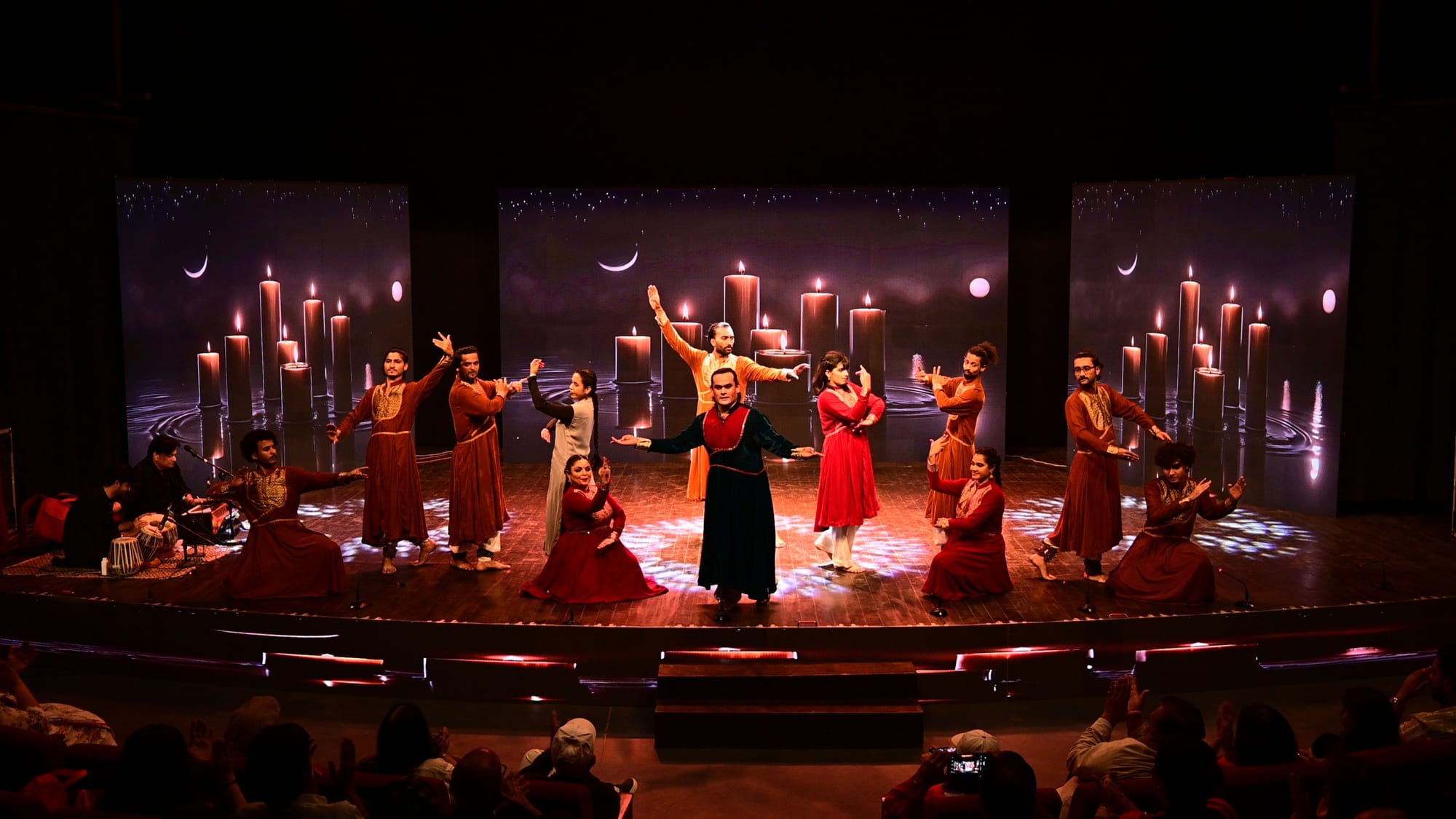
Aatish-o-Ayena places the relationship between Rumi and Shams of Tabriz at its centre. What does that story make visible about the present moment that a contemporary story could not?
The story of Rumi and Shams may be centuries old, but the questions it asks are timeless. It is a story about transformation, mentorship, companionship, devotion and the search for truth.
In our production, Shams is performed by me and Rumi is performed by one of my students. In that sense, the story is not merely being retold; it is being re-enacted through a contemporary teacher-student relationship. The guru-shagird bond that lies at the heart of many artistic traditions is also central to the story of Rumi and Shams.
The modern world is full of information but often lacking in genuine connection. The story of Rumi and Shams reminds us that knowledge alone is not enough. Transformation comes through relationship, through sincerity and through the willingness to be changed.
There is a reason Rumi remains one of the most widely read poets in the world today. His poetry speaks to fundamental human questions about love, longing, purpose and transformation. The story of Shams and Rumi gives those ideas a human form. It shows how one encounter, one relationship, can completely alter the course of a life.
That is why the story continues to speak to contemporary audiences. Its setting belongs to the thirteenth century, but its emotional truth belongs to every era.
Sassui Punhu draws from Shah Abdul Latif Bhittai, one of the great literary voices of South Asia, yet he remains largely unknown internationally. Why has that tradition not travelled, and whose responsibility is that?
Part of the reason is simply that we have not invested enough in sharing these stories with the world. Shah Abdul Latif Bhittai is one of the great poetic voices of the world.
The responsibility belongs to all of us: artists, cultural institutions, governments and educators. Great traditions do not travel by accident. People must actively carry them across borders and introduce them to new audiences.
With Sassui Punhu, we are trying to contribute to that process. The story is deeply rooted in Sindh, but its themes of longing, perseverance, sacrifice and spiritual love are universal. Our aim is to present Bhittai's world through dance, music and theatre in a way that speaks to contemporary audiences while remaining faithful to its origins.
You have trained dancers free of charge who could not otherwise have accessed formal instruction. When you watch them perform, what do you see in their movement that a more conventionally trained dancer does not carry?
The traditional system required years of intensive training before a student could even begin to perform. That is how I was trained from the age of eleven. Today's world moves differently. People have less time and different pressures. My challenge as a teacher is to pass on knowledge more efficiently without compromising its integrity.
What I often see in students who have fought hard simply to access training is an extraordinary hunger to learn. Many arrive with no expectation that dance could ever be part of their lives. When they discover it, they bring a level of gratitude and commitment that is deeply moving.
Many of them also carry a determination that comes from having overcome barriers simply to reach the studio. That life experience becomes visible in their performance. It gives their movement a sincerity that cannot be taught.
Every student develops differently. Some have a natural understanding of rhythm, some possess patience and stillness, others have a gift for performance. My role is to recognise those strengths and guide each student accordingly.
More than anything, I see possibility. Every student who learns Kathak becomes part of the effort to ensure that the tradition survives beyond my own generation.
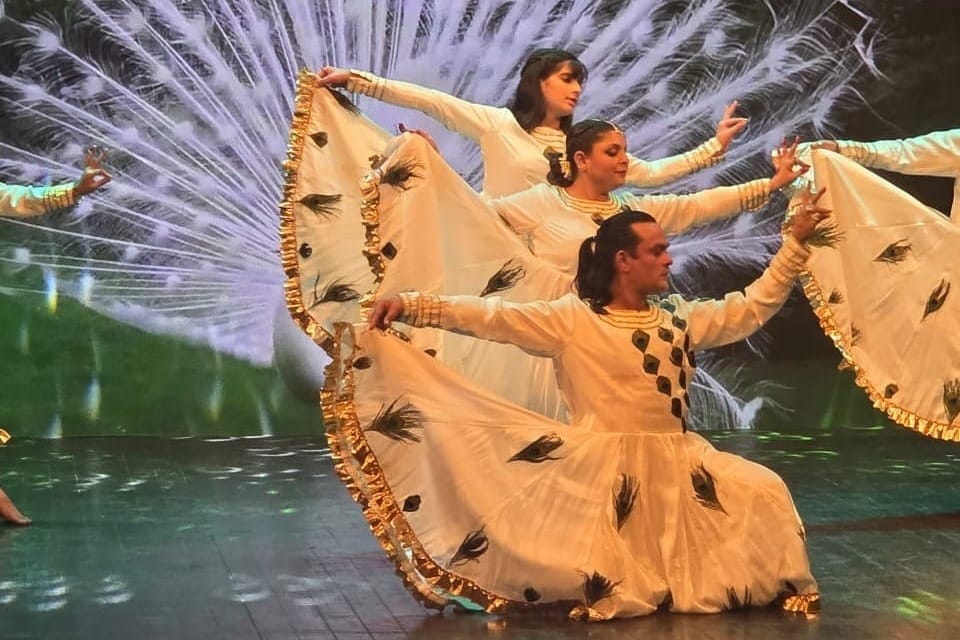
Four original productions, with original music, costumes, set design and a touring component, represent a significant financial undertaking. How do you make work like this economically viable in Pakistan's current cultural landscape?
The honest answer is that it is extremely difficult.
Dance receives very little funding in Pakistan, and the limited support that does exist often reaches the same handful of people. We have so far been unable to secure meaningful government, corporate or international funding for these productions.
Much of what we do is sustained through personal commitment. I teach Kathak and reinvest that income into the work. We have received support from the Ali Hasan Mangi Memorial Trust, whose belief in cultural preservation has helped us continue.
The challenge is not simply producing performances. It is building an environment in which dance can survive as a profession and not merely as a personal sacrifice. That is why partnerships and patronage are so important. Without sustained support, many important artistic traditions risk disappearing.
If a curator from a major international festival were sitting in your audience tomorrow, what would you want them to understand that they could not have understood before walking in?
I would want them to understand that dance in Pakistan is not simply surviving; it is finding new ways to grow.
I would want them to see a generation of young dancers who are passionate, disciplined and committed despite having very little institutional support. I would want them to understand that the work emerging from Pakistan today is not an imitation of what exists elsewhere. It is shaped by our own histories, languages, poetry, music and social realities.
I would also want them to see that these productions are not only performances. They are acts of cultural preservation and renewal. In my work, Kathak is placed in conversation with Sufi-style movement, Pakistani folk traditions and contemporary movement to create dance-theatre that is rooted in where we come from but speaks to universal human experiences.
Many of our dancers come from backgrounds where formal training would otherwise have been impossible. Many of our audiences, especially in smaller towns and villages, are seeing live dance for the first time.
I would want a curator to leave understanding that Pakistan is not only a place with a rich cultural history, but a place where new cultural work is being created right now. These productions are rooted in our own stories, music and literary traditions, yet they speak to universal questions about identity, love, loss and transformation. That conversation deserves a place on international stages.