The Hired Body: Being Mary Kate(s)
Mary Kate Sheehan is a freelance dancer trained to be versatile, to embody any aesthetic, to deliver whatever the room required. In this essay, she traces what happens when that is no longer enough, and the long search for a dancing self that belongs to no one but her.

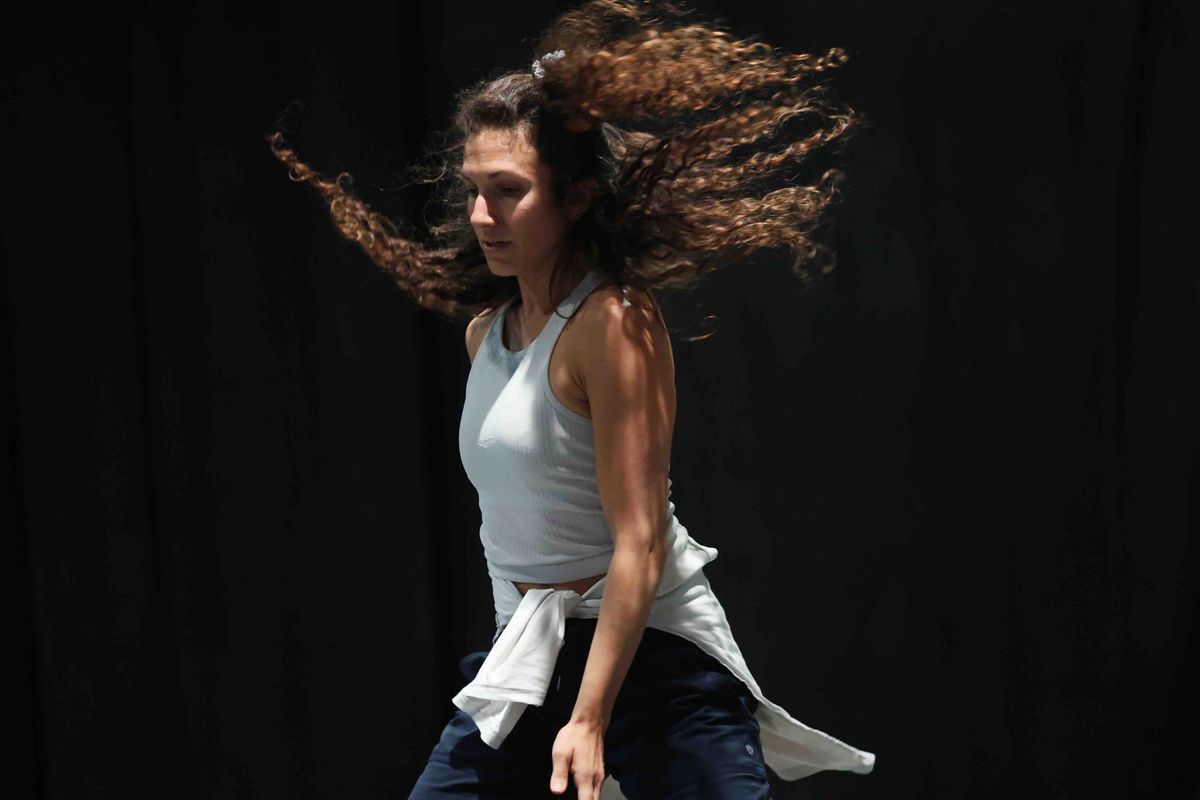
I woke up one Saturday morning to the email: from hundreds of applicants, I am one of twenty dancers invited to audition for one of my all-time favorite choreographers. I was shocked and immediately began planning my travel carefully so I could arrive calm and well-rested on the day. But as the date approached, a familiar fear began creeping around the back of my head. How much of the audition would be improvisation? I knew my strength was in learning and interpreting material and musicality, which I knew mattered deeply to this choreographer, but the moment an auditioner says 'show us who you are!,' something in me disconnects. Could I find a way to present a 'me' that might actually get me this job I wanted so desperately?
Hired Bodies and Moving Identities
After many years of feeling a rising tension between the dancer I was trained to be and the dancer I am asked to be in professional contexts, a breaking point at an audition finally pushed me into a period of self-reflection and personal movement research. Dancers seem to be asked to do more and more in creative spaces, and I reached a point of feeling like my technique and repertory-based training was no longer serving me. Since childhood, I was taught to perfect and prioritize a range of technical knowledge in order to become a versatile dancer. I trained in jazz, contemporary, modern, ballet, hip-hop, tap, and Irish dancing, enthusiastically pursuing the path of becoming what Susan Leigh Foster termed a ‘hired body’ (1992). The ‘hired body’ dancer has ‘train[ed] in several existing techniques without adopting the aesthetic vision of any’ (Foster 1992, p.493) and ‘can be made over into whatever look one desires’ (ibid p.494). In the late 20th century, versatility was necessary for dancers to be able to hop from one job to another and stay afloat. I was taught that being able to embody the nuances of any given technique and morph into a choreographer’s personal style at a moment’s notice was the key to sustaining a career in dance.
Versatility across movement vocabularies remains crucial for contemporary dancers, yet dancers in the 21st century are asked to be more than versatile bodies – they should also be thoughtful artistic collaborators. When interviewed by Katya Čičigoj in 2011, Foster commented that, ‘the dancer has to be good at everything, now even at generating movement and contributing ideas’ (Foster with Čičigoj, 2011). In the online Dancer as Agent Collection which has been compiled by practicing dance artists, Cecilia Roos adds, ‘It is almost required of you to share your viewpoints and take an active part in the development of the new creation’ (Roos 2014, p.11). My own experiences reflect this shift as well. In the early years of my career in New York City (beginning in 2011), I worked with many choreographers who created and taught set movement phrases, and as dancers we were expected to learn and execute them in detail. I knew of choreographers who worked more collaboratively with dancers, but there were still plenty who did not. In recent years, however, every choreographer I work with or audition for includes improvisation and dancer input in their process. Witnessing this shift made me feel uncomfortable and insecure. My ‘hired body’ training included very little in terms of improvisation or personal creative voice, and I suddenly felt unqualified for the job I had trained my whole life to do. Many colleagues I have spoken to express similar experiences of expecting the work of a dancer to be one thing, and realizing slowly it is now different than what our training prepared us for.
Practicing artist and scholar Jenny Roche notes that, ‘[b]ased on current developments … it may be less useful to train dancers to be a neutral palette in order to embody any or all styles than to enable the dancer to begin to develop a signature moving identity’ (Roche 2011, p.8). Indeed, in my experience, many choreographers now hire dancers for their individuality and unique voice more so than their technical ability. But developing an identifiable movement signature felt antithetical to my hired body training, as did the prioritization of improvisation. The juicy part of dancing for me has always been digging into the details, subtleties, and nuances of movement given by a choreographer and discovering those possibilities within my own body. As a dancer who does not aim to become a choreographer I thought, why should I develop my own creative voice when what I am interested in is bringing someone else’s vision to life through skilled somatic awareness and chameleon-like malleability? For many years, I felt my personal signature was my ability to perform many different styles of dance well. I eventually realized that this mentality relied on a limited and outdated understanding of a dancer’s work.
More than skilled and malleable bodies to instruct, many choreographers today are looking for collaborators – dancers with their own kinetic and vocal thoughts – with whom to explore and discover possibilities. Roos writes, ‘Generally I would say that the work of freelance dancers consists of developing methodologies, movement vocabularies, participatory practices and conceptual frames to serve different kinds of processes. They are dealing with discourse and agency, creation and change’ (2014, p.15). Arguably, this ability to participate collaboratively in a creative process requires a certain understanding of the self and a sense of personal artistic identity. When a choreographer proposes a topic of exploration rather than a specific movement phrase, the skills of the hired body are not enough. Countless times, I have been asked by a choreographer to create movement material based on a topic or impulse, and simply drawn a blank. From where to begin? What is ‘my’ take on something which does not yet exist? For me, this moment feels like trying to grab onto something concrete in an empty void. Without a developed understanding of my own creative voice, I can only try to produce what I think the choreographer wants to see. My input cannot be representative of my own moving identity if I have no relationship to the essence of my own dancing Self in this way.
Freelance Careers and Fragmentation
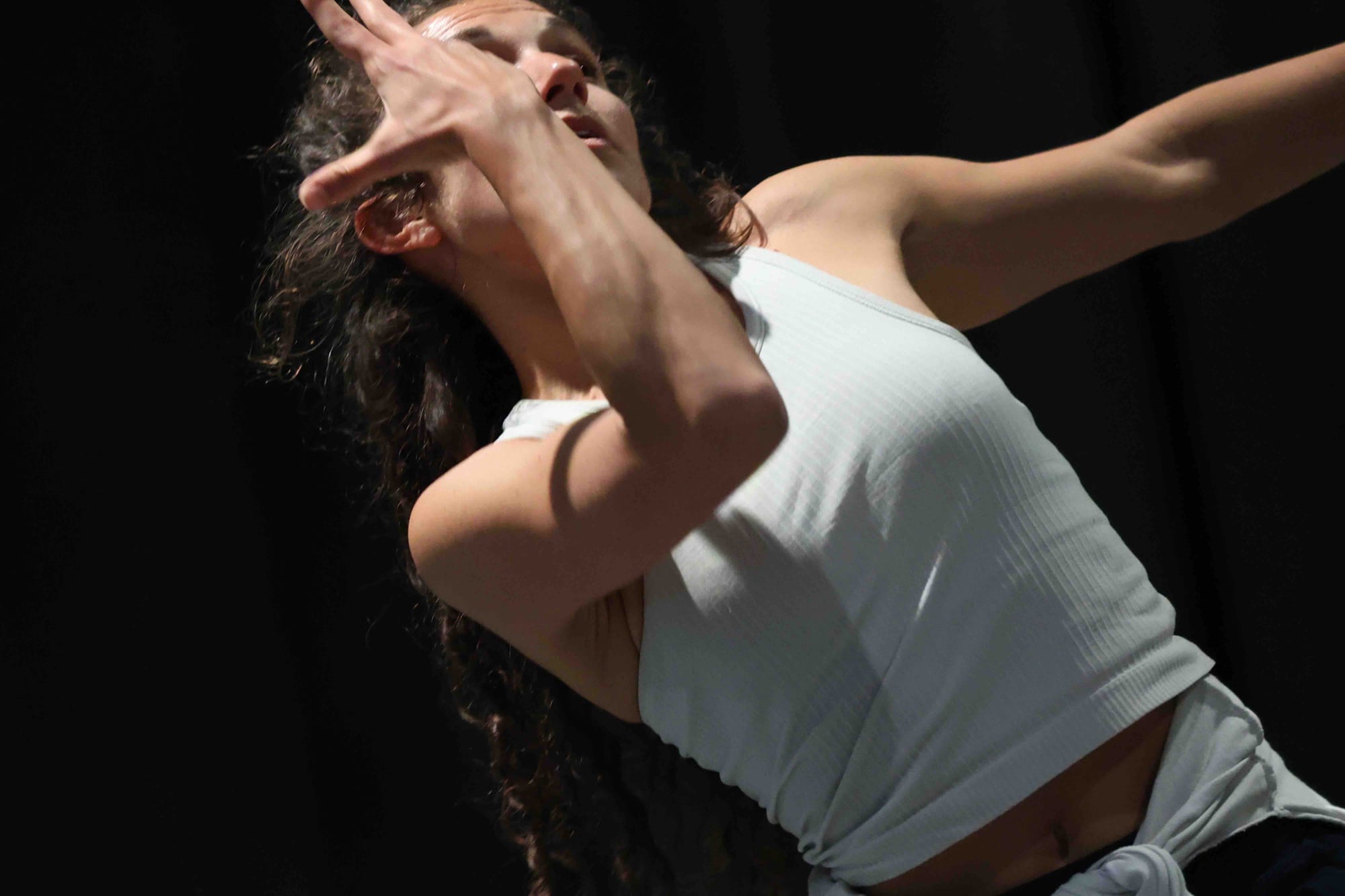
My difficulty in locating and experiencing a sense of a cohesive dancing Self is related to my training, but also to the nomadic, decentralized nature of the 21st century dancer’s career structure. Nowadays, dancers ‘live fragmented lineages that are interrupted and redirected as they traverse between various projects’ (Roche 2015, p.253). With many jobs lasting anywhere from a few weeks to a few months, dancers must arrive and adapt quickly to the aesthetics and requirements of a new job in order to achieve the desired embodiment before moving on to the next project and starting the process of adaptation all over again.
During my training in New York City, my goal was to dance in one of New York’s many well-known companies. But the rising scarcity of well-paid jobs in New York throughout the 2010s meant that there were very few positions available. Furthermore, I was told again and again in auditions, ‘we love your dancing, but … we need someone taller/someone with a different hair color/someone physically more similar to the girl who is leaving,’ and so on. So I began performing in project-based positions with choreographers I grew to know through classes and workshops, building myself the foundations of a freelance career. Fifteen years later, I have never held a contract longer than six months. My career has spanned across smooth and circular contemporary, commercial jazz, traditional technical modern, funky and athletic modern-contemporary, Irish dance-modern dance fusion, and even the postmodern works of Yvonne Rainer. Roche notes that decentralized freelance careers like mine where the dancer ‘nomadically traverses between different creative environments’ (Roche 2011, p.3) have become the norm due to dwindling funding and resources for the arts.
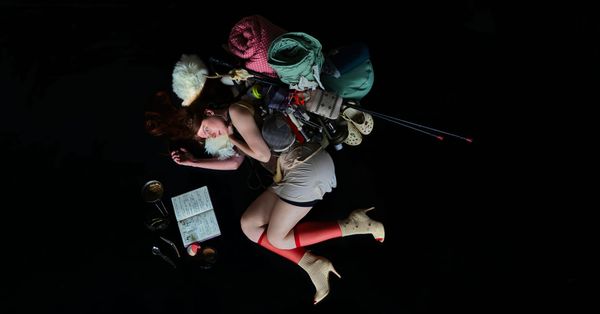
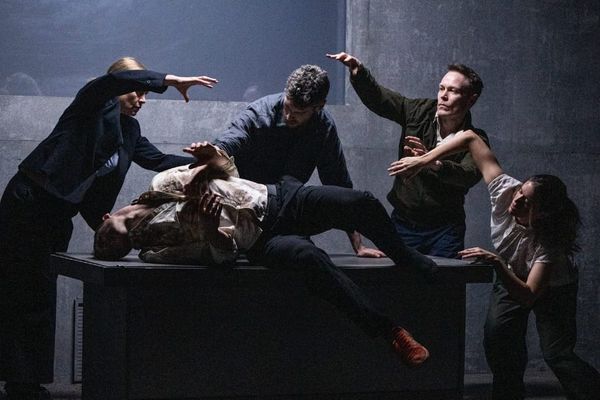
The result of this patchwork-style career is a pattern of fragmentation of the Self. Roche writes, ‘The economic reality of the dancer’s career demands supreme versatility in order to survive. This requires the capability of transforming across the differing stylistic approaches of various choreographers’ (2015, p.255). As an example, each choreographer I work with has their own warm-up, movement vocabulary, rehearsal structure, communication style, and taste in music. Like a sponge, I try to absorb the details and nuances of the choreographer’s creative world quickly to orient myself as seamlessly as possible. Dancing for Marlena Wolfe, I knew to come with power, athleticism, musicality, and a sharp memory for details. With Shelly Hutchinson, I learned to bring a calmer, cozier energy and more emotional expressiveness. Larry Keigwin led a joy-filled space which was at once focused and productive as well as playful and light. Yvonne Rainer’s work requires the detail-oriented memory I learned with Marlena, but a completely different grounded and pedestrian energy-body.
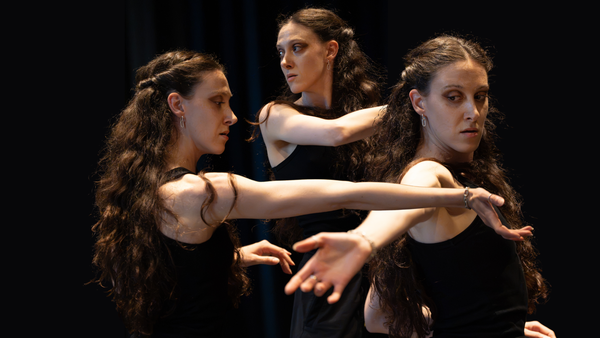
In many cases, I dance for a choreographer on and off for a number of years, with other jobs interwoven between or even overlapping. Rather than diving deeply into a choreographer’s world for an extended period of time before leaving to enter a new world, I have to keep many dancing identities close to the surface simultaneously, easily accessible as I bounce from one job to another and back again. Thus, ‘identity becomes located in and activated through movement’ (Roche 2011, p.5). Entering Marlena’s rehearsal triggers the Marlena-Mary Kate, Yvonne’s rehearsal triggers the Yvonne-Mary Kate, and so on – each Mary Kate a fragment of the whole. Over many years, what develops then is an artist composed of factions of different identities and work modes rather than one united throughline of Self. It is a dance of swimming between identities or embodied selves. While some may overlap or influence each other productively, others must remain isolated so as to not detract from the integrity of another fragment (or self).
Artist Michael Helland in the Dancer as Agent Collection reflected, ‘This breaking into smaller pieces then has the danger of making my entire experience of dancing just feel like little jobs … it’s not disparate elements but rather a whole body of work, and it’s one that basically only I have’ (Curating Your Moves 2014, p.22). Each individual dancer is the throughline or glue connecting their unique collection of artistic and experiential fragments. Accessing this sense of unity between fragments can be easier for some dancers than others. While some of my colleagues feel this thread of unity between pieces, I personally have identified more with the experience of fragmentation.
Friction
For me – like many dancers – the fragmentation is not only between different creative environments, but includes many different types of jobs that relate to and surround creative endeavors. A typical week for me might include teaching 3 or 4 different dance styles and yoga, online admin work as the General Manager of a dance company, my own studio practice and physiotherapy, and hopefully some other creative work. Teaching jazz is a different fragment than teaching contemporary which is different than teaching yoga … teaching is a different fragment than researching … and within any given day I probably need to access at least 3 fragments of myself. This is all outside the fragments of myself which relate to different creative and performative jobs I hold over the years. This fragmentation of the self is a ‘survival strategy’ for dancers like me negotiating the ‘complexity of remaining employable’ in the 21st century (Roche 2015, p.255).
However, the need to constantly shift and adapt the self plays against the development and embodiment of a unified, individual artistic signature or moving identity. Roos observes that dancers ‘must [adapt] without losing their integrity; otherwise they might not be interesting for choreographers to work with, since the performer as a “subjectified singular” is a kind of ideal in the freelance world today’ (2014, p.8-9). In my experience, this pressure to be an ‘interesting’ individual is a protagonist in many auditions and creative spaces. But again, calling up the observation that a dancer’s ‘own’ interpretation is ‘contextually triggered’ (Roche 2011, p.110) and is likely influenced by the choreographer in the room, to what extent can a dancer present themselves as an interesting artistic individual relevant to the choreographer at hand without sacrificing an element of the exact personal integrity which many choreographers search for?
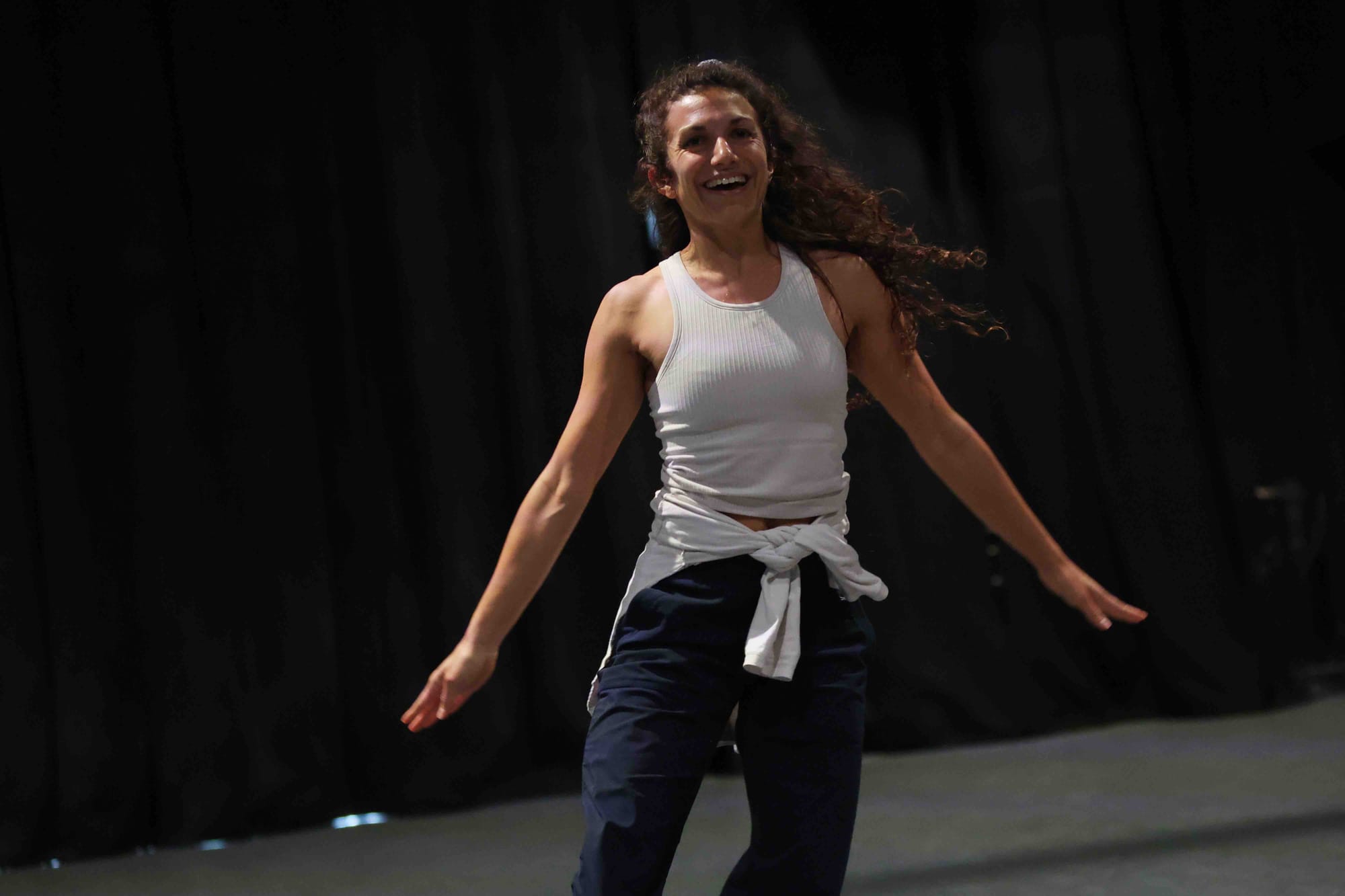
How can a dancer be both malleable and maintain a signature moving identity? In my experience, this is a difficult balance to find. The external attention to and somatic integration of detail required for adaptability is very different from the self-awareness and explorative bodymind which supports the development and expression of an individual voice or style. Yet today’s dancers are asked to embody both. Roos suggests that efforts to ‘combine adjustability with integrity’ result in a kind of ‘friction’ (2014, p.9). I identify strongly with this experience of friction in my attempt to navigate the marriage or coexistence of these two skillsets in my own dancing. I feel I need to turn off one to access the other, and if I experience a moment where both seem to be present simultaneously, it is almost an accident that I arrived there.
Fueled by this friction, in 2024 I began a personal movement research exploration with a goal of getting to know myself as a dancer outside the context of anyone else’s work. Who is Mary Kate as a dancer when she’s not dancing for someone else? When no one else is setting the tone or boundaries of the dancing? What is Mary Kate’s own dance? I wanted to gain confidence as an improviser, and through the process, I hoped to reveal my dancing Self to myself in the studio… to get to know the Mary Kate who is the glue uniting all the other fragments I am familiar with. A year and a half later, I have arrived at a deeper embodied understanding of this Self, though I know this process of exploration and discovery will continue for years to come. I have befriended my quirks and patterns and gained confidence in having a sense of who I am as a unique artistic presence. I enjoy dancing my Mary Kate dance, which feels somehow both freshly discovered and familiar. I know that this dance and sense of Self will evolve over time with me, my interests, and my body as it ages.
Gaining this sense of personal dancing identity gives me something to hold on to in the moment when the choreographer asks me to develop something. I begin to feel that I do bring a unique voice to an audition or process which does not depend on input from the choreographer. I attended an audition recently which was structured completely through improvisational tasks, and for the first time, I really enjoyed myself, my choices, and my explorations rather than being agitated by the circumstances. I did not care if I was hired or not because I felt joyful that I had danced honestly and authentically as myself. My personal studio research has led me to know and embrace my unique moving identity which, of course, has existed all along, though I was not attuned to it.
The irony is … this knowledge of Mary Kate’s dance is arguably both a union of my fragments and a new fragment in itself. The ability to dance my own dance and bring my own voice to a space is a skill just like all the other techniques and fragments I have picked up along the way which I can lean into or away from depending on the context. But this one straddles the line between the ‘hired body’ Mary Kate and the unique dancing identity Mary Kate.
References
Curating Your Moves (2014). The Dancer as Agent Collection [Online]. Available at: http://repo.sarma.be/Dancer%20as%20Agent/Helland.pdf.
Foster, S.L. (1992). Dancing Bodies. In: Incorporations. New York: Zone Books, pp. 480–95.
Foster, Susan Leigh, with Katja Čičigoj. (2011) “Interview with Susan Foster on the implicit politics of dance training and choreography.” Maska, XXVI, no. 141-142.
Roche, J. (2011). Embodying multiplicity: the independent contemporary dancer’s moving identity. Research in Dance Education [Online] 12:105–118. Available at: http://www.tandfonline.com/doi/abs/10.1080/14647893.2011.575222 [Accessed: 10 November 2024].
Roche, J. (2015) Disorganising Principles, Corporeal Fragmentation and the Possibilities for Repair. In: Attending to Movement: Somatic Perspectives on Living in This World. Triarchy Press. pp. 253–262.
Roos, C. (2014). Appreciating Skill, Performing Articulation. The Dancer As Agent Collection [Online]. Available at: http://repo.sarma.be/Dancer%20as%20Agent/Roos.pdf.
ABOUT THE WRITER
Mary Kate Sheehan is a dance artist based in Athens, Greece. She will complete her MA in Dance Research in Fall 2026 with the Rambert School (London). She has taught and performed in the USA, Europe, Asia, and Africa.