The Devil's Fiddle, Danced
Steven McRae and Vasko Vassilev on obsession, collaboration, and making Paganini "look cool" at the Linbury

by Leila Lois
There is a story, half-legend and wholly irresistible, that nineteenth century violin virtuoso, Niccolò Paganini sold his soul for the ability to play as he did, that no mortal hand could summon such speed, such derangement of the strings, without some infernal assistance. It is the kind of myth that clings to supreme genius. Two centuries on, that same myth has found its way into the Linbury Theatre, in a new work bringing together Royal Ballet principal Steven McRae, Principal Guest Concert Master Vasko Vassilev, and director Natalie Abrahami.
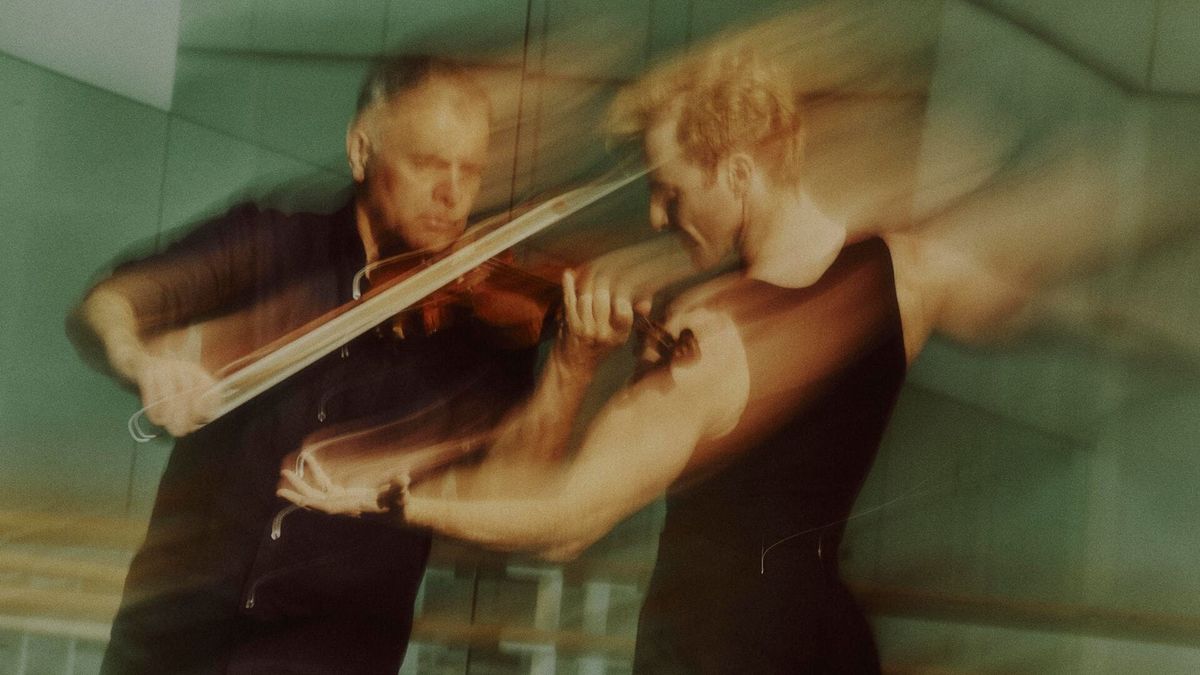
The McRae/Vassilev Project, running at the Linbury from 11 to 19 September 2026, is billed simply as a "new creation inspired by" Paganini. It is a description that undersells the strangeness of what is being attempted: a violinist and a dancer, long accustomed to occupying separate zones of the Royal Opera House (Vassilev in the pit, McRae on the boards above him), stepping into a shared, unmediated space.
Leila Lois speaks with McRae to uncover the intrigue of this project.
"We're not going down that route," McRae says of the sold-soul mythology. The point, instead, is to "showcase and celebrate his unique talent", the snapped strings, the entire concertos played on a single remaining one, the guitar fluency, the sheer bloody-minded virtuosity of a man who, in McRae's words, "made the violin cool." Paganini, reframed this way, becomes less devil than rock star: the nineteenth century's own study in showmanship pushed to its outer edge.
It is a reframing that suits McRae, who has spent much of his career being asked to explain a form of talent that resists tidy taxonomy. Called, not always comfortably, "a modern-day Fred Astaire," he has built a reputation on refusing to stay inside a single discipline. Ballet and tap, he suggests, are not separate vocabularies so much as dialects of one restless language. "Tap is one of my languages," he says, describing his own development less as a career than as "a never ending journey of discovery", the kind of phrase that could sound like a publicist's gloss if it weren't so evidently embodied. He speaks of “tweaking the engine”, of becoming a better driver, imagery that turns the dancing body into something worked on rather than simply born gifted, and of a company whose founding spirit has always been exploratory; "pioneering," in his word, "from day one."
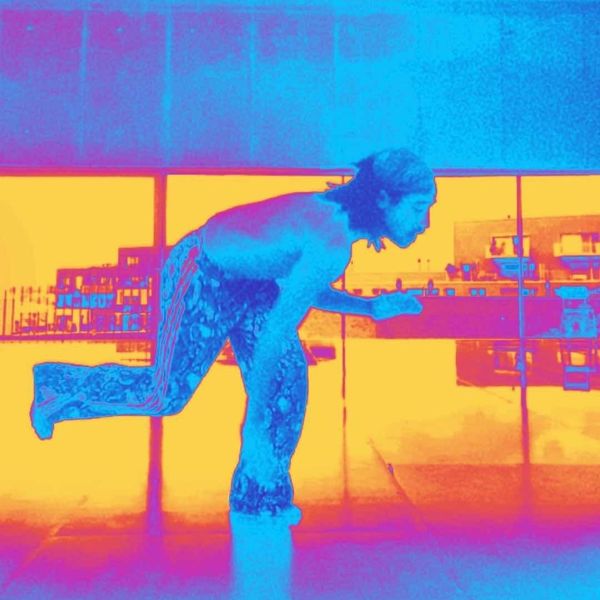
That restlessness finds its natural counterpart in Vassilev, with whom McRae has now shared a stage, in one capacity or another, for the better part of two decades. "I've danced with him as much or more than any ballerina," McRae says, a line delivered with wry precision. Their partnership, born of the accidental proximity of pit and stage, has evolved through smaller experiments, pieces made for pop concerts, unlikely detours into contemporary Spanish music, into something McRae frames as a "culmination," a chance finally to "share our stories". His own story is rooted in the outer suburbs of Sydney; Vassilev's, in Bulgaria. Two unlikely routes into an art form that neither, by McRae's own account, expected to reach. "I wouldn't have even known where the Royal Opera House was as a kid," he said, a reminder, delivered without self-pity, that "you don't have to grow up with doors open" to end up walking through the grandest of them.
Vassilev's own route into performance was, by his account in an earlier profile for The Classical Source, considerably stranger than McRae's. As a child prodigy in Communist-era Bulgaria, he was routinely produced for the entertainment of visiting dignitaries, reduced, in effect, to a kind of performing curiosity for party officials and state guests, Ceaușescu among them. It is a formation almost comically distant from Sydney's outer suburbs, and yet it lands, in this project, on the same conclusion. McRae reaches from the opposite direction: that neither man's path to the stage was ever going to look like a straight line, and that the collaboration now built between them owes something to both of those crooked routes.
Structurally, the production resists the easy binary of dance-with-music-accompaniment. Choreographer Loughlan Prior shares credit with McRae himself, who is listed for "Additional Choreography," while direction falls to Abrahami, a theatre, opera and film director rather than a dance-maker by training, a distinction McRae seems to relish rather than resist. Working with a director who arrives without the reflexes of the studio, he suggested, changes what gets asked of the performers: less about pre-set steps, more about a "fluent, natural process" in which a choreographer must have "the bravery" both to imprint the work and, at moments, to step back and let dancer and musician occupy the centre alone. "It's not a dance show or music show," he insisted, an equivocation that, in a work built explicitly to fuse two virtuoso traditions, is perhaps not diplomacy but design. "No single person has all the answers," he added, and it is hard not to hear, in that, an echo of the collaborative ethos he traces back to something as ordinary as tennis: even at the most individual extremities of performance, "you need to collaborate with a team."
There is, inevitably, a cost accounted for in all of this, one McRae raised unprompted, and without theatrics. A life spent largely away from family is, he said plainly, simply what "I've done." He named the obsessive line that virtuosity of this kind requires crossing, "from time to time," and named just as plainly what holds him on the other side of it: "my wife and children are my world." It is a modesty of admission that Paganini's own age, so hungry for the demonic explanation, would scarcely have allowed its idols. McRae seems to prefer it that way, less interested in the devil's bargain than in the unglamorous scaffolding of trust, family, and collaborators that makes any bargain-free version of virtuosity possible at all.
What audiences will take from the Linbury in September remains, appropriately, unresolved even by its makers. But if the work succeeds in its own stated terms, neither pure recital nor conventional story ballet, but something argued into being through the friction of two disciplines meeting at close range, it will have done Paganini's memory a rare favour: taken the myth of the untouchable, and put a human, breathing body that connects music and soul back in it.
Leila Lois is a dance writer specialized in features, criticism and creative writing that captures feeling and place. Published internationally from Australia to Canada, she brings diverse media experience to every story, finding personality in culture worldwide.