The Waltz I Cannot Stop
Maria Pickart can trace the shame historically, culturally, pedagogically. She has written papers on it. And then she walks into the studio, and the imagined audience assembles before she has taken a single step.

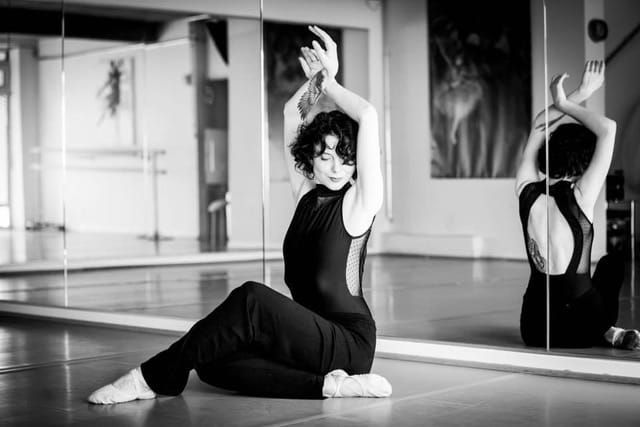
by Maria Pickart
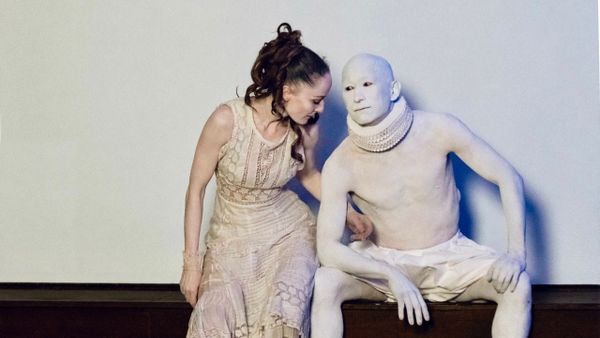
And yet, when I begin to move, what arrives first is not freedom, but control. Sometimes it is shame and the weight of an imagined audience, their expectations settling onto my shoulders before I have taken a single step. And then my body begins to dance the waltz with my mind. Circling: fateful and repetitive, beautiful and destructive. A dance couple locked in a rhythm neither can escape.
That still surprises me. I have spent over twenty years of dancing professionally and teaching bodies. My academic work explored how classical ballet shapes, constrains, and sometimes silences the female body. I understand these mechanisms intellectually. Yet my own body continues to carry them.
I keep returning to a memory that has nothing to do with technique. I am a child. Music plays. I move. There is no mirror, no teacher, no audience. There is only the irresistible pull of sound meeting body – thoughtless, joyful, entirely mine. Somewhere between that child and the dancing self I became, something was lost. Something hard to name: the simple permission to experience my own body without judgement. The loss did not happen at once. There was no single correction, a teacher, or a rehearsal that changed everything. It happened quietly. Mirror after mirror. Correction after correction. Little by little, I stopped asking how movement felt and began wondering how it looked. Before I knew it, the mirror had become more convincing than my own body. Eventually, I no longer needed the mirror. I had learned to carry it inside me. Ballet had given me a great deal but the freedom to simply be in my body was not among its gifts.
I remember one of my students telling me, before a performance, that she had invited her school friends to watch her dance. Not for the applause. She wanted to show them something they had never seen before: herself. She wanted them to see who she really was, not the girl they knew as quiet, as reserved.
"People think I am quiet," she said, "but when I dance I have so much to say."
She had something I recognized and quietly envied: a body she trusted, a body that felt like hers.
Becoming an expert in embodiment and understanding the system, it turns out, does not set you free from it.
I know how dance training inscribes external norms onto the body – how the mirror, the correction, the constant evaluation gradually replaces a natural sense of self with a constructed one. I have explained this to students. I have written about it. And then I step into the studio myself. The shame arrives before the movement does. I know exactly where these reactions come from. I can trace their origins historically, culturally and pedagogically. What I cannot do is simply decide not to feel them. The imagined audience assembles before I have taken a single step. The child who once moved without thinking – thoughtlessly, joyfully, entirely herself – feels very far away. Intellectual knowledge does not automatically travel into the body. I can name what is happening to me with precise theoretical language. However, I cannot always stop it from happening.
The internalization runs deeper than analysis can reach. You can dismantle the system in your mind and still feel it in your bones.
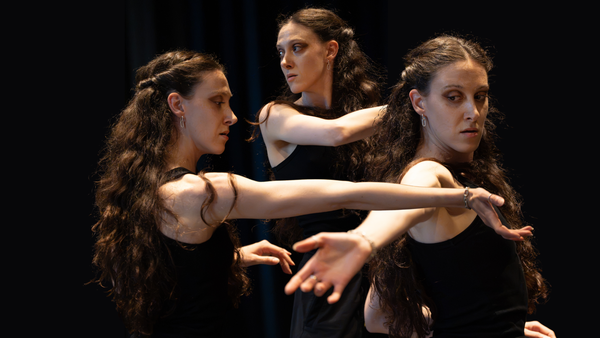
The waltz continues. Body and mind, circling each other, sometimes in conflict, sometimes in something that almost resembles grace. Perhaps the first step towards harmony is not the absence of tension, but the willingness to acknowledge it. To stop fighting the waltz and just feel it. To accept that the body and mind may never move in perfect unison, and that this imperfection is not something to overcome. It is something to dance with.
We spend so much time in dance trying to transcend vulnerability. To train it away, to perfect it out of existence, to present bodies that appear effortless, controlled, complete. But vulnerability may not be a problem, maybe it is the point.
The dancing body that allows itself to be fragile, uncertain, unfinished, still becoming is a body that is telling the truth. And in a culture that so often demands performance over presence, that truth is radical.
My student knew this instinctively. She did not step onto that stage to be perfect. She stepped onto it to be seen – fully, honestly, as herself.
I am still learning to do the same. The waltz goes on. But increasingly, I find myself dancing it with a little more curiosity and a little less shame. The mirror is still there but it is no longer the first thing I see when I come home to myself.
ABOUT THE WRITER
Maria Pickart is a dance educator based in Germany. Through her writing, she explores embodiment, feminist perspectives on ballet, and the relationship between movement, identity, and belonging, drawing on both academic research and lived experience.