Holding the Threads Together: Ballet Cymru at Forty
Leila Lois spends an afternoon in Newport to witness how a fiercely local, radically inclusive company is redefining classical ballet through the lens of Welsh heritage and contemporary bodies.
by Leila Lois
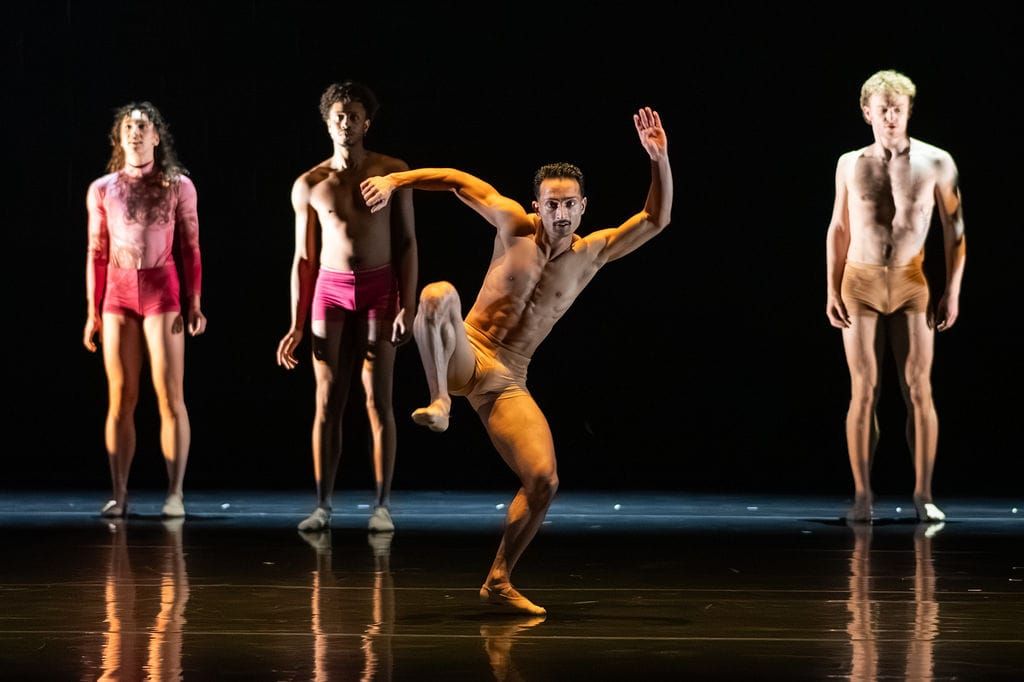
The harp seeps from the studio into the foyer, seductive and ancient, with Catrin Finch's sublime strains murmuring through speakers. Two by two, the dancers of Ballet Cymru enter into their partnering, the work still forming, still finding its shape. The piece is called Woven. Choreographed by husband and wife duo, Ballet Cymru founder Darius James and former company dancer Amy Doughty. It is built from duets, and is set to Finch's 2020 album of the same name, a collaboration with Irish fiddle virtuoso Aoife Ni Bhriain that draws on folk tunes from Ireland, Brittany, and Wales alongside original compositions. The title is apt for more reasons than the choreographers may have intended. Weaving is what this company does. The dancers have distinctly different physicality, and this is celebrated in the work that shows tender pas de deus on diagonal lines, breathing across the studio with grace.
Ballet Cymru's studio is in Newport, South Wales, a post-industrial city in a purpose-built space in a trading estate that announces itself humbly. The company turns forty this year, and it has spent those four decades making that same quiet argument: that ballet can be local and cosmopolitan, site-specific and beyond the proscenium arch and the velvet curtain. A rare opportunity to watch them work is also, it turns out, a great opportunity to see how they think, as a company. The duets are tender, technically precise, and extraordinary. The dancers know each other's weight and movement They catch without looking, seeming to emulate the flow and softness of the harp.
The score, designed by Catrin Finch, the former Official Harpist to the Prince of Wales and a commissioned composer for the National Eisteddfod of Wales, is a musician whose artistic life moves between the classical, the folkloric and intercultural collaboration. Her collaboration with Senegalese kora player Seckou Keita, whose albums Clychau Dibon and SOAR wove Welsh and West African musical traditions into something that belonged to both and neither, is one of the more quietly radical artistic partnerships of the last decade. The choice of her music for this new work is not incidental. It locates Ballet Cymru in a specific conversation: one about Welsh cultural identity as a living, evolving, proudly particular thing, not a mere heritage object.
Yet what does it actually mean to be a progressive yet proudly local ballet company, respondent to the plural world in which we live, yet reverent of the Indigenous roots of the company? How do you hold all these worlds together, through dance? A visit to the studio, spending time with the dancers and the Ballet Cymru team, offers a rare chance to witness their thoughts in motion.
Progressive beginnings
The company was founded in 1986 by choreographer Darius James and patron Yvonne Greenleaf as Gwent Ballet Theatre, operating out of Newport and touring to the smaller venues that might otherwise go without ballet entirely. It has gone through several names since: Independent Ballet Wales, Welsh Ballet, and finally Ballet Cymru, which is simply the Welsh-language version of Ballet Wales but sounds entirely different. Cymru is what Wales calls itself in its own tongue, a word that has survived centuries of British imperialism and attempted annihilation, and using it is a choice. It places the company inside the Welsh-language tradition rather than translating it for an English-speaking audience.
Forty years is a long time to sustain a small ballet company in any city. In Newport, is rarely the first place classical dance presenters think of, it is a particular kind of achievement. Darius James received an OBE in 2019 for services to ballet and community dance, a formulation that brackets the two activities rather than ranking them, which feels right for how the company operates. Amy Doughty, who joined as assistant artistic director and leads the company's inclusive education work, is a Paul Hamlyn Foundation JADE Fellow. The company has won the Theatre Critics of Wales Award for Best Dance Production three times, in 2014, 2017, and 2018, and the Critics' Circle National Dance Award for Best Independent Company three times. The Independent has described them as a brightly gifted, energetic young ensemble taking dance to smaller venues that might otherwise be left out. Ballet Cymru is a company that has built its reputation not despite its commitment to access and Welsh identity but through it. The two things are not in tension here, but are the same project.
The Celtic temperament
In 2018, the writer and critic Gary Raymond argued in The Theatre Times that the best of Wales' performing arts is always close to poetry, presence, and what he called the ‘incantational darkness of the Celtic temperament’. Wales' literature, he wrote, can be dated back to the Mabinogion, Britain's earliest prose, a collection of ancient fairy tales that continues to inform Welsh literary and theatrical traditions not just with its stories but with its ethereal rhythms and peculiar tones. Walking the Welsh countryside, Raymond observed, it is easy to feel nothing has changed since the time when the Mabinogi were first performed as part of the oral tradition.
Ballet Cymru inhabits this lineage consciously. The clearest instance to date is Poems and Tiger Eggs, first performed in 2017, their love letter to Dylan Thomas. Welsh icon and Ballet Cymru Patron Cerys Matthews MBE read some of Thomas's best-known poems live, the sonorous Welsh lyricism in her voice the perfect instrument for their recitation, as the DanceTabs reviewer put it, his phrases slicing the air like jewelled arrows. The choreography, by James, Doughty, put Thomas's characters and poems into bodies: Fern Hill capturing the delight of being young and easy on a light-dappled stage, Death Shall Have No Dominion interpreted in bodies melded into sculptured shapes. The work toured to Sadler's Wells in 2021 as part of the Made in Wales triple bill and moved critics and audiences with an intensity that had less to do with dancing, strictly speaking, than with what dancing can become when it carries a tradition inside it.
Dancing en plein air
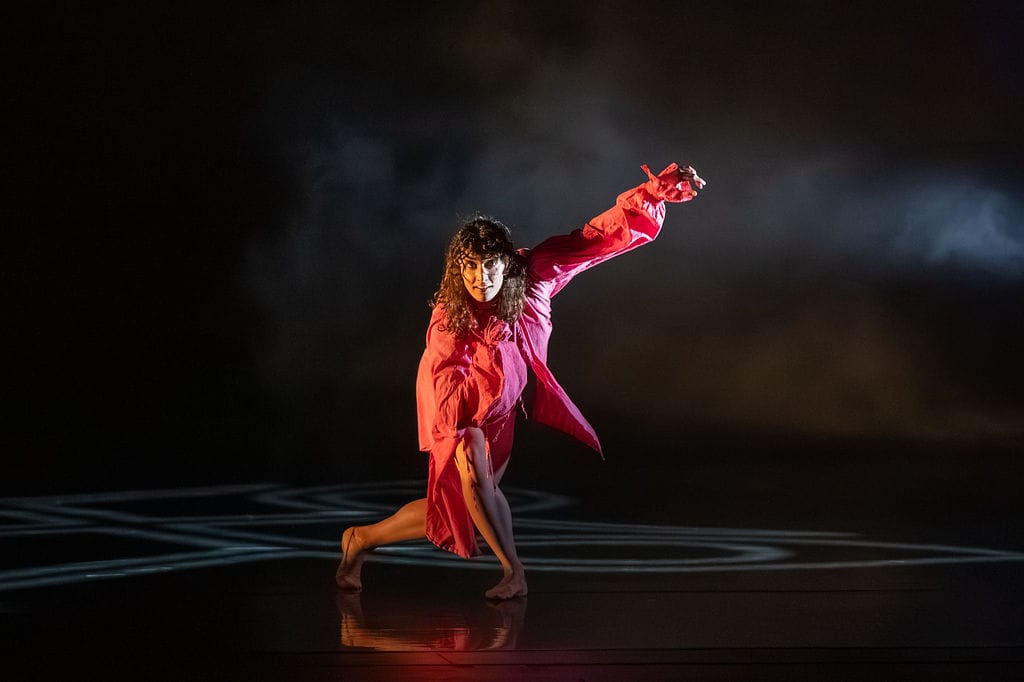
The current gardens tour of Sleeping Beauty is the next iteration of this lineage, and perhaps the most ambitious. The production was programmed to be performed outdoors at National Trust sites, including Dyffryn House and Tredegar House in South Wales, audiences on picnic blankets, the garden itself the set. This is not merely a staging choice. The Mabinogion is full of enchanted sleeps, cursed bodies, figures conjured from flowers and transformed into animals. Welsh fairy tale tradition has always understood that the body can be changed by forces outside itself, that the landscape is a magical participant in human lives, that what the English might call the supernatural is simply the natural world paying attention. To perform Sleeping Beauty in a Welsh garden at dusk, with the trees darkening around the audience and the light failing slowly, is to offer the fairy tale as a Welsh one. Not an adaptation. A homecoming.
Dancer, Isobel Holland, discusses this, saying: One of the things that feels genuinely new is how Ballet Cymru have reimagined some of the traditional characters and relationships. Instead of the classic fairies who each present Sleeping Beauty with a gift, we have protectors who each represent something different, such as light, fire, and animals. Their choreography reflects the qualities of what they protect, which gives each character a unique movement style that they carry throughout. Another big difference is the relationship between Seren and Bran, the boy she falls in love with. In our version, they already know each other before she falls asleep and have built a genuine connection. That means when he finally wakes her, she's only been asleep for a few years rather than a hundred, and their reunion feels much more natural and authentic.”
The location for performance, heritage Welsh gardens, also influences the interpretation: “One of the profound things that happens when we take our works into different spaces is the amount the audience relaxes.” Rehearsals and training manager, Robbie Moorcroft, says, “when there’s someone two feet away on a picnic blanket with bubbles and cheese, it really brings the dancers and audience closer and creates a bond or agreement of relaxation and trust.”
Dancer, Gwen Davies, adds: "Listening to the birds whilst sleeping as Seren in sleeping beauty, have an altogether different feel in comparison to a relatively controlled environment in traditional theatre.”
A ballet company and a family
Darius James and Amy Doughty co-choreograph the production, a pairing that remains rare in classical ballet. Their shared vision foregrounds love, acceptance, and what it means to be different, which sounds like the language of contemporary arts marketing until you watch it and realise they mean it in the most structural sense.
“I feel like I can be myself in the company… it feels like a family,” a dancer, Mika George Evans says. Mika joined in 2024 After training at the Scottish conservatoire for dance, a few years after her family relocated from New Zealand to the UK. Similarly, Evans adds that she had often been told she was too tall for ballet before auditioning for ballet Cymru.
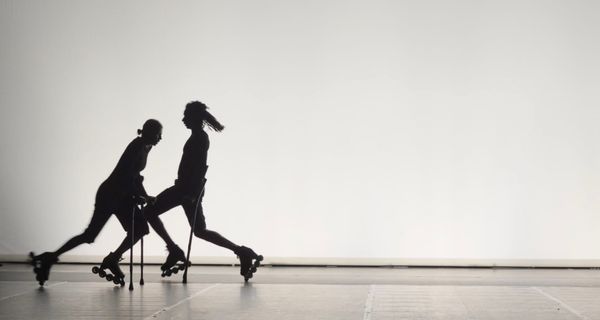
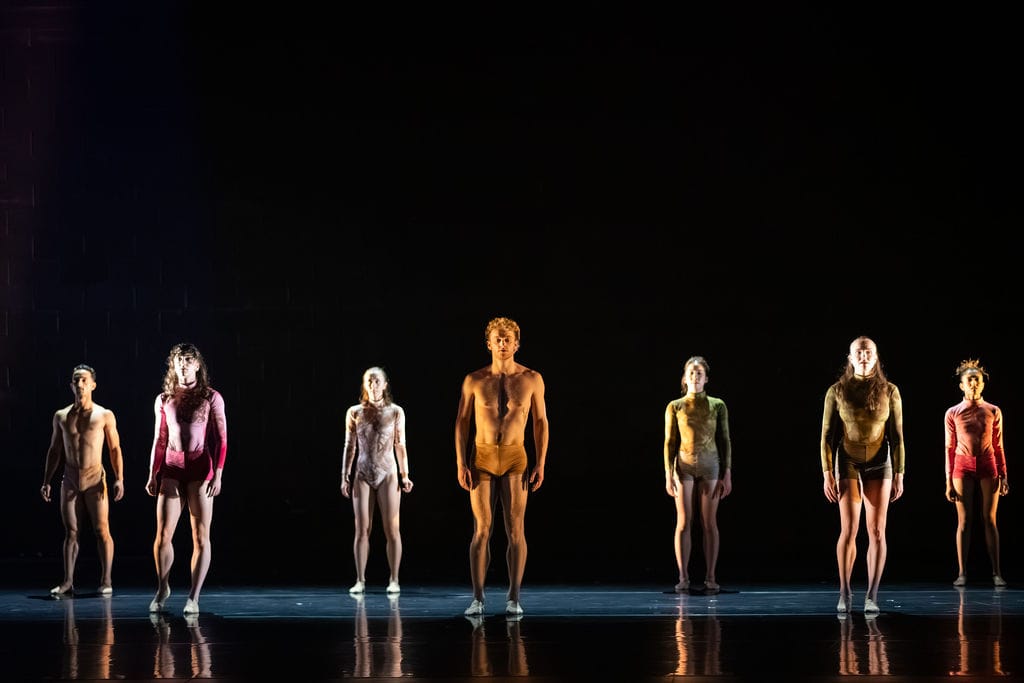
“There’s a beautiful scene in Woven,” Doughty adds, “the dancers are silhouettes at the back of the stage, their outlines showing their unique proportions, it’s like a beautiful mural of the dancers as individuals together, rather than a uniform ensemble.”
Ballet Cymru's recruitment language invites applications from disabled, neurodiverse, Black, Asian, non-Black people of colour, and ethnically diverse dancers. This is worth pausing on, because the language appears not in a separate diversity programme or initiative but in the standard dancer recruitment material. That placement is a structural argument. It says: this is who we are looking for, all the time, as a matter of course, not as an exception or an aspiration.
Holly Vallis joined the company as its first non-binary artist. Their testimony is unambiguous: “I feel very proud to have worked for a ballet company as progressive as Ballet Cymru and as their first non-binary artist I hope to motivate anyone who feels different to just keep doing you.” The word different, here, is not a euphemism. It is the same word the company uses in its production materials for Sleeping Beauty, and it is doing the same work: naming something that classical ballet has historically been quite poor at accommodating, and insisting that this diversity of ensemble is a company’s strength.
Diversity and Inclusion
Marc Brew is the most significant figure in the company's disability inclusion work, and his story is worth telling in full because it illuminates what Ballet Cymru's commitment to inclusive practice actually means in human terms. Brew trained as a professional dancer in Australia before a car accident at twenty left him paralysed from the waist down, ending, he assumed, his dance career. Instead, he rebuilt it entirely, becoming over the following two decades an acclaimed director, choreographer, dancer, teacher, and speaker working internationally with companies including Australian Ballet, CandoCo, AXIS Dance Company, and Scottish Dance Theatre. He has been named a National Lottery Game Changer in 2024 and received nominations for two UK National Dance Awards for An Accident / a Life. He serves as Associate Artistic Director at Ballet Cymru.
His Season for Change, developed in partnership with National Youth Arts Wales, is a series of free talks with guest speakers designed to enhance skills and knowledge of inclusive dance in Wales. It was described as the first initiative of its kind in Wales. That framing matters: Ballet Cymru is not simply including disabled artists in its existing ecosystem. It is building the ecosystem that did not previously exist.
Ballet Cymru 3, the company's weekly inclusive ballet class for young people aged eight and upwards, is open to all regardless of ability or disability. It focuses on creativity and individuality. It is free. It is not a charity outreach arm operating at a distance from the professional company's artistic life. It is the same conversation, held in a different room.
The Duets National Dance Training Programme is Ballet Cymru's most structurally ambitious outreach effort. It enables young people to access high-quality ballet tuition across Wales regardless of economic, social, or geographical circumstances, and it is specifically designed for those living in deprived areas, partnering with six theatres, seven schools, and four community arts organisations across the country.
The word geographical is doing particular work here. Wales is a country whose landscape is both its defining beauty and its defining challenge. The Brecon Beacons and the Cambrian Mountains, the coastal villages of Ceredigion, the valleys of the south: these are places where the ground and the sky press close together and the ordinary infrastructure of cultural life does not always reach. A child in Merthyr Tydfil or Llanidloes does not have the same access to ballet training that a child in Cardiff does, let alone in London. The Duets programme aspires to redress this imbalance.
Gary Raymond's 2018 essay on Welsh performing arts observed that in Wales, a huge number of performance artists come originally from working-class backgrounds, and those working-class values inform much of the work to be seen. Ballet has historically been one of the art forms most resistant to this claim. It is expensive to train, expensive to watch, and its cultural prestige has tended to cluster around institutions and cities that already have cultural prestige. Ballet Cymru is doing something genuinely unusual in insisting that its art form belongs everywhere in Wales, in treating geographical reach not as a logistical problem but as an artistic commitment.
The company also holds a reciprocal agreement with National Dance Company Wales, enabling young dancers to participate in both associate programmes. In a country of 3.2 million people with a small but vital dance ecology, this kind of structural collaboration explores what a national dance culture can be when its constituent parts are willing to act in relation to each other rather than in competition.
Back in the studio, Woven is still becoming. The dancers move through their duets with concentration and devotion, they have not finished discovering yet. The harp continues its lines overhead.
Catrin Finch's album Woven takes its name from its method: two musicians from different traditions, different instruments, different cultural inheritances, finding in the space between them something that neither could make alone. The 47 strings of the Welsh harp and the 22 strings of the West African kora, in Finch's collaboration with Seckou Keita, produced music that belonged to both traditions and could not be reduced to either. That is what weaving does. It does not blend or merge or erase. It holds two threads in relation, and the tension between them is the textile.
Ballet Cymru has been doing this for forty years. Welsh identity with classical form. Disability with virtuosity. The local with the international. The ancient fairy tale with the contemporary body. The Mabinogion's incantational darkness with the gardens at dusk where an audience on picnic blankets watches a sleeping figure wake. None of these threads overwrites the others. The weave is instrumental, not ornamental.
Leila Lois is a dance writer specialized in features, criticism and creative writing that captures feeling and place. Published internationally from Australia to Canada, she brings diverse media experience to every story, finding personality in culture worldwide.