'Nonstop Bodies': Against Isolated Geniuses
Rennie McDougall’s Nonstop Bodies strips the history of dance in New York away from the canon and hands it back to the streets. Next on our reading list.

Alain Corbin’s The Foul and The Fragrant: Odor and the French Social Imagination is the first cultural history book I ever read. I remember thinking: Well, this might very well be the most honest form of history writing. I like that in French the words “history” and “story” are one and the same. That’s because no matter how factual a history book is, it is always an arrangement of events that an author weaves together reflecting a particular point of view.
When I came across Nonstop Bodies: How Dance Shaped New York City, I knew this book was worth a read, but I haven’t yet – only excerpts and interviews. Rennie McDougall's premise is powerfully simple: dance did not just happen in New York City. Dance built the city. Or rather, the city and its bodies built each other, simultaneously. From the endurance marathons of Prohibition to the Rockettes' militant precision, to the mambo heat of the Palladium, to breaking in the South Bronx, McDougall tracks a continuous conversation between people in motion and the concrete world pressing in around them. This is cultural history at its best.
"Knowledge has not only been produced by the mind alone; it’s through our bodies moving in space that we come to know the world, then synthesize it into text."
What drew me in, before even turning a page, is the method. McDougall walked the city, visited archival sites and vanished intersections, physically reconciling historical choreography with what the streets look like now. There is something quiet compelling about that kind of knowing. Knowledge has not only been produced by the mind alone; it’s through our bodies moving in space that we come to know the world, then synthesize it into text.
The book also makes a point I theoretically agree with: social dances born in marginalized communities didn't influence concert dance, they repeatedly bled into it and redefined it in perpetuity. The lineage, McDougall argues, doesn't run in a tidy family tree. Speaking recently with Maxwell Neely-Cohen for Urban Omnibus, McDougall noted: "I wanted to disrupt the idea of dance lineages that looked like family trees and instead explore all the influences that dancers and choreographers absorb by simply living in and moving through the city together."
It's also a rebuke to a certain kind of dance history that attributes innovation to 'isolated geniuses' rather than to neighborhoods, economic pressures, and the magic born out of encounters.
The overview I've encountered hints at one tension worth watching: whether the thesis holds equally across all the dance forms McDougall covers. The connection between street vernacular and the city's social fabric is immediately legible. But Judson Dance Theater's austere, academic minimalism? That's a harder sell as urban architecture. The book apparently acknowledges the strain without fully resolving it, which makes me trust it more.
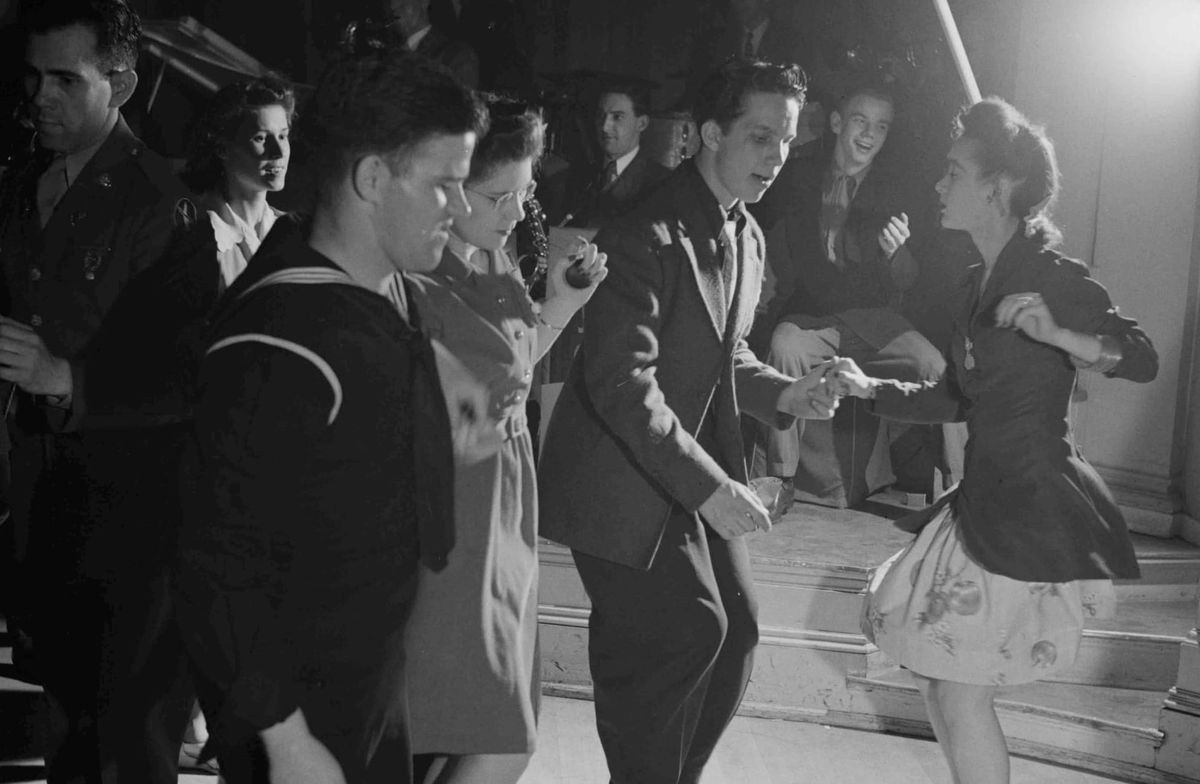
Some of the most interesting ideas in cultural history are ones that don't close. The shift McDougall traces from the open, airborne Lindy Hop to bebop's turned-inward, withdrawn movements read as a somatic map of changing political hope in Harlem is an observation that sharpens the whole argument.
Nonstop Bodies (Abrams Press, 2026) is next on our list.
The Editor's Preview