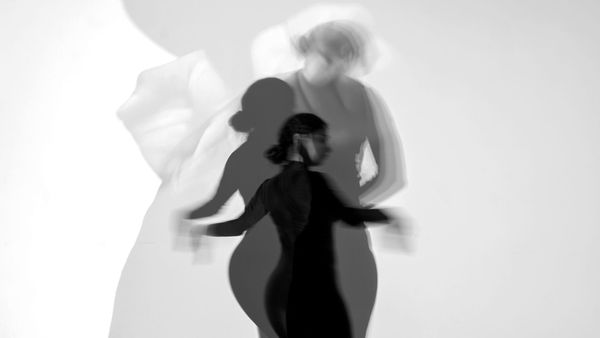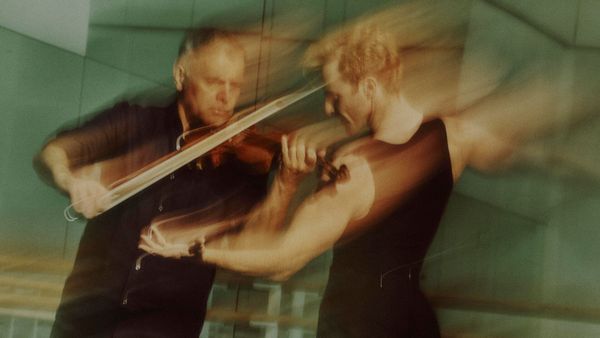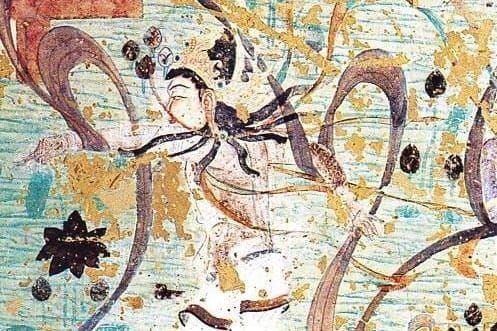
contemporary dance is not a neutral description but a colonial framing of the present
artist's statement by patric da cunha

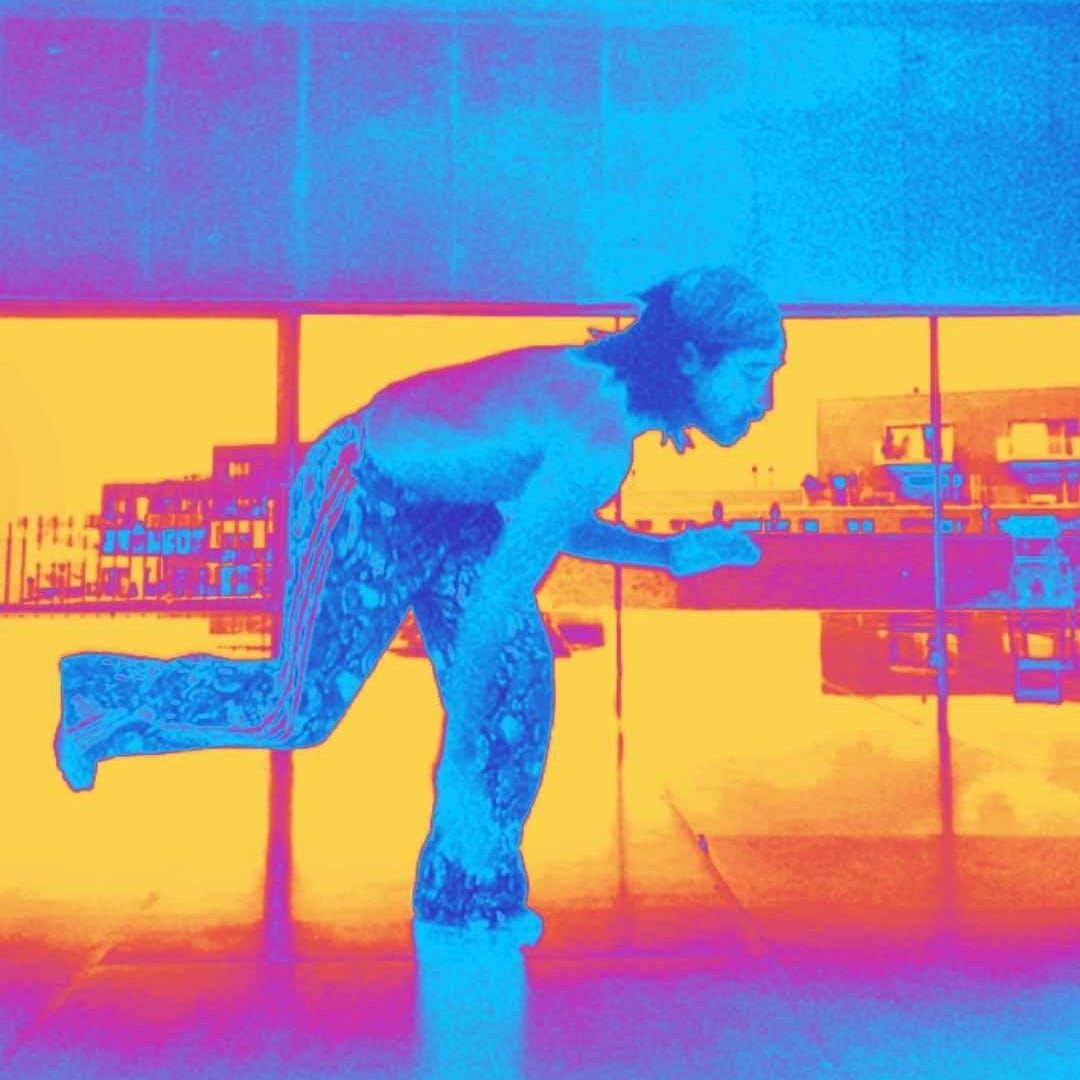
i wonder: who are the contemporary ones, once a society cultivates a condition that denies embodiment, choosing to limit itself to one life - one [dance] experience?
as a artist coming from the brazilian diaspora living and working in brussels, i ask this from within the contradiction itself. my body moves through institutions that call themselves “contemporary,” yet everything i carry is often in friction within my context, by either being abused or rejected by ignorance, and never taken as a way of reimagining and rethinking present spaces. the term contemporary dance is presented as neutral - a simple marker of time, a way to say “what is happening now.” but nothing about it is neutral. the very idea of “the contemporary” is a colonial construction: a way of naming the present that privileges certain bodies, certain histories, and certain geographies as the ones who define what “now” means.
this text emerges from the tension of migrating between spaces and times, and yet insisting on being in the present. knowing that the present is danced by many, from past to the future and beyond the fragile reality we call now.
in a nutshell, contemporary means existing now, happening in the present moment, and an awareness of what is shaping it; and dance is defined by movement - the body experiencing space and time, expressing living conditions.
so, to call something contemporary is to claim ownership over the present. it is to decide whose movement belongs to the current moment and whose movement is relegated to the past, to folklore, to tradition, to “otherness”. the term contemporary then does not describe time, it selects and organizes it. and in doing so, it reproduces the colonial monotheist idea that there is only a truth path for humanity. same hierarchies that shaped the modern dance canon - hierarchies built in europe and north america exported globally to how dance should look like.
contemporary dance did not emerge from a vacuum. it emerged from modern dance, which itself emerged from a desire to break from ballet while still maintaining a western lineage of ‘‘innovation’’. when european and american artists declared themselves “post‐modern”, they were not simply experimenting with form, they were claiming the authority to define what counts as progress. the term contemporary became the next iteration of that authority - a way to gather diverse practices under a single umbrella while quietly maintaining the center.
yet, by presenting this image of dance, many practices from the global majority are pushed to the margins. but, if we recall what contemporary dance means, those practices have always been contemporary - not because they fit into a western timeline, but because their nature is in relation to its environment, keeping it alive and always evolving.
institutions, however, continue to treat them as “outside” the contemporary, inviting them in only when they can be framed, translated, or curated as innovation. even when dances like hiphop are based on the improvisational play between the body and the music, allowing the playground for the body to express its present through its foundations.
this is the coloniality of the term: it demands that other practices enter their idea of the present through a gate that was never built for them. using bodies as just an object of representation, choosing to forget the history of this body.
the term contemporary dance does not simply describe what is happening now; it decides who gets to be seen as part of the now; it is not a style, but a condition that denies embodiment, choosing to limit itself to one [dance] life experience.
implicating who gets to survive in the dance field due to funding structures, residencies, festivals, and academic programs that rely on this colonial frame of the present. they use it to decide which bodies are shaping the future of dance and which bodies are merely “informing” it. the category becomes a gatekeeping device - a way of maintaining the center while appearing inclusive.
but the present is not a category, to be present is a condition. it is lived, felt, danced, and negotiated by all bodies, not just the ones historically choosing to define it.
let 's decolonize!
in an ideal reality, contemporary dance should mean any kind of practice responding to the present moment. a practice that is about recognizing the body for what it has always been: an intelligent, adaptive, and deeply contextual system. but the denial continues, when indigenous practices appear on stage, they are praised for their “heritage”, as if heritage cannot be contemporary.
to decolonize dance is not only to diversify stages; it is to dismantle the idea that the present belongs to one lineage. it is to recognize that contemporary is not a universal descriptor but a political frame - one that can be challenged, expanded, or refused by the different knowledge existing in the world. it is to create safe spaces where peoples experience and history are considered.
the question that we must ask is not what is contemporary dance or who are the contemporary ones? but who gets to decide what counts as contemporary?
the work is not to fit more practices into the category, but to expose the category itself as a colonial tool constantly trying to eliminate the space and time for certain bodies. bodies that are often conditioned to erase their cultural and self identity in order to fit into institutional spaces.and also to resist and insist that our practices, that come from the global majority groups, are not contemporary because they resemble western ideas, but because they in fact exist, and because they breathe. they move and keep on transforming, they respond to the world as it is, and not as institutions define it.
dance is change, we must allow it. because some of us just know how to dance, and nothing else will make sense...
ABOUT THE ARTIST
Patric da Cunha is a queer Brazilian artist working across disciplines, exploring the body through movement, memory, rhythm and transformation.