Gods, Monsters, and The Limits of Mastery at Melbourne's Dance Biennale
Leila Lois speaks to the artists of Melbourne's RISING Dance Biennale and reveals a programme that feels urgent, uncomfortably alive, and may have saved an important contemporary dance festival.
by Leila Lois
In the post-COVID years, the status of a concerted dance front in Australia has hung in the balance. Since Dance Massive launched in 2009, seven editions of a national festival have taken place under various auspices, as funding became increasingly difficult to secure — a textbook case of the conundrum facing dance festivals globally: precarious public funding, post-pandemic cost pressures, and the structural invisibility of dance as a form (too experimental for commercial sponsorship, too embodied for the digital age) conspiring against the very festivals that sustain it. The festival has found its salvation under the wing of Melbourne's flourishing RISING Festival.
A merger of several festivals, RISING takes a "city as canvas" approach, using site-specific installations to turn Melbourne into a live venue for art across genres. Few cities so naturally embody the experimental, ephemeral nature of contemporary dance, and that is the magic formula behind the city's reputation as a hub for the form in the Southern Hemisphere.
This biennale's strength of vision is reflected across the programme in a discernible "Gods and monsters" theme, shaped by RISING co-founder Gideon Obarzanek — also the founder of preeminent contemporary dance company Chunky Move — whose deep roots in Melbourne's dance ecology give the Australian Dance Biennale an artistic credibility no administrator alone could provide.
Many of the works seem to be asking audiences what happens when human ambition outpaces its wisdom, when we build something we can no longer control and when the creator becomes indistinguishable from the destroyer. Many also contain horror, which, to borrow a phrase from one of the choreographers, Martin Hansen, is "a refuse container for anxieties, taboos, a place to think the unthinkable."
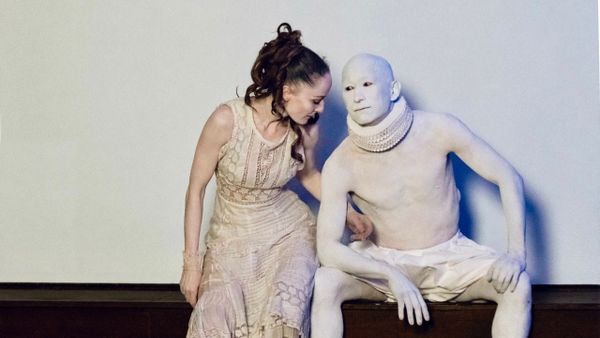
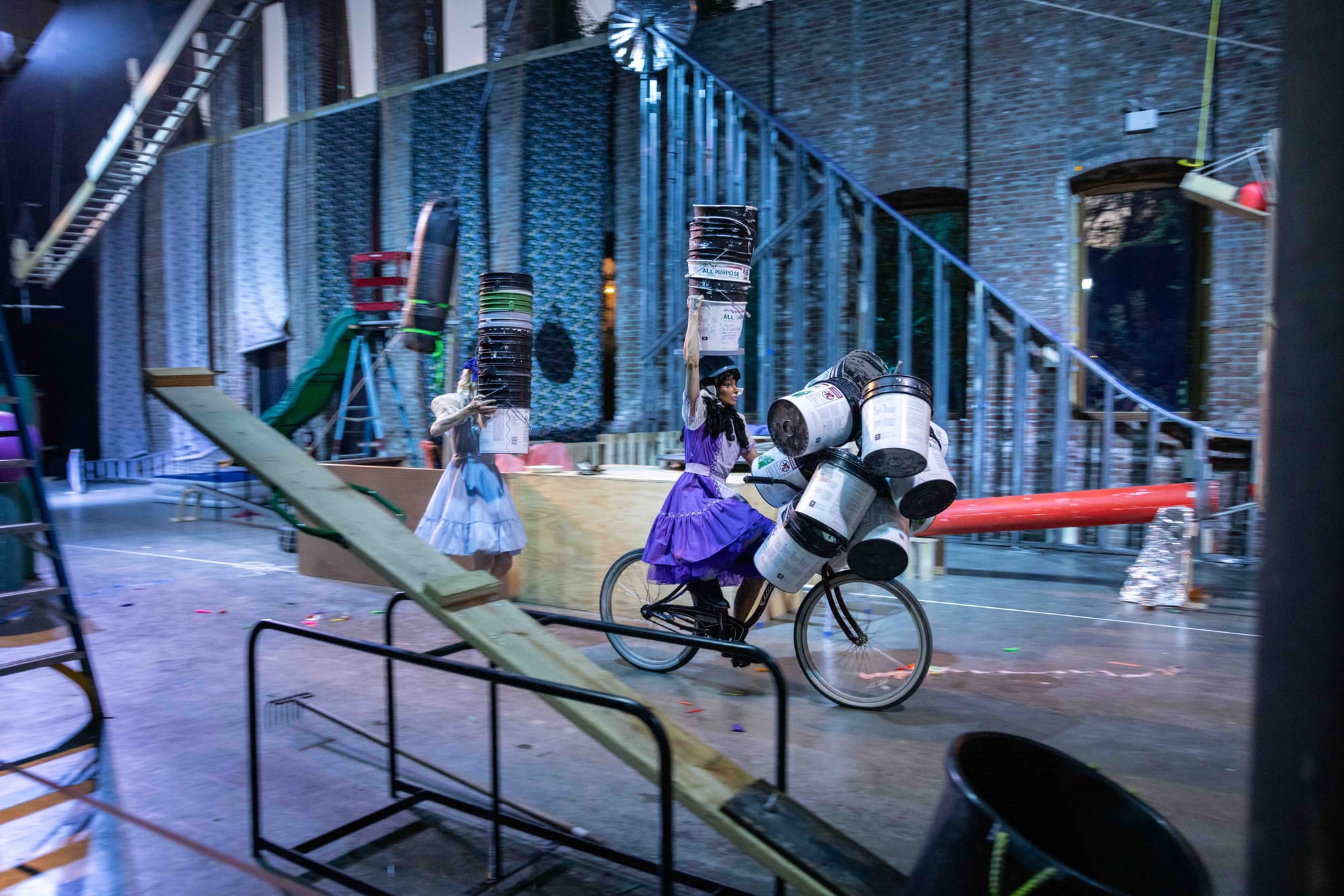
Narcissister's Voyage Into Infinity transforms The Substation into something between a fairground and a fever dream: a warehouse-scale Rube Goldberg machine operated by masked, doll-like female performers who crawl from rabbit holes and trigger chain reactions that unspool across the space with hypnotic, slightly menacing precision. The work explicitly riffs on Fischli and Weiss's canonical The Way Things Go, that beloved 1987 film in which objects set each other in motion through a choreography of cause and effect, with the artists themselves absent from frame. But where those unseen male creators arranged their world and stepped back, here the performers are never offstage, never safely behind the apparatus. They are the apparatus. They pull strings and are strung; they animate the machine and are animated by it. The central question of the work is: who animates whom? There is no clean answer, and that is precisely the point. These anonymous, masked feminine bodies are at once the source of the chain reaction and its most eloquent product: puppet-masters who are also, unmistakably, puppets. It is a haunted carnival of cause and effect, and one of the sharpest meditations on creative agency in the programme.
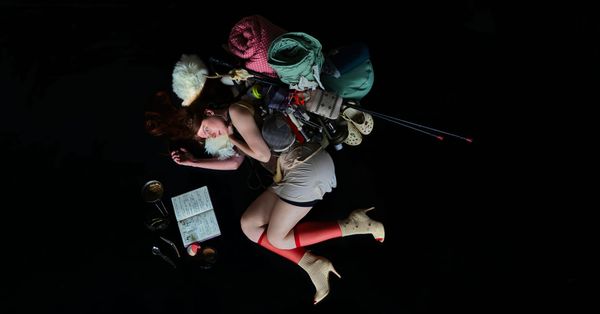
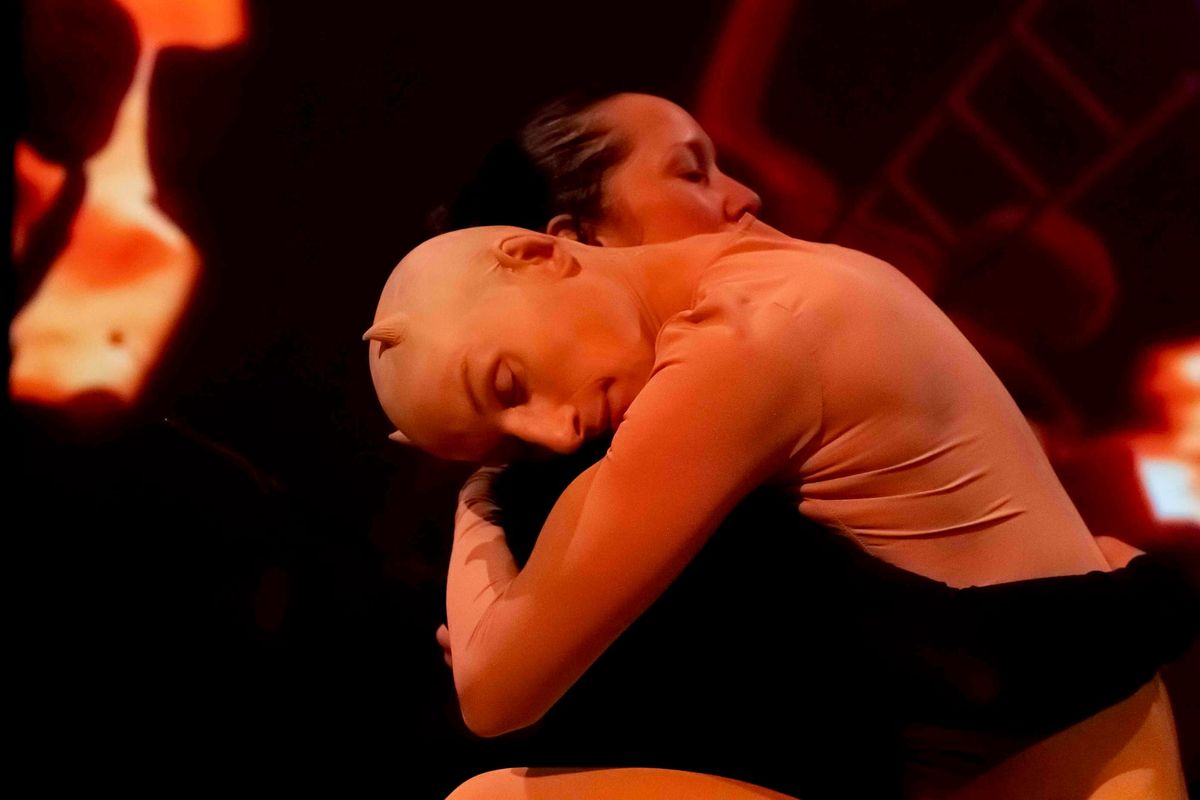
If Narcissister stages the body as ‘component’ inside a machine, Martin Hansen's Frankie at Dancehouse stages it as something considerably more unruly: a leaky, imperfect, ever-becoming archive of feeling. The work takes its frame from Mary Shelley's Frankenstein, though Hansen is quick to note that the specificity of that starting point was, in his words, "an accident of process rather than intention." He began with a more ambitious research project: a tentative history of the horror genre from Romanticism to the present, following the philosopher Eugene Thacker's proposition that supernatural horror is the genre par excellence for thinking about today's world; that refuse container for anxieties and taboos. He got stuck at Frankenstein, and the work that emerged from that obstruction is richer for it.
The monster gives Hansen a productive formal frame: "the assemblage, the impossible logic, the fantasy" as ways of thinking about how a dancing body composes and communicates. But the work's other great preoccupation is grief, which is framed through philosopher Matthew Ratcliffe's conception of the body as a flawed mediator of emotion, experiencing the way one feels texture through a glove. Hansen describes inhabiting this in performance as "the closest thing I could ever relate to as a notion of truly feeling myself", not despite the body's imperfection but because of it. He is drawn to what he calls "the leaky vessel": the body that is porous, soft, vulnerable, in constant negotiation with its context and environment. This, he argues, is "a far more interesting way to conceive of the body" than the "static, stoic, sovereign, individuated agent of meaning" that so much culture still insists upon. That this kind of meaning-making, this dwelling in multiplying possibility, is, in his view, "actively under attack by so many social processes" gives Frankie a quiet political charge beneath its wit.
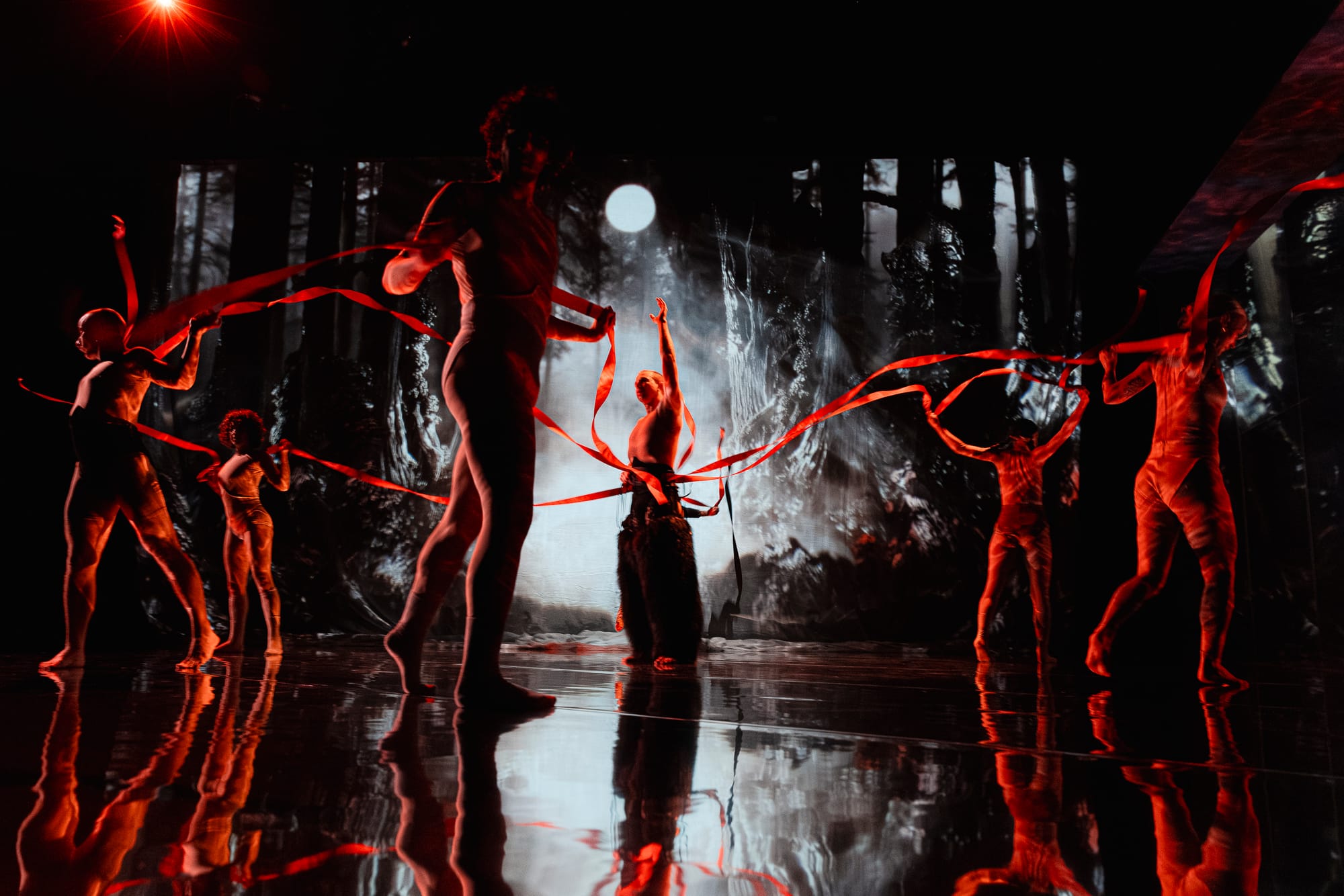
From the interior landscape of the body, Lucy Guerin Inc's world premiere The Forest moves outward into the literal one, and finds there a mirror image of the same estrangement. The work traces the shifting relationship between humans and trees across history and mythology, and Guerin's choreographic approach holds that history in tension throughout. The work opens, she explains, in a "theatrical mode," with dancers embodying figures from folktales, ballet, rituals, bush raves, and eco-horror: archetypes of human dislocation who find themselves in "an unknown and unnavigable labyrinth which they fear and try to overcome." What follows is a reckoning. The dancers' devastating actions toward the forest and each other give way, eventually, to a kind of stripping back or a re-emergence in what Guerin calls their "natural form," the dance reduced to pure movement, rhythm, and form. She describes this final passage as "a dream of reconnecting with the natural world for the future." But the word dream does real work here. Our attempts to be at one with the forest, she says, "inevitably lack a true intimacy. Somehow we are always out of place, tourists in another land at best, destroyers at worst." The estrangement Hansen locates inside the body (emotion felt through a glove) Guerin finds written across the whole landscape of our relationship to the natural world.
Melanie Lane's Into the Woods sits beside The Forest on the programme almost uncannily because of their resonance, a proximity Guerin herself finds generative. Where Guerin's witch is a fairytale figure: "a projection of human fears of the unknown and the human desire for control," as she puts it, an older woman cast out from the village and made monstrous in the imagination of those who feared her, Lane's work goes further, into history rather than folklore. Into the Woods reconstructs the fates of women condemned in actual medieval witch trials: women whose intimacy with the natural world, whose knowledge of it, was recast by those in power as transgression. The body punished, in these cases, was precisely the body that had not kept its distance, that had remained too close to the forest, too fluent in its logic. Lane's work reclaims that closeness as power. It answers the question Hansen poses: which monsters are dancing today? Not from the choreographer's studio but from the accusation itself, from the perspective of those named as monsters by a culture that could not tolerate what it could not confine.

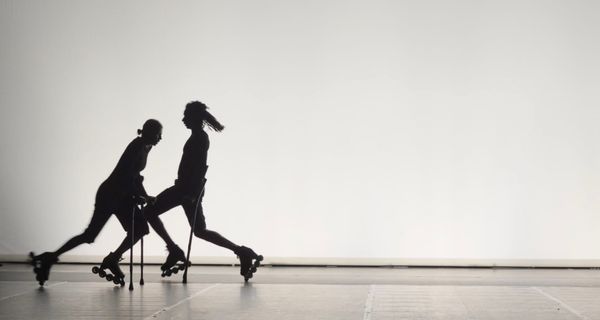
These preoccupations ripple outward across the broader Biennale program. Antony Hamilton's Forever & Ever – a "pagan, mechanistic death rave" – returns to Australian stages after its 2018 premiere, working the same territory from inside the club. Hamilton describes his dancers as neither surrendering to the relentless techno beat nor resisting it, but finding "complementary rhythmic structures that dance over the main rhythm": bodies in counterpoint with the machine rather than consumed by it. The costume dramaturgy enacts its own arc of liberation, layers shed until the dancers are "reborn in flesh," escaped from what Hamilton calls "the tyranny" of fashion's systems.
Dancenorth's RED arrives from a different angle entirely, with its dancers sealed inside a slowly deflating transparent structure, "both agents and subjects," in co-artistic directors Amber Haines and Kyle Page's phrase, "shaping the space while being shaped by it." Conceived just before COVID, RED has accumulated new weight with each remount; Haines and Page describe returning to it now, at the close of their decade at Dancenorth, as a shift from exploration to reflection. It is a work about survival and fragility that has become, almost against its will, a work about letting go. Across both pieces, the same dialectic holds: the body inside the system, neither fully mastered nor fully free.
What RISING’s programming understands, across its full range, is that what we call monsters are most often simply the things we cannot control: other bodies, the natural world, grief, systems larger than ourselves. These works do not resolve that. They hold it, turn it over, find new angles on it each night. Hansen's "leaky vessel", that porous, multiplying, ungovernable body, is not a problem to be solved but a condition to be inhabited, and perhaps, in the right space, even celebrated. That is what the best live performance has always offered: not mastery, but the particular aliveness of surrendering to something larger than yourself, and discovering creativity in the surrender.
RISING/Dance Biennale opens Wed 27 May - 8 June in Melbourne, Australia
Programme here