ZINADA’s NAMI Traces Generational Trauma at Tanzwerkstatt Europa
Choreographer Jin Lee and Kyung Mee Lee transform historic Korean violence into a somatic ritual of care, memory, and freedom.
Korea, 1950. 전쟁 – Korean for "war" – was the three-year conflict between North and South Korea that ended on 27 July 1953 and left four million victims on all sides.
Why does a war from the last century matter today? It left behind traumatized people, and the shadow of that violence is still present, and is visible in NAMI, the performance shown during the dance festival Tanzwerkstatt Europa in Munich.
NAMI is about rewriting the history of HER story by breaking patterns to move forward toward a new coexistence in the future.
At the Schwere-Reiter Theatre in Munich, on 6 and 7 August 2026, choreographer and dancer Susanne Schneider leads the introduction, inviting the audience to lie down on the floor and relax for a moment: listen to your body and breathe. Breath is a symbol for stamina and endurance. After a while you calm down; then the door to the stage opens, and the audience enters the space where the performance will take place.
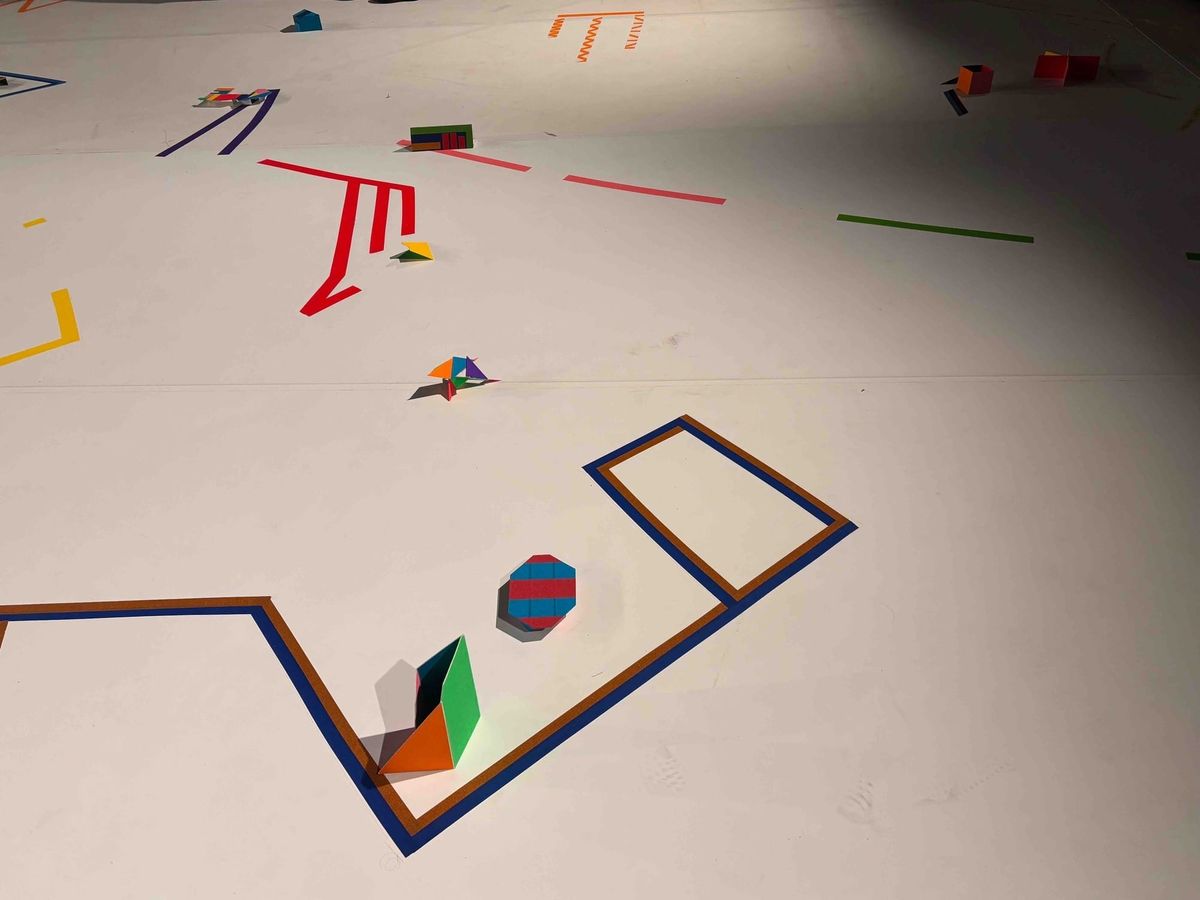
You see signs on the floor. Colored paper shapes symbolize body and mind, which can be folded and unfolded to discover patterns and disorders. You see green, red, blue, and yellow stripes, arrows that seem to show directions but could just as easily be Korean characters. You see two women: Jin Lee, a young dancer and choreographer, and Kyung Mee Lee, an elder female performer. Daughter and mother: they walk around the room; they ignore each other; their relationship is distanced, or is it Korean culture that does not allow too many emotions? We don't know yet.
"Being hurt by your own family; the performance is about how to break the logic and chain of violence by accepting and trusting both yourself and your child as strong characters."
In modern Korean, NA means "I/me" and MI means “beauty”; MI is also Kyung Mee Lee’s nickname: so, the title of this performance can also be interpreted as “me and my mother”. However, it refers to three generations of women: the Korean War of 1950 (6.25) and his impact on Jin Lee’s grandmother, the violence a mother inflicts on her own child, and the legacy she carries into raising and loving her own daughter between pain, depression, rage, and care. In the very end, it's about freedom: Kyung Mee Lee was mistreated by her mother, Jin Lee's grandmother, a burden that made it difficult for her to love herself and accept her own daughter as she is. Being hurt by your own family; the performance is about how to break the logic and chain of violence by accepting and trusting both yourself and your child as strong characters.
NAMI is about the sadness of not being supported, of being rejected, of missed occasions. It is about being misunderstood; about the continuous dialogue between education and freedom, between authority, power, and force and their antagonist, freedom; about letting go and holding on.
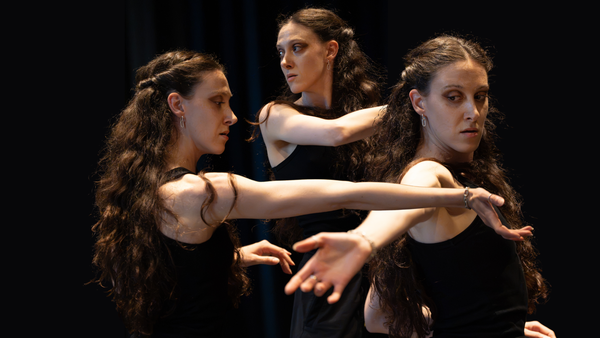
The daughter straightens her arm and invites the mother to move with her, in her direction. The mother does the same, but her arm extends the opposite way, as if she refuses to be controlled by her daughter. Finally, both begin to follow each other, one arm's length at a time and then vice versa, and this might be the most telling moment of the show, because this simple shift of arms, hands, and direction demonstrates the care and trust for and in each other and opens a path toward the future.
This Korean mother-daughter pair invites us to reflect on our own mother-child relationship and to show emotion. This is intercultural exchange at its best. But it is even more: it reflects on our relationship to women's bodies as givers of birth, and on the vulnerability of both men and women. Birth hurts, and so does family.
At the end of tears, traumatic experiences, and several episodes of re-traumatization stands – literally – a huge sheet of paper unfolded on the theatre's wall, carrying the years beginning in 1962, Korean characters, photos of mother and daughter, handwritten emotional status descriptions on stripes that form waves, and the final word: FREEDOM.
A must see. A must repeat. Be excited to learn more about Zinada.
Cover photo by Suzanne Fischer