Wilma Casal on Ancestral Shadows, Graham Technique, Butoh, and Screendance
From a childhood discovery of Martha Graham on VHS to a cross-cultural collaboration with Butoh master Akihito Ichihara, Wilma Casal explores how ancestral weight lives in the body.

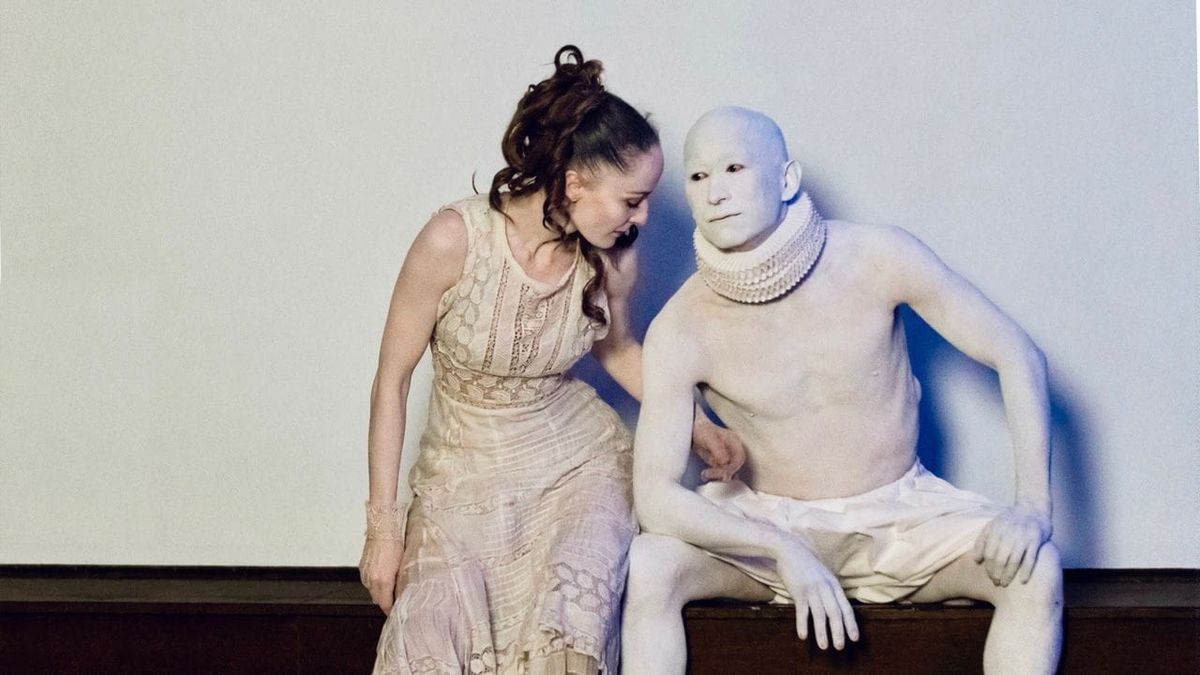
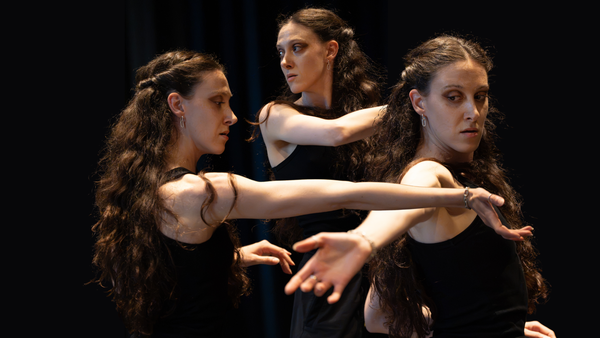
What happens when three sisters reunite at their family home? They may find themselves confronting the ghosts of their ancestors — spirits who embody all the roles and behaviors they've inherited through generations of women.
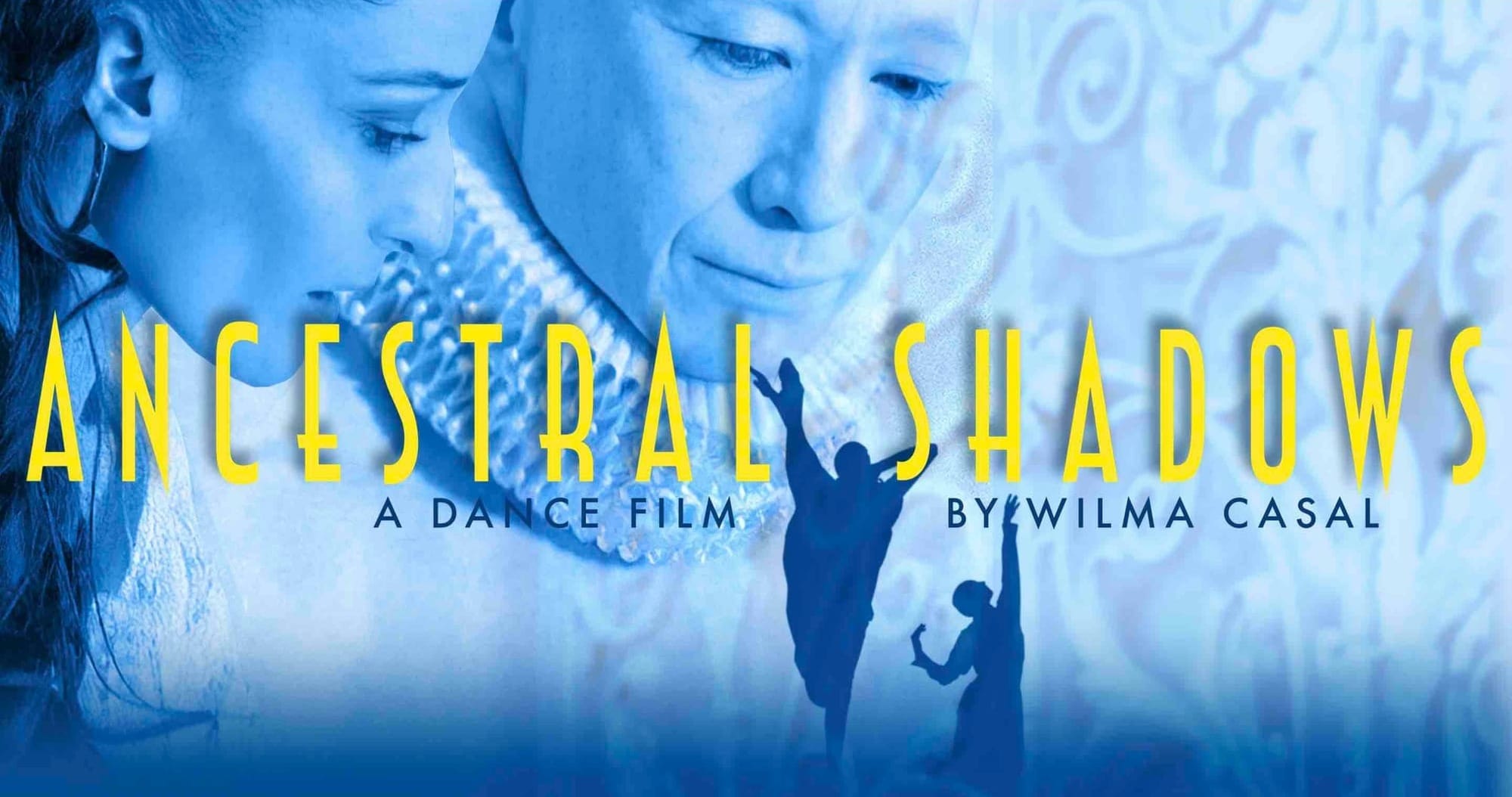
That's Ancestral Shadows, the third dance film from Wilma Casal, dancer and founder of Wolf & Swan Company. She first developed it as a stage work, performed at the iconic La MaMa's Ellen Stewart Theater in New York City in 2019, before adapting it into a film.
The film version came together after Wilma heard from Akihito Ichihara, a Butoh dancer with Sankai Juku, who wanted to perform in one of her works. Looking for a project that could bring Butoh and her own Graham-based technique together, she recalled a line she'd once read by Tatsumi Hijikata, Butoh's founder — that his dead sister and his ancestors lived on inside his body, guiding his movements from the dark. The line sent her back to Ancestral Shadows, and eventually to Alder Manor, the 1912 Yonkers estate where the film takes place.
The film has since screened at festivals on three continents. We talked to Wilma about the piece that wouldn't let her go, the fan her ghosts pass down through generations, and what changed for her moving from live performance to film.
You've described the Graham Technique as feeling like "a homecoming" the first time you encountered it. What was it about that technique specifically that felt so immediately like your language?
The fact that I could understand it. I was interested in what this language expressed and fascinated by how it did so.
When I was a child, maybe ten years old, I got to participate in a Graham workshop with the older dance students. Even though it was only for a few days, the movements left a deep impression on me, and I sensed the power and wisdom of this technique, which felt so sincere and human to me. And although I didn't have access to real Graham technique classes for many years, I felt a deep connection and trust that I would learn this technique as my language. There were barely any books I might have used to learn more about the technique and the stage works, but my dance history teacher gifted me a rare VHS tape of "Five Dances by Martha Graham," which I treasured.
The technique is physically, intellectually and emotionally challenging in a way that I want to be challenged and reveals a beauty that I can't take my eyes off of. It fascinates me how such strong and powerful movements can melt into such soft waves that can float straight into your heart.
Martha Graham has gifted us with incredibly brilliant dance works, pieces that portray strong female characters, and a technique that takes a lifetime to master, but eventually somewhere along this journey empowered me to express myself and create my own dances.
"It fascinates me how such strong and powerful movements can melt into such soft waves that can float straight into your heart."
You studied classical ballet before finding Graham's work. What did that earlier training give you, even as you moved away from it?
Ballet was my gateway to a world where truly special people unite their talents and passions to create fabulous moments.
At the ballet barre, I found fulfillment and my mission to commit myself to beauty. Through the discipline and the analytical thinking required to master every dance technique, I was rewarded with moments of pure freedom in which I could fly with the music.
I was very fortunate to have been dancing at the opera from a young age. It was a blessing to grow up and be able to learn about theater from a backstage perspective, where every department is its own fascinating nucleus that works its magic to create a realm that seemed even more enormous to me than the world itself.
In ballet, I learned that technique is a craft which enables my body to give life to any character. I had brilliant teachers who devoted their time to mentoring me, helping me to analyze and immerse myself in those roles. The generosity of these dancers who shared all their knowledge, secret tricks, stories, resources, contacts as well as their love of ballet with me will live within me forever, together with those characters.
Brave Steps and An Ocean Away were your first dance films. What did you learn from that shift from stage to screen? What surprised you, and what did you have to unlearn?
I learned to embrace the opportunity of taking the audience through our world with us. Deciding on frame and focus presented a new challenge. During a live performance, the audience has the freedom to decide what to look at and when to change focus. In film, though, I take on that responsibility because I am making those decisions.
Although it requires a lot of planning up front, followed by having to change those plans on set, I very much enjoyed being able to use natural light. Using all the beauty that surrounds us as part of the story is truly a fabulous opportunity.
And then I had to learn to let go. A stage piece can continue to evolve as long as it's being performed. I can consider adjustments, make changes, and continue to develop my performance. Releasing not just the final cut of a film but the process of making it feels a little eerie to me.
What does film let you do that the stage doesn't, and what do you miss when you're not working live?
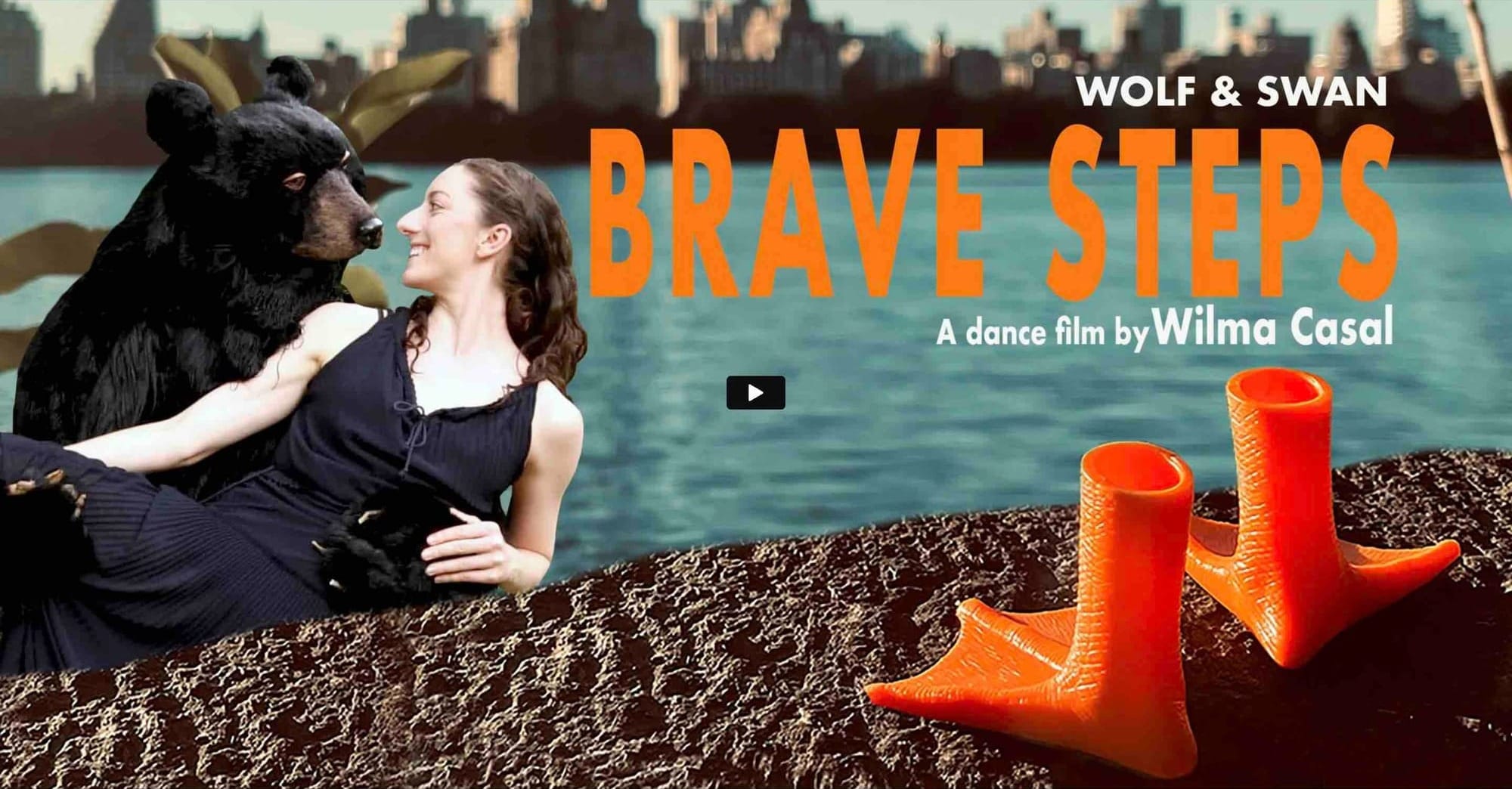
Actually, I had never been interested in making dance films until I fell in love with two tiny duck feet that I had turned into little marionettes. I followed them around with my camera and sent short videos to my friends just for fun. When people kept asking me how the little feet were doing, I realized what potential they had to become film heroes, spreading joy and happiness. So I hired and trained them, and because of their size, it was clear that I needed a camera to tell their story. On stage, they would simply have been too small to be seen.
Nothing can replace an evening together with a live audience. Those precious moments when that magic happens which drives us all as artists cannot be captured or preserved with a camera.
But during our first shoots outdoors, we definitely had an audience: Brave Steps was filmed in and around Central Park, and I couldn't have imagined a friendlier or more enthusiastic audience than the people who visit the park or call it home. We received applause and thanked the audience with several encores depending on the number of takes.
Parts of An Ocean Away were filmed in an area which isn't exactly open to the public. That's why we were a little worried when we saw police officers who started watching us - until they came over and asked us if we would like some coffee. How wonderful is that?!
While filming Ancestral Shadows, I actually felt like I was dancing in a house full of truly invisible ghosts who hosted us and became an incredibly supportive audience.
To answer your question, through film I can introduce my works to new audiences, share it with the world, and get to know artists from all walks of life and cultures, while also enjoying their work at various festivals. So far, my films have been shown in over 60 cities around the globe, which has been very exciting and wouldn't have been possible with live performances at this time. I am very much looking forward to doing both.
"I had never been interested in making dance films until I fell in love with two tiny duck feet that I had turned into little marionettes."
Ancestral Shadows started as a stage piece in 2019, built around the image of a marionette pulled by invisible strings. What drew you to that image originally?
When I choreograph, I trust my body's voice, remain patient and let it do the work. During this initial phase I do not question the movements to preserve their authenticity.
But with Ancestral Shadows, the image of the marionette jumped out at me immediately and unasked, with the very first movements. And those were so persistent that they became the piece's leitmotif.
Out of the image of being directed by invisible strings that cannot be removed, a story emerged that tells of liberation from traditions and values which are also reflected in body language and are passed down through generations as "learned behavior."
The film version came together after a message from Akihito Ichihara. Can you walk us through that conversation, and how it connected back to Tatsumi Hijikata's idea of ancestors living through the body?
Four years after our last live performance of Ancestral Shadows at La MaMa's Ellen Stewart Theater in New York City, I received a message from Akihito Ichihara, a mesmerizing Butoh dancer and member of one of my favorite dance companies, Sankai Juku. We met and he expressed his interest in joining one of my works. Initially I had planned to create an entirely new piece for this occasion and began looking for a story that would call for a coming together of Butoh and Modern Dance to shine in a new light.
One day I remembered that Tatsumi Hijikata, one of the founders of Butoh, had described the sensation of his deceased sister and ancestors living on in his body and guiding his movements from within the dark.
This describes one of the many images that are used in Butoh, and it reminded me of Ancestral Shadows. It was a very different feeling from my own, and it must certainly feel quite different within the movement as well as to the audience. It inspired me to give the ancestors in my story greater space and voices.
"Maybe they invited me to create this work and thus set them free."
The three sisters in the film confront inherited roles and behaviors passed down through generations. Were there real inheritances, patterns, expectations, you were thinking about while making this?
Yes, one example here is a scene in which a ghost presents a fan to one of the sisters. She takes it from his hand and recalls a time in which women used their fans to discreetly communicate their feelings and wishes.
This was key to remaining in control of their thoughts and emotional expressions within a strictly regulated patriarchal society.
We grew up with many images of such "quiet" and modest women, and the world continues to be dominated largely by men. Even today, women must remain mindful of the barriers presented to them, and often communicate with caution.
Together with the dancers and composers, we reflected on our perceptions, observations, and experiences. How are women expected to behave, and what masculine attributes does society still demand of men?
The persistent injustice we perceived served as our shared engine for Ancestral Shadows to expose this far-reaching web of imbalance - which extends into all areas of life - in order to continue forward.
The piece moves from confrontation with the past to the sisters releasing those shadows. Was that resolution something you knew from the start, or something you found while making it?
Maybe they invited me to create this work and thus set them free.
You've described searching for nearly a year for the right location before finding the Yonkers estate. What was it about that place, once you found it, that told you it was right?
Yes, I had searched for quite some time to find a place that would reflect both the history of the different eras and the immense strength of this heritage.
However, it is always a wonderful gift and adventurous challenge to find the perfect location where the story can unfold, a place that speaks its own language and can transport us dancers to another world through its colors and scents.
One day, I found myself riding the Bee-Line bus in Westchester County. Cheerful bees adorned everything, from the signs to the seat cushions. I had never been to Yonkers before, but I had heard about an old mansion there, so I set out to try my luck.
After a long bus ride through quiet neighborhoods and a strikingly graceful countryside, I arrived at the historic manor. I was immediately enchanted. Built in 1912 in the Renaissance style, the estate contains a replica of the Theater of Dionysus in Athens as well as the original façade of an Italian Baroque church.
A car was parked in the courtyard, but I couldn't find anyone. So I quietly explored the surrounding wild gardens and introduced myself to the ancient, authentic sculptures and fragments that seemed to guard the magic of this place. As I peered through the windows, I saw all my ideas and visions for the film take shape.
And just as I had hoped, I found a place where - during filming many months later - the dancers and the crew could also immerse themselves, inspired, in a world long past - and yet so present.
"I let them lead and tell me their stories. That's always exciting!"
What does your rehearsal process typically look like? You've mentioned it's your favorite part of a production. What happens there that doesn't happen anywhere else?
My stories often emerge out of the characters who create themselves as I choreograph. I let them lead and tell me their stories. That's always exciting!
Then follows what I find to be the most fulfilling part of a production: rehearsals, the workshop for my pieces. Here I keep discovering new tools as we work on technical nuances, the quality of movements and dynamics, paving the way for us to slip into our roles and interpret them.
Those memorable moments that make every performance unique have their roots in the rehearsal room. Here, our new world unfolds itself and we find symbiosis with our partner, the music.
The film has already traveled widely and picked up awards. What has it been like watching audiences in such different cultural contexts respond to a story about ancestry and inherited roles?
Regardless of culture, every viewer sees the film through their uniquely different lens. Listening to what people have perceived and what they've associated with the images is a precious gift, as exciting as turning a kaleidoscope.
Someone recently described how the film allowed them to experience the story on an almost meditative level, and rather than having to follow the plot, they were able to connect with it on a much deeper level.
And then some viewers are surprised by the ending, which I consider a completely flattering compliment for this ghost film.
Wilma's new film, Dance Is in the Air: To the Rhythm of Manhattan's Underground – What Moves the City?, premieres this October 2026 at Wolf & Swan online cinema. It features new and classic characters from the Wolf & Swan repertoire.
For news and upcoming productions, visit the Wolf & Swan Company's Website or follow the company on Instagram.