“Everything Is Fine”: Beirut Choreography Encounters Returns for a Second Edition
From 15 to 29 November 2026, Arab contemporary dance takes over Beirut’s stages with new work on memory, exile and loss from Lebanon, Tunisia, Syria and beyond, plus workshops and panels on the future of dance in the region.
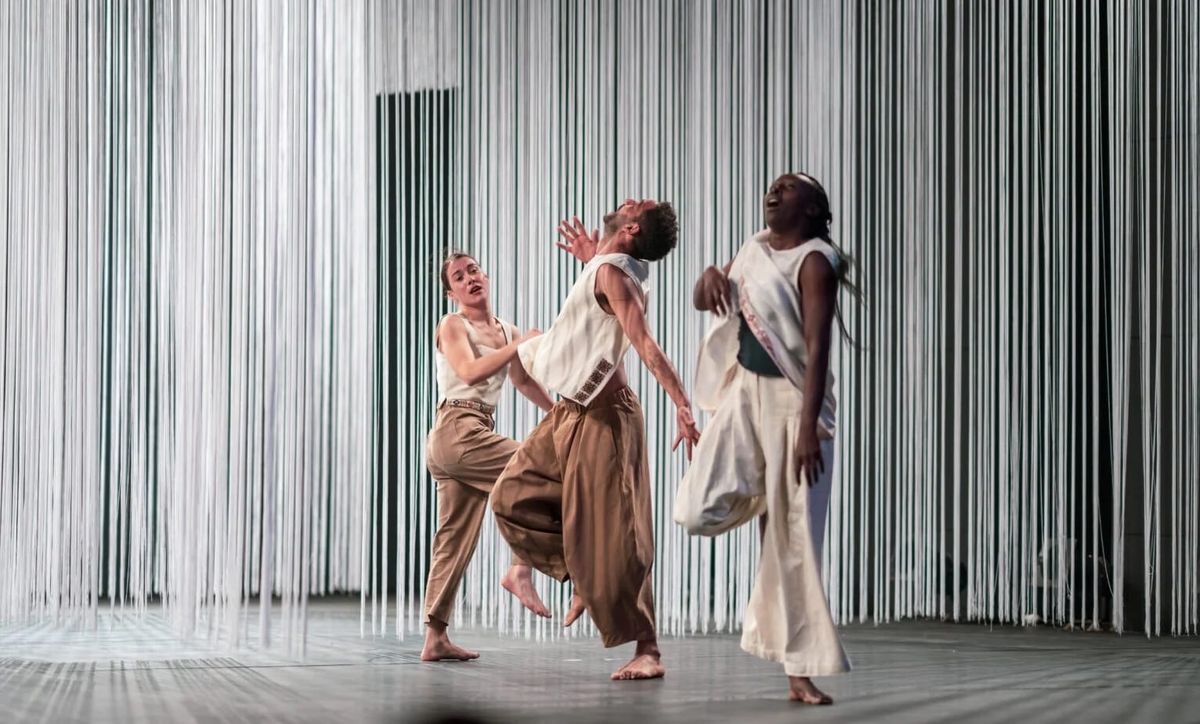
“Labes,” in Tunisian Arabic, is a common response to the question of how someone is doing: “everything is fine.” It is a standard Arabic word, whose everyday use varies across the region from one dialect to another. In Beirut, where people say “kello tamam” (all good), an expression that carries its own share of irony, the title takes on a particularly familiar resonance.
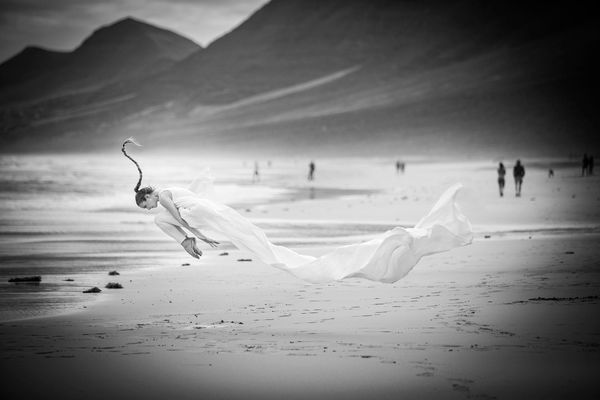
It is also the title of the work opening the performance program of the second edition of Beirut Choreography Encounters on 16 November. Created by Tunisian choreographer Selim Ben Safia with artist Nadia Kaabi-Linke, Labes brings four dancers and a musician onto a stage where transparent walls rise like ghosts, accompanied by the sound of a viola da gamba. The scenography draws on Kaabi-Linke’s research into Jerusalem’s Maghrebian Quarter, destroyed in 1967. It is an opening that sets the tone for a festival preoccupied with what remains, what disappears and what the body carries long after a place has been altered or erased.
Its local counterpart takes up these questions on 25 November with The Dance of Enkidu on the Collapsing Mountain, choreographed by festival director Bassam Abou Diab and performed by him and Ali Al Hout. The piece recasts the Epic of Gilgamesh through a dabke dancer and a zajal poet, drawing on a living archive of artistic work and personal experiences shaped by Lebanon’s civil war. The two heroes set out in pursuit of glory and immortality, and their path leads from conflict to alliance, then to loss and collapse. The work examines how heroism and hollow victories take shape in movement, sound and poetry, and what choices an individual has amid war and the perpetual threat of conflict.
Beirut Choreography Encounters (BCE) runs from 15 to 29 November. Its first edition, in 2025, was a three-day gathering of artists from six countries. Beirut Physical Lab, founded in 2021 by Abou Diab and Andrea Fahed, organizes it. BCE is part of the Arab Dance Platform (ADP), a collaborative regional network connecting contemporary dance festivals across Lebanon, Tunisia and Morocco.
Memory, family and displacement recur throughout the program. On 25 November, the same night as Enkidu, Yohann Hebi Daher’s Tfou aalik, le château de mon père uses movement, voice and storytelling to explore a son’s relationship with his father, navigating exile and silence. The following evening, Syrian choreographer Angela Al Debs considers how a change in landscape can alter the body. In A Frozen Street Changed My Walk, nearly five months of winter in Finland become a choreographic experience: a slower pace, a different balance, and the traces of another place carried into every step.
On 27 November, Khalil Hajj Ali presents Meters of Cement, a work in progress in which a son recalls the first night following his father’s death. The memory of the loss merges with the memory of the place. On the 28th, Lisa Al Munaizel’s Architecture of Remembering treats memory as something the body can reshape in the present, and Laetitia El Hakim’s At Stake turns grief into labor, as she embroiders willow leaves onto a bedsheet for eight hours in tribute to victims of femicide.
On 29 November, Berlin-based Lebanese choreographer Dominique Tegho presents Time, Desire, and Fog, created with sound artist Ghenwa Abou Fayad. The work takes apart and reimagines dabke and Levantine sound, approaching the dance not as a fixed expression of heritage but as a living practice. Here, cultural memory becomes a language through which grief and rupture can be acknowledged, but also through which joy and collective agency can be reclaimed.
In Beirut, the performances travel through venues that also carry memory. The first performance starts in Hamra, at Al Madina Theater, which Nidal Al Achkar founded in 1994 and which has occupied the renovated Saroulla Cinema, a late-1960s Hamra Street landmark, since 2005. Zico House, in Sanayeh, was a family home from the French Mandate era that Moustapha Yamouth, known as Zico, turned into an independent cultural space after the war.
Architecture of Remembering and At Stake both take place at Beit Beirut, the 1924 Barakat house at Sodeco. Its position at the crossroads made it a sniper’s nest during the war, and it is now a museum and urban cultural center whose restoration kept the bullet-marked walls: a fitting home for works about what the body remembers and what grief leaves behind. The next day, the festival moves to UnionMarks, a former factory in Burj Hammoud, a neighborhood that began as a refugee camp for Armenians fleeing genocide.
This year’s theme, “The Body Is Not Alone,” is an invitation to think about what it means to gather, listen and sustain one another. Alongside the performances, a panel titled “The Art Scene After the War” and a series of discussions on the region’s dance ecosystem turn attention to the conditions under which artists continue to work. The organizers see the festival as a response to the scarcity of research spaces, the fragility of collaboration across the region and the conditions of economic and political instability that increasingly shape cultural production.
The circumstances under which this edition takes place are hard to overlook. Airstrikes on Beirut are not a distant memory. The South of the country remains under occupation and attacks. Surveillance drones continue to circle over Beirut, their buzzing an increasingly constant presence in the city’s soundscape. Against this backdrop, bringing artists and audiences together is not an uncomplicated undertaking, nor is making work, rehearsing or sustaining a cultural space.
In a city where uncertainty has become part of everyday life, gathering around art, sharing space and paying attention to one another is “a form of resistance,” as the organizers say, and “The Body Is Not Alone,” puts it into practice: everything may not be fine, but no one has to carry it alone.
Festival passes and individual tickets are available through Ihjoz and Antoine Ticketing. The full program can be found on the festival website.