Inside the Cycle of Self-Silencing: Bharatanatyam Meets the Politics of Healing
Choreographer Yashashree Rajendra Chakole uses classical Indian dance and contemporary movement to critique systemic mental health care.

A single Manjeera strike cuts through the dark. It will return, again and again, over the course of the performance as a kind of clock. Each time it sounds, something in the room tightens.
This is the sonic spine of Cycle of Self-Silencing, a live multimedia performance that explores what happens when the space promised for healing becomes another way of keeping women in line?
The piece grew out of Yashashree Rajendra Chakole's own experience navigating therapy as an Indian woman, and out of conversations with ten young Indian women across different points in their own therapeutic journeys, some newly in treatment, some longtime skeptics, some who'd left therapy altogether. What Yashashree heard, across very different stories, was a pattern: therapy, as most of these women encountered it, wasn't teaching them to name what was structurally wrong. It was teaching them to cope with it.
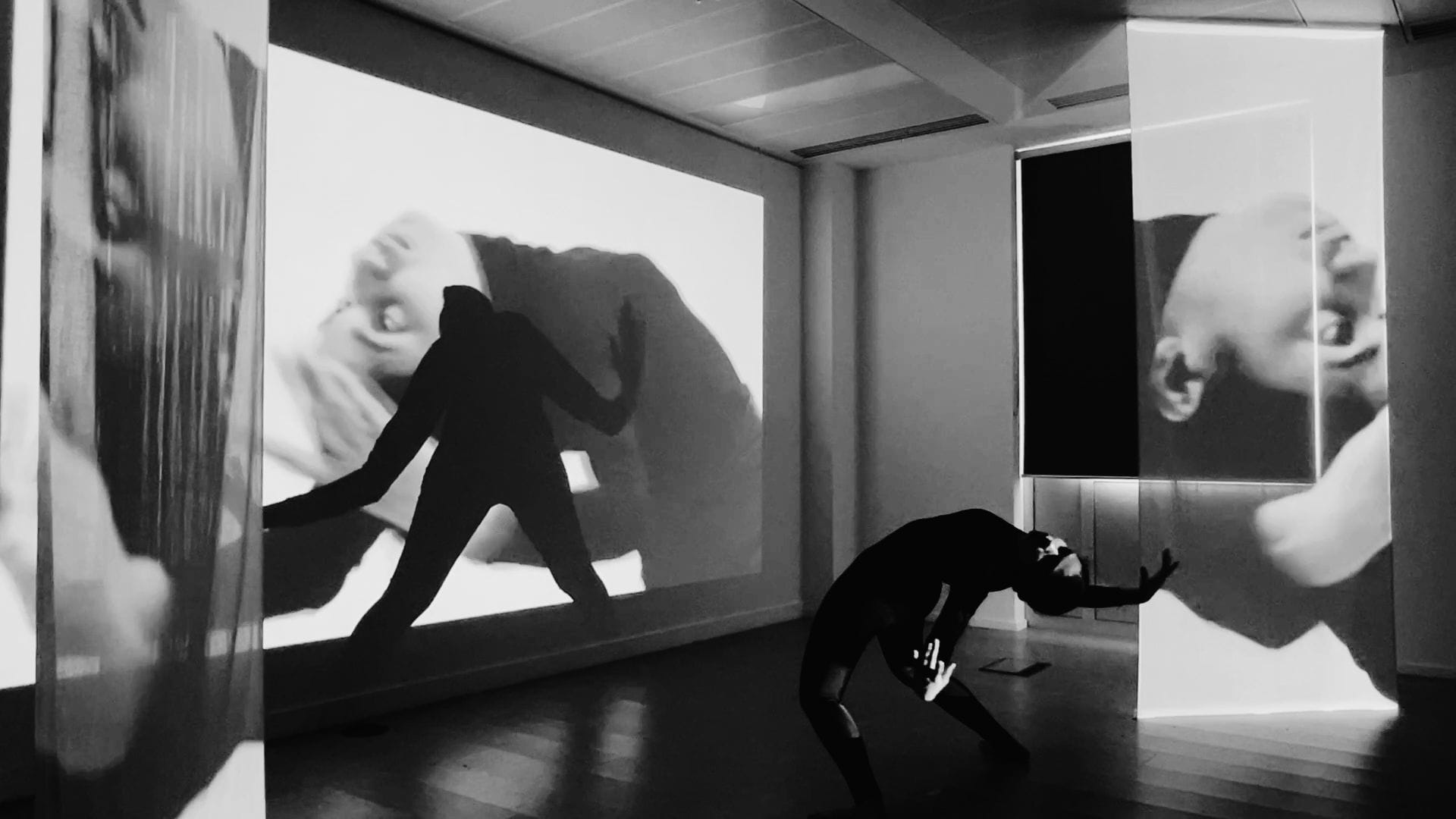
Yashashree drew on Indian feminist scholars like Bhargavi Davar and U. Vindhya who have argued for years that Westernized clinical therapy, transplanted into a collectivist society without much cultural adaptation, can end up functioning less like liberation and more like maintenance; a pressure valve that lets just enough steam off to keep a woman functional, compliant, and back into patriarchal norms. South Korean-born German philosopher Byung-Chul Han's writing on burnout gives the pattern a wider frame: when a culture replaces external limits with endless self-demand, there's no one left to blame for breaking down but the Self — so exhaustion reads as personal failure rather than a reasonable response to unreasonable pressure.
Cycle of Self-Silencing traces that logic across three movements. The first is ancestral: the daily friction of holding ancient collectivist expectations in one hand and modern individual ambition in the other. The second is clinical: the trap of a therapy room that treats a systemic wound as a private one, something to be solved between two people rather than named as a wider social pattern. The third is the most dangerous, Yashashree argues, the point where the woman no longer needs anyone else in the room to police her. She's learned to do it herself.
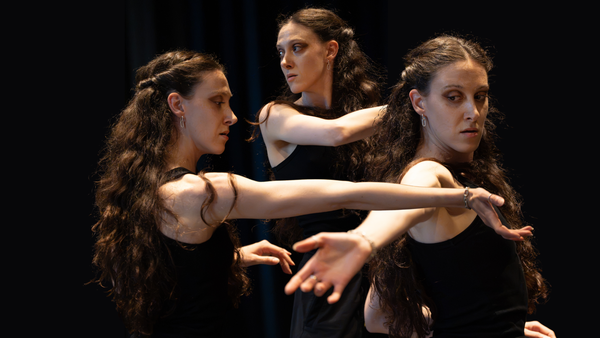
You can see all three translated into the body. The choreography moves between the precision of classical Bharatanatyam and the looser, weightier vocabulary of contemporary release technique, a deliberate collision between inherited form and a body trying to unlearn it. That's the "self-correction" the piece keeps returning to, a small, constant, almost invisible adjustment, done so often it stops registering as effort at all.
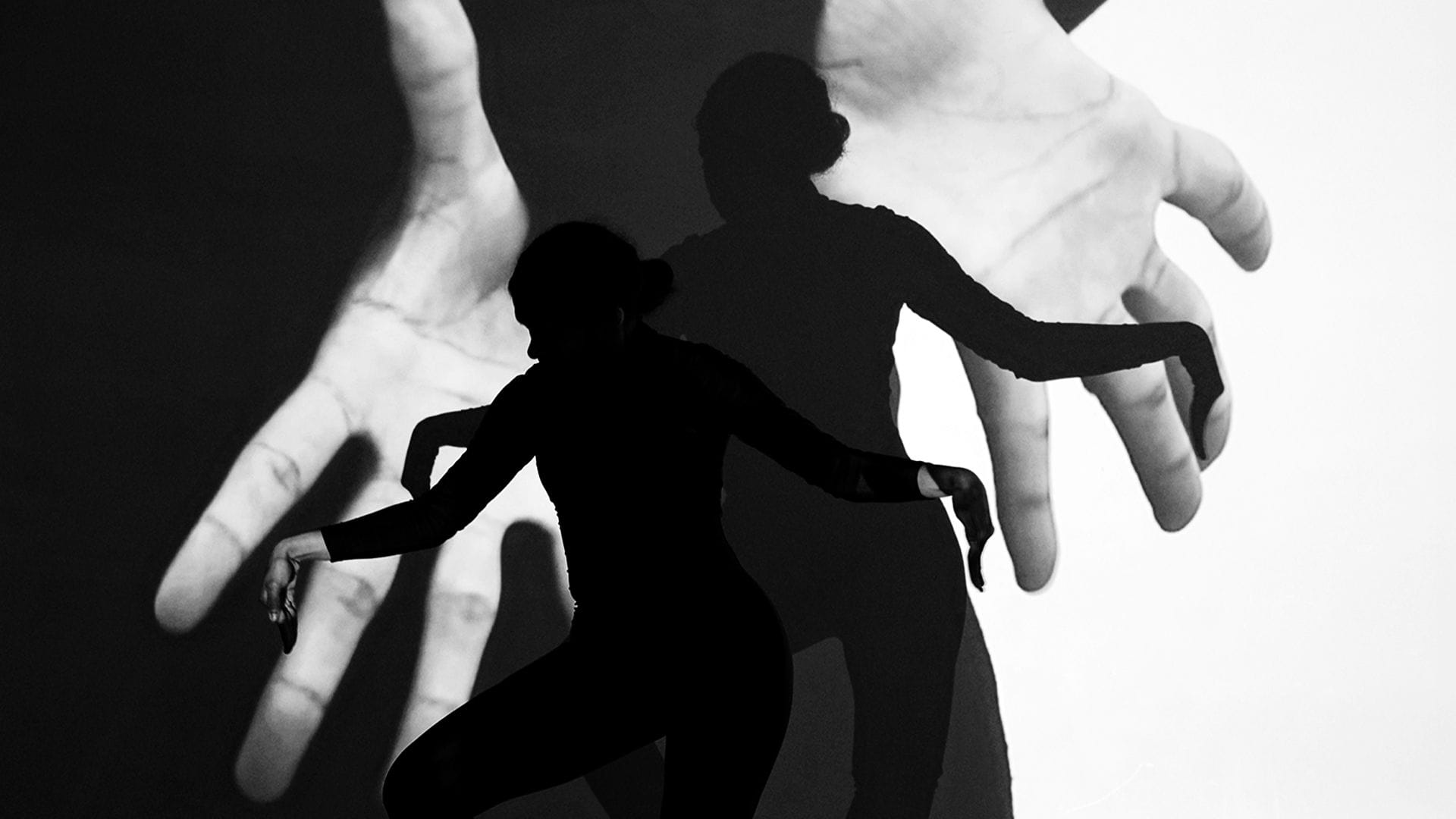
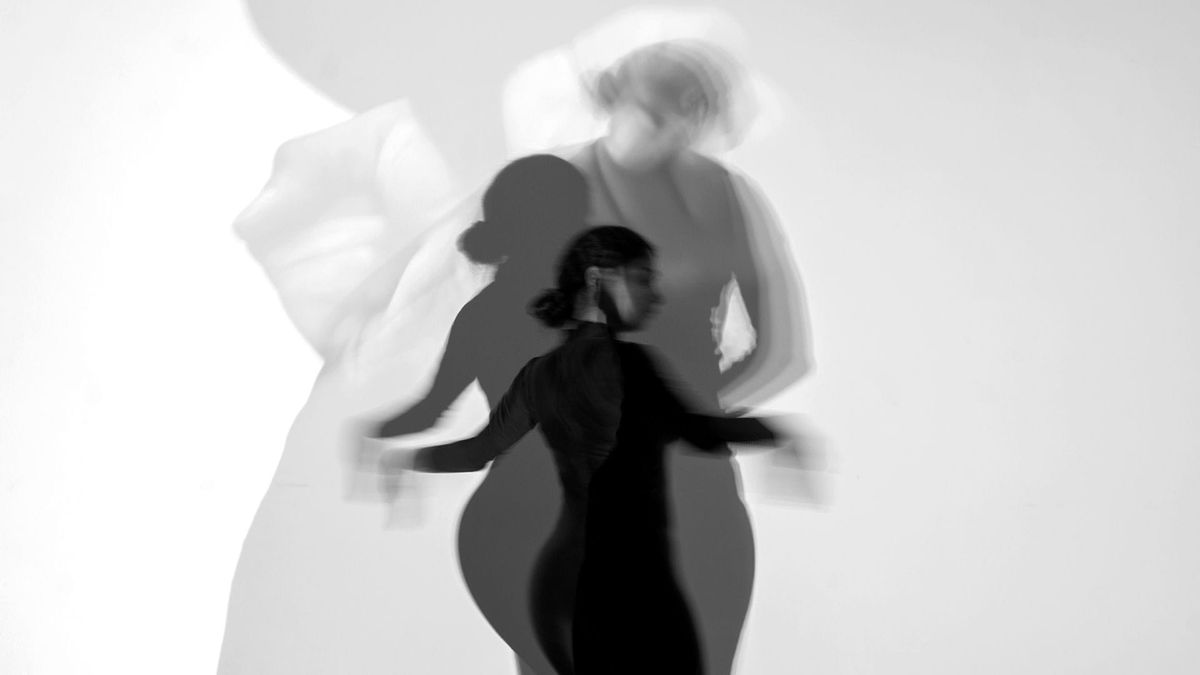
The visual world matches the argument: monochrome projections, a soundscape that doesn’t resolve, and that recurring Manjeera strike threading through a spoken poem that tracks time, memory, and displacement rather than plot.
Yashashree isn't arguing against therapy, she’s interested in what happens when a healing space is asked to absorb the cost of a structural problem so the structure itself never has to change. Cycle of Self-Silencing isn't meant to resolve this tension. It sits inside it, strike after strike, until the audience can feel exactly where it lands in their own body.
Cycle of Self-Silencing was presented at the Royal College of Art’s Information Experience Design (IED) Graduation Show from July 9–12, 2026.
- Lead Artist: Yashashree Rajendra Chakole
- Collaborators: Ruby Cotton and Pankhuri Soni
- Research Base: Anonymized interviews with ten young Indian women