"The World Is Beautiful Because It Is Diverse:" Arianna Marchiori on Choreographing Belonging in a Time of Division
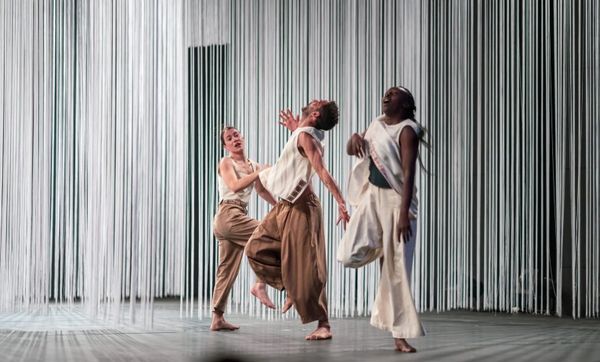
Lingua Madre, a collaboration between M.Collective and the chamber choir Alchemy Consort, brings dance and voice together in Melbourne’s Immigration Museum. Its choreographer says the point is not to explain migration to an audience, but to leave room for them to find themselves in it.

by Leila Lois
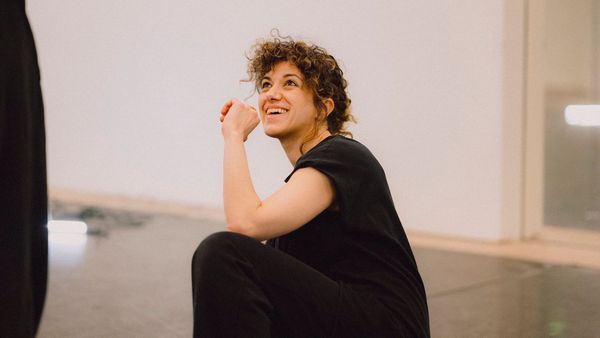
Born in Italy, Arianna Marchiori lived in the United States, France, Germany, the UK, Ireland, Estonia and the Czech Republic before settling in Melbourne. She calls herself a privileged migrant, and says her experience is nothing like that of people forced out by war or poverty. Lingua Madre, her new work for M.Collective, is a dance about displacement that children from eight can watch alongside their grandparents.
The women-led Melbourne company, a Fringe nominee for Best in Dance & Physical Theatre in 2025, describes the piece as a response to “increasing division and the stoking of anti-migrant sentiment”. Arianna made it with the chamber choir Alchemy Consort and mezzo-soprano Lotte Betts-Dean. It is suitable for children aged eight and over, with no strobe, nudity or graphic content.
I spoke with Arianna about why she made it now, how the singers became part of the choreography, and what she hopes an audience with no dance background carries out of the room.
Arianna's perspective
“Every place has given me a different perspective and contributed to who I am today,” Arianna says of the years of moving. It made her reflect on “what home really means, and how you can feel connected to different places without necessarily belonging to just one.”
She is aware of her privileged position. “My experience has been very different from that of people who are forced to leave their homes because of war, persecution or extreme poverty. I think it’s important to acknowledge that distinction.”
The feeling of being an outsider, Arianna argues, is not confined to those who cross borders: “It could be moving to a new city, changing environments or simply finding yourself in a situation where you feel you don’t quite fit in.” Such feelings can connect us, she says, “while also recognizing that everyone’s experience of migration is different.”
The urgency, for Arianna, is political as much as personal. “We’re living in a frightening time in many parts of the world, where people are being made to feel that they don’t belong because of their background, culture or identity,” she says. “I think it’s particularly important now to create work that embraces difference rather than fears it.”
The title of this feature comes from an Italian saying she returns to, Il mondo è bello perché è vario: the world is beautiful because it is diverse. She also cites Stanley Tucci, who has said that immigration enriches culture and that many people are now forced to flee war and extreme poverty, in situations that have in many cases been created by others, so that refugees are not to blame.
The Immigration Museum
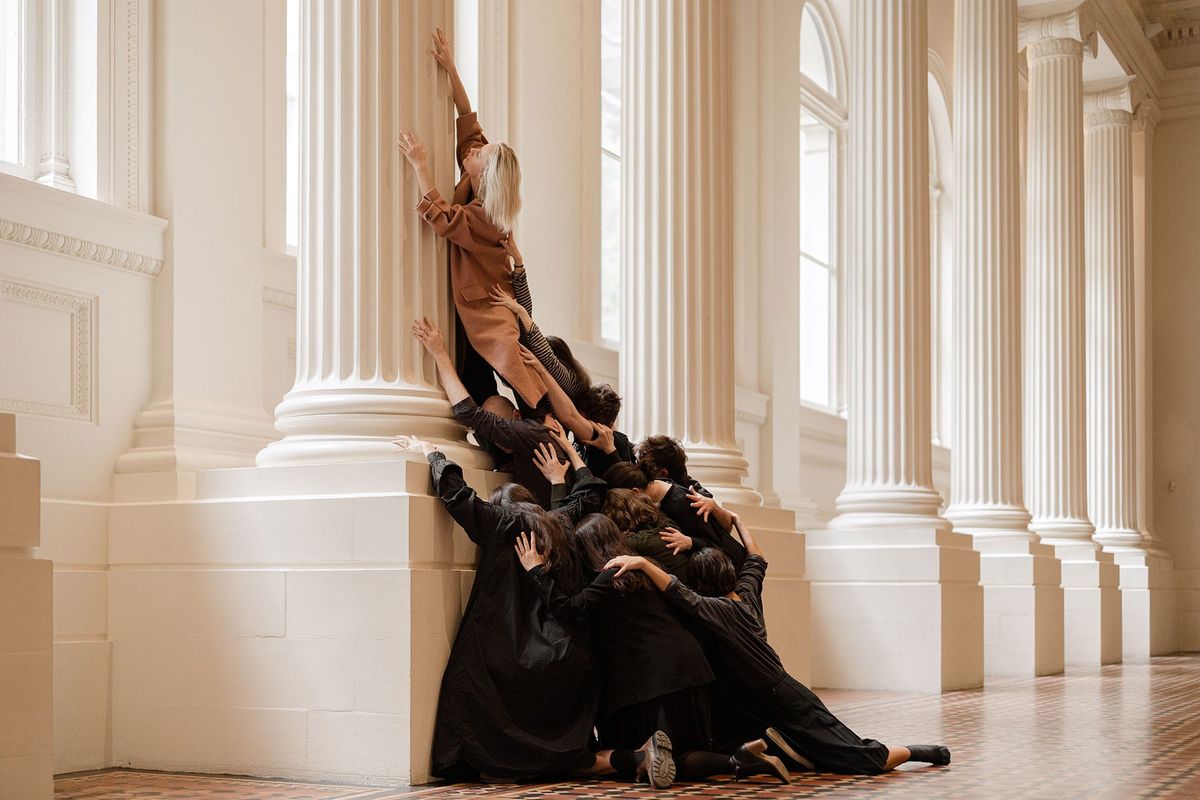
The choice of the Immigration Museum was, she says, “very intentional”. The aim was to make a work that embraced the history and identity of the space, “connecting its stories of migration with the world we live in today.” The building is not meant to be scenery. “The venue isn’t simply a backdrop for the performance. Its history and meaning are part of the work itself.”
Singers in the choreography
Lingua Madre began with sound. Arianna developed the concept with her music co-director Clementine Isaacson, who is also her sister-in-law, and with Betts-Dean as co-curator. Alchemy Consort’s chamber choral music was one of the key starting points for the choreography. “The music wasn’t added to an existing choreography,” she says. “Instead, it helped inspire and shape the movement from the very beginning.”
For a project about home and belonging, the family connection counts for something. “Given that Lingua Madre is a project that explores the idea of home, belonging and connection, having Clem as part of this journey has made it particularly special on a personal level,” Arianna says. The two worked together from the start on the concept, and Arianna describes the process as “a genuine creative exchange, where we’ve challenged, inspired and influenced each other throughout.”
The more distinctive choice is what the singers do onstage. They are not placed to one side as accompaniment. “The singers are not simply voices accompanying the dancers; they are an integral part of the physical and choreographic language of the work,” she explains. “Their presence, bodies and voices all contribute to the movement and the storytelling.” The ambition was “to move beyond the traditional relationship between musicians and dancers and create something where everyone shares the performance space.”
The M.Collective dancers shaped the material too. Arianna speaks of them as collaborators who bring their own ideas, experiences and artistic voices, and who are “not just interpreting choreography” but actively contributing to the creative process. “Lingua Madre is not the work of one person,” she says. “It’s the result of many talented people coming together, trusting each other and creating something that none of us could have made alone.”
Difficult themes, young audiences
The question I most wanted to ask was how a work can carry a heavy subject like displacement for an audience that includes children. Arianna's answer is that accessibility and difficulty are not opposites. “Children can understand complex emotions such as loneliness, change, missing home and wanting to belong, even if they don’t fully understand the broader context of displacement or migration.”
She does not think the work needs to be graphic to be honest. Hard experiences can be explored “through physicality, relationships, gestures and atmosphere without needing to depict them literally.” And she is wary of tidy messages. “We don’t want to impose a particular interpretation or give the audience all the answers. We’d rather create an opportunity for people to ask questions, reflect and have conversations, including between different generations.”
A child and an adult can watch the same performance and take away different things, she adds, “and I think that’s one of the beautiful things about art.” Her position is plain: “I don’t think we need to simplify a difficult subject to make it accessible. We can approach complex themes with sensitivity and honesty, trusting that audiences, including children, will connect with the work in their own way.”
What the audience carries out
For viewers with no dance background, Arianna's hope is modest and generous. “You don’t need to understand dance technically to connect with it,” she says. She would rather people “feel rather than analyze”, and does not want anyone to worry about decoding every movement. The same goes for the music: “You don’t need to understand the music technically or even the words to be moved by it.”
Beneath that sits a more pointed hope. She wants the work to nudge people to look at another person’s story differently, to be curious, and “perhaps question some of their own assumptions.” Belonging, she says, “isn’t always simple”: people can belong to more than one place, culture or identity, and “home doesn’t necessarily have to be one single place.”
Living in Australia, she observes, means meeting migration stories everywhere, “in our own neighborhoods, workplaces and communities”. If a family leaves the museum talking, she is content. “If someone leaves wanting to talk with their child, partner or friend about the performance, or if it makes them reflect on their own experiences, I think that’s already incredibly meaningful.”
Her closing thought is the one the whole project turns on. “You don’t have to share someone’s experience to recognize something of yourself in their story,” Arianna says. “I think that’s where empathy begins.”
Lingua Madre | Mother Tongue is an immersive dance and live vocal performance in Melbourne exploring themes of migration, identity, and belonging. It runs Fri 27 and Saturday 28 November at the Immigration Museum.
Dates & Times: Friday, November 27 and Saturday, November 28, 2026, with two sessions each day: 6:00 PM – 7:00 PM and 8:30 PM – 9:30 PM
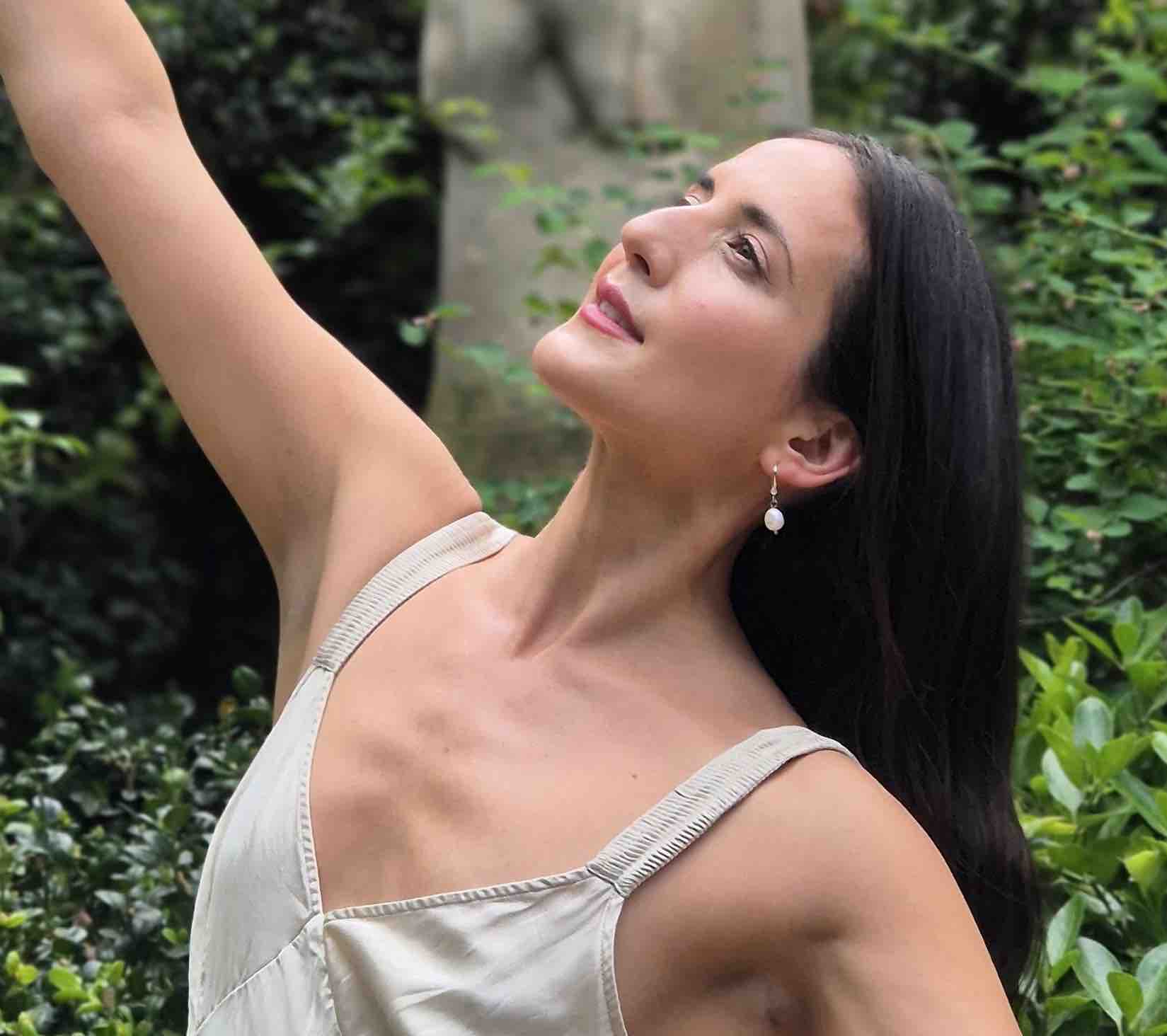
Leila Lois is a dance writer specialized in features, criticism and creative writing that captures feeling and place. Published internationally from Australia to Canada, she brings diverse media experience to every story, finding personality in culture worldwide.