Interviews
From Minuets to Algorithms: A Conversation with Katja Vaghi
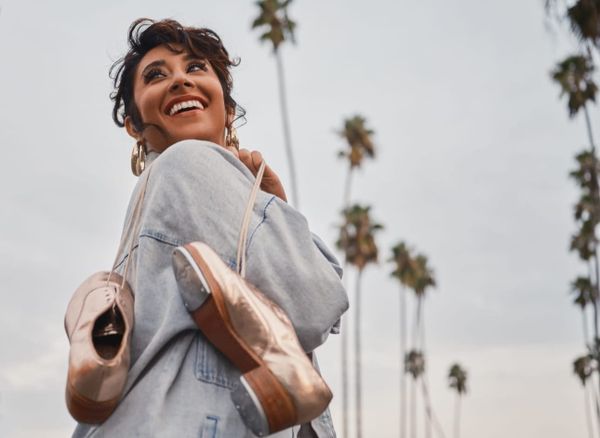
The Swiss-Italian dance scholar on Baroque notation, digital bodies, and finding wabi-sabi in a hectic life.
Reviews
By Leila Lois — NYCB's opening night offered everything: the pure joy of Serenade, the frank sensuality of a rarely staged Prodigal Son, and the athletic brilliance of Paquita. Leila Lois travels from the Southern Hemisphere to see performances that honor ballet's full emotional spectrum.
Reviews
By Will McGregor — David Chartoriski and Yelena Odintsova navigate tango's essential paradox: a dance born in intimate embrace that becomes magnetic when performed. At Sofar Sounds' RSA House, they made the case for both.
Short Reads
Michael O'Connor discovers that paper folding reveals that human bodies work as archives of evolutionary folds where dancing, writing, and speech cross over each other. Through experiments with nine artists, he shows that the body isn't metaphorically like origami. It is origami.
The Swiss-Italian dance scholar on Baroque notation, digital bodies, and finding wabi-sabi in a hectic life.
"‘I approached a Dance Mag's visual direction as a foundation, not a constraint,’ designer Lilia Di Bella said. In our conversation, she explains how she drew from her dance background to let shapes and colors flow through the pages, creating a space where "meaning is made together with the reader."
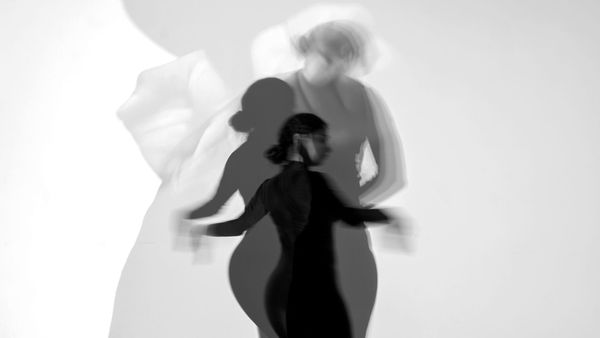
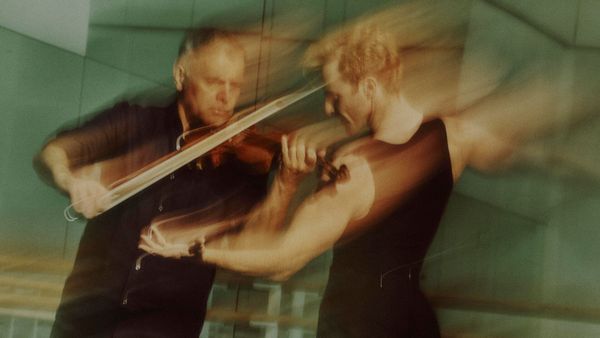
Photographer Jennifer Lee Delić and dancer-fighter Rasmus Branders push against the limits of the camera. Using flowing fabrics and contrasts of light, their collaboration seeks to give form to the internal dance of masculine and feminine energy we all embody.
Tejaswini Loundo moves through flow, ego-death, and the cosmic rhythm of Naṭarāja to ask what it truly means to dance beyond the self.
In a country where protest is a crime, the dancing body itself becomes a site of resistance. Choreographer and researcher Sasha Portyannikova documents how artists under impossible conditions continue to create despite all risks.
The choreography of repression: a history of policing dance, from medieval plagues to Brazilian funk. An essay by Vinícius Portella.
Once a week, we meet a dance artist over coffee. We have a quiet moment and leave with an idea, a reference, or a feeling to carry into our day. Join us!
From West Siberia to Munich, Alina Belyagina has turned periphery into method. Her new work fuses vogue and Slavic folk dance to explore how bodies migrate between traditions and carry memories that discourse hasn't yet mapped.
"‘I approached a Dance Mag's visual direction as a foundation, not a constraint,’ designer Lilia Di Bella said. In our conversation, she explains how she drew from her dance background to let shapes and colors flow through the pages, creating a space where "meaning is made together with the reader."
Photographer Jennifer Lee Delić and dancer-fighter Rasmus Branders push against the limits of the camera. Using flowing fabrics and contrasts of light, their collaboration seeks to give form to the internal dance of masculine and feminine energy we all embody.
Tejaswini Loundo moves through flow, ego-death, and the cosmic rhythm of Naṭarāja to ask what it truly means to dance beyond the self.
In a country where protest is a crime, the dancing body itself becomes a site of resistance. Choreographer and researcher Sasha Portyannikova documents how artists under impossible conditions continue to create despite all risks.
The choreography of repression: a history of policing dance, from medieval plagues to Brazilian funk. An essay by Vinícius Portella.
Nestled in Goa’s jungles, Kala Keli is a dance retreat where movement becomes meditation. By day: contemporary, martial arts, and yoga in open-air studios. By night: bonfire circles and ecstatic beach dances. Here, rigor meets play and bodies remember their wild, joyful language.
Through the whimsy of Whoville, the choreographer reflects on jazz’s communal roots, the choreography of belonging, and what it means to dance joy into constraint.
By Leila Lois — On Williamstown Beach, Zoe Bastin stages a choreography of defiance and endurance, where the waves echo the body’s refusal to be contained.
By Leila Lois — Mirror worlds, celestial themes, and tongue-in-cheek queerness collide as two dance artists create, Scenarios, their most ambitious collaboration yet.
By Melissa Jones — What happens when the body becomes both translator and translated? A mover's meditation on the sacred geography of studios, where flesh learns its own language through repetition, the ancient dialogue between effort and release.
By Sabrina Castillo Gallusser — Guatemala-based choreographer explores the shift from scientific planning to collaborative discovery in thirty years of dance-making.