NYCB Winter Season Opens with Balanchine's Radiant Serenade and Sensual Prodigal Son
By Leila Lois — NYCB's opening night offered everything: the pure joy of Serenade, the frank sensuality of a rarely staged Prodigal Son, and the athletic brilliance of Paquita. Leila Lois travels from the Southern Hemisphere to see performances that honor ballet's full emotional spectrum.

By Leila Lois
New York City Ballet
David H. Koch Theatre, Lincoln Center January 20, 2026
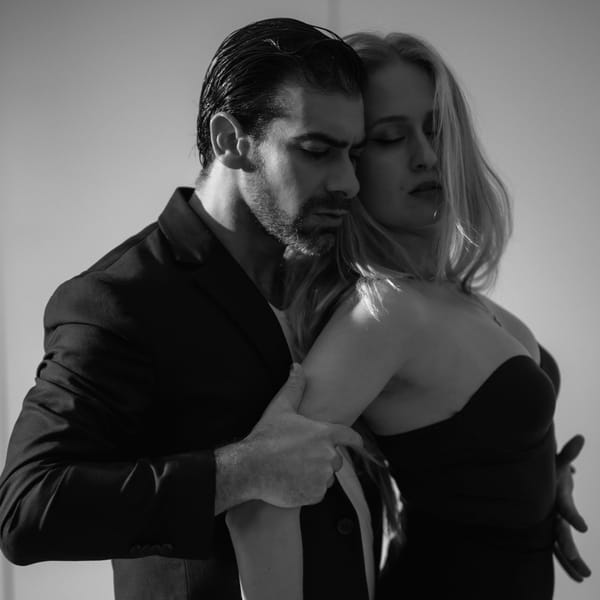
Before entering the Koch Theatre on opening night, 20 Jan, I paused in the entrance to admire the videography installation of New York City Ballet dancers, directed by Thibaut Grevet, a French director and photographer known for his work in art and fashion. The dancers shimmer in mesh and sequins, in daring pas de deux featuring two women and romantic ensembles—the Winter 2026 campaign is punctuated with movement photography that captures dancers effortlessly moving onward. It proved an apt threshold for what awaited inside: an opening night program that honoured both the timeless grace and daring sensuality of classical ballet.
Serenade
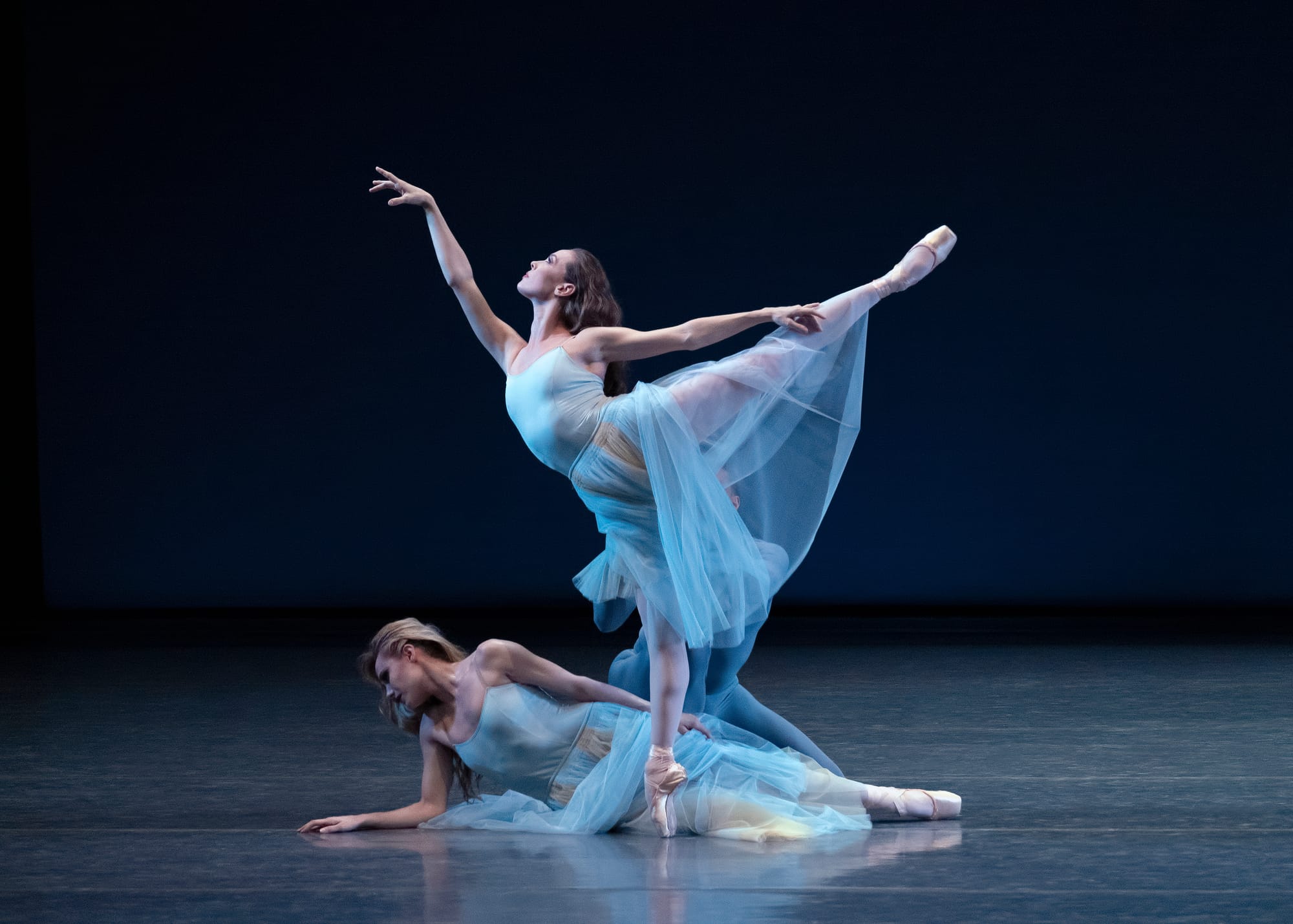
As Tchaikovsky's score swelled and the curtain slowly rose on George Balanchine's Serenade, the stage bloomed with dancers in sky blue and butter yellow tulle skirts, like waltzing clouds made manifest. This 1935 masterwork—the first ballet Balanchine created in America—remains the epitome of American ballet, and indeed ballet at its heart. I’ve seen it many times, but each remounting offers new opportunities for connection.
Sara Mearns delivered the piece's hallmark arabesque en tournant with stunning perfection, her hair loose and flowing. What struck me most was not merely technical excellence, but something far more elusive: joy. Yes, joy—something so refreshing and vital in this moment that I sat mesmerised. In an art form often associated with discipline and restraint, this unguarded emotional radiance felt like a revelation and an invitation.
The corps formed archways with their arms and unfurled expertly. Their partners entered and lifted them with a quality between reverence and tenderness, holding them like something between a doll and a Goddess, with such care. The beautiful sequence featuring three men and one woman dancer evoked Cleopatra borne on her chariot: Mearns lifted celestial and revered, an icon of grace. This is balm for the eyes, Serenade—so charming, so soft, such effort expended to appear effortless. The syrupy nourishment it provides to the aesthetic eye comes from those impossibly clean lines, that perfect curvature. Such levity, such lyrical ease—yet beneath it all, the rigour that makes American ballet what it is.
Prodigal Son
Balanchine's 1929 Prodigal Son offered welcome contrast: one of the most sensual ballets I've ever encountered, and one I was particularly grateful to witness, as it's performed relatively rarely, especially in the Southern Hemisphere where I live.
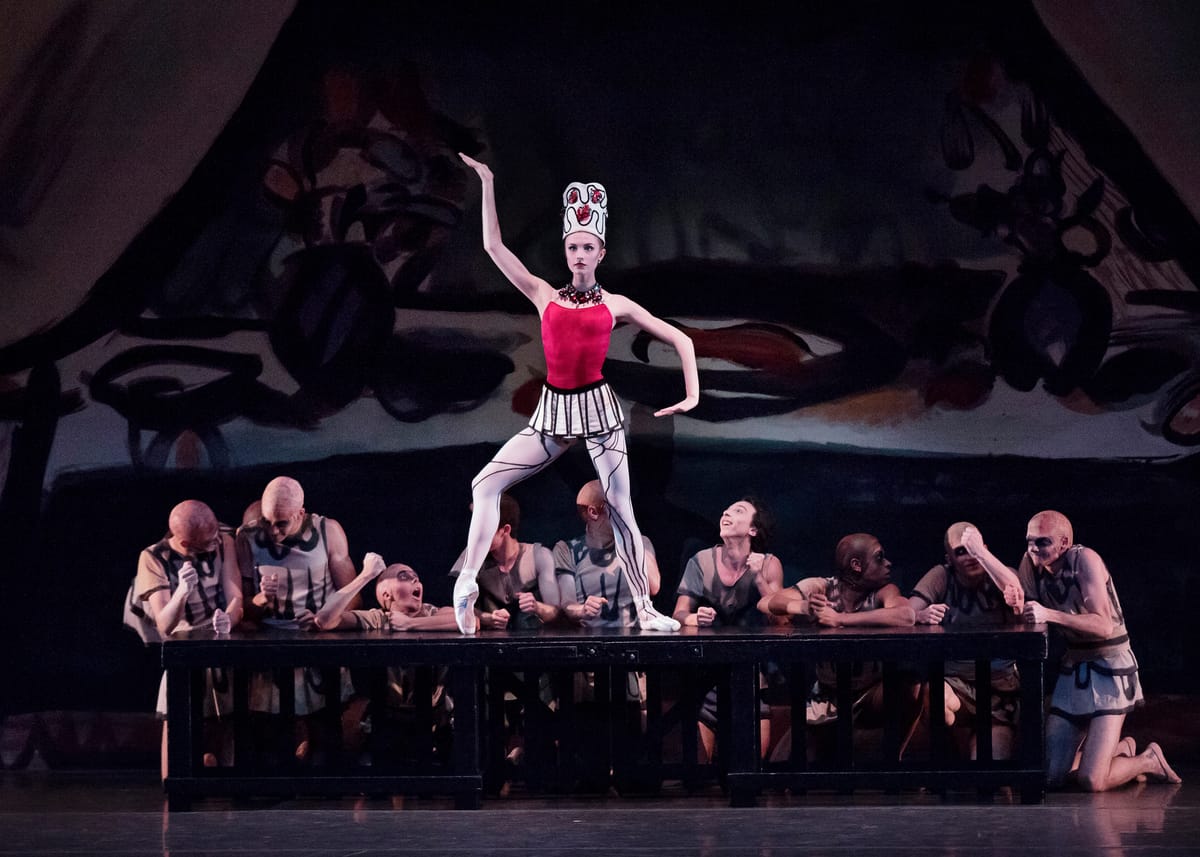
The work begins with the imagistic, tribal movement patterns made famous by the Ballets Russes: a flock of bald, muscular dancers in a conga line (“Drinkers”) entering to announce the coming mythological debauchery. But the true punctum of the piece arrives with the Siren's entrance in her folkloric Russian headdress and regal long black cloak. Danced by Miriam Miller, who emulates hieroglyphic shapes with her arms while traveling on bourrée, ancient and inscrutable.
The duet that follows—the Siren balanced on the Prodigal Son's shoulders, danced in foppish naive style by Anthony Huxley, his head between her legs—pulses with frank eroticism and the complex dynamics of submission and power. The choreography doesn't shy from the biblical parable's darker implications; instead, it embraces them with unflinching theatrical boldness, supported by those remarkable tribal dancers who frame the seduction. It is much more rich in dramaturgy and mise en scene than technical dancing, but a welcome contrast to the rest of the bill.
Paquita
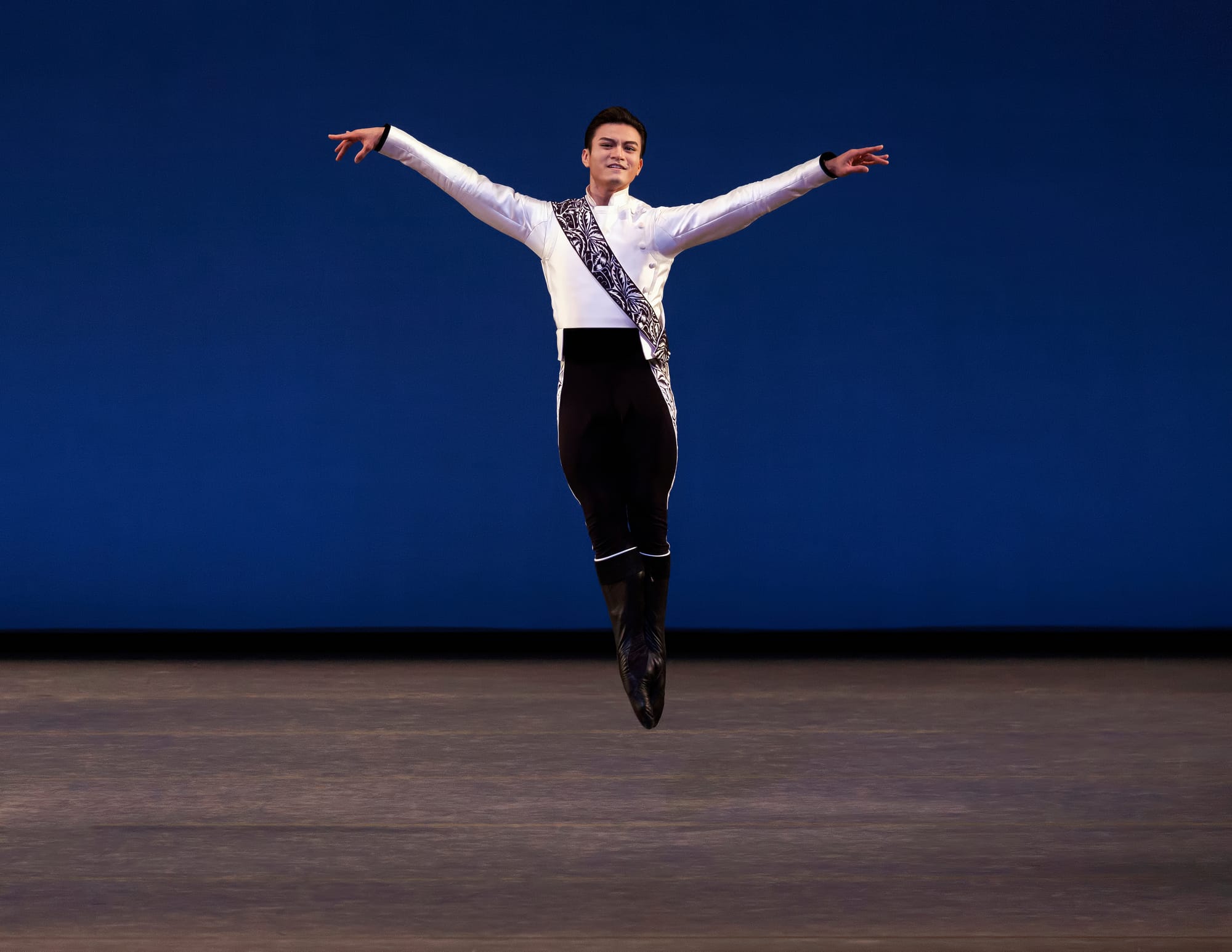
The evening concluded with Alexei Ratmansky's refreshing take on excerpts from the classical ballet Paquita, which premiered just last winter season and already feels like an essential addition to the repertory. Set to Ludwig Minkus's sparkling score, this was hugely athletic and acrobatic—a celebration of virtuosity that proved the perfect energetic finale.
Ratmansky focused on two sections from Marius Petipa's 1881 staging: the Grand Pas and Balanchine's own Minkus Pas de Trois from 1951, creating a fascinating dialogue between choreographic eras. The work opened with the Pas de Trois, dancers exploding onto the stage with exuberance, their technically demanding variations showcasing the kind of control that looks deceptively effortless. This is classical ballet distilled to its essence—intricate footwork, refined musicality, bodies pushed to their technical limits while maintaining an airy grace.
What Ratmansky has achieved here is remarkable: he's taken old material and presented it in a new light, honoring both Petipa's nineteenth-century grandeur and Balanchine's mid-century refinement while giving NYCB dancers something distinctly their own. The Grand Pas section brought the full company together in a display of ensemble precision and individual brilliance, tutus filling the stage in geometric formations before breaking apart for dazzling solo variations.
The athleticism required was formidable—grand jetés that seemed to defy gravity, fouettés executed with pin-sharp precision, partnering that demanded absolute trust and synchronicity. Yet Ratmansky never lets the technique overwhelm the artistry. There's gentle humour woven through the choreography, moments of playfulness that remind you this is, after all, a celebration.
Together, these three ballets demonstrated the remarkable breadth of NYCB's repertory: the pure, radiant classicism of Serenade, the psychological complexity of Prodigal Son, and the virtuosic brilliance of Paquita. It was a winter season opening that reminded me why New York City Ballet remains so groundbreaking, preserving not just steps, but the full emotional and artistic spectrum of ballet itself, from its nineteenth-century roots to its evolution and contemporary vitality.
Leila Lois, a dance writer specialized in features, criticism and creative writing that captures feeling and place. Published internationally from Australia to Canada, she brings diverse media experience to every story, finding personality in culture worldwide.
More from Leila here: https://leilaloiswrites.wordpress.com