Memory in Motion: Oral History, Dance, and the Practice of Holding Space
By Carol Pierre — A relationship with a choreographer reveals oral history as embodied practice. Like dance, research arranges testimonies, holds space, moves through memory with narrators, and performs stories that transform audiences into witnesses of alternative realities.

by Carol Pierre
He has always been in the body; I, in the mind. The source and output of inspiration was physical for my lover, for me it is intellectual. Of course, these are not diametrically opposed, there are junctures…sweet overlaps.
When we cohabited, these intersections were lived, at theatres where my critical gaze complimented his aesthetic eye; at studio rehearsals where I would ask "what are you representing?", "do the lyrics correspond with the movement?"; in the kitchen where he would crush and cut efficiently whilst I lost any sense of order and yet executed each recipe meticulously; on the sofa where sociology, dance and movement theory met as we shared literature; and of course in our bedroom where we touched, moved and teased in a spiritual exchange.
Clash
In 2021 I left our Paris apartment, home to our collective creativity.
After a year of manifesting a stimulating job, I was accepted as a doctoral research assistant in a small Swiss town, under conditions impossible to refuse.
Physically we were separated, emotionally too. How could we find common ground when we trod two different paths? I would comment briefly on clips of his work, and he would listen to streams of consciousness on ontologies, epistemologies and dialectics but where did our worlds really meet?
Compatibility
My lover was a dancer, and a budding choreographer. I, an academic. Psychological disconnect materialises in the spatial distance. The artist is consumed by his art, obsessed, possessed. He makes, he creates, he produces.
I came to accept our differences, less as a question of interests, more so, one of structure. How we manage our time, lives, minds, and work. Living in contrast leaves room for the thief of joy: comparison.
Journeying to and through balance, equanimity and alliance is a lifelong pursuit.
History and dance have in common the ability to assist and broaden our understanding of different cultures, social issues, and geographical contexts. As an oral historian my craft is to enable and build on records to facilitate storytelling, similar to that of the choreographer who builds on and arranges movement passed down ancestrally through tales, traditions, traumas.
People dance to experience, to communicate and to share emotion with an audience. We recount stories for similar purposes, we delve into the historical, contemporary, and prospective facets of humanity.
What I initially dismissed as the gulf between us - body versus mind, making versus analyzing - has become the foundation of a methodological revelation. Oral history, I have come to understand, is choreography. We arrange testimonies as dancers arrange bodies; we structure narratives as choreographers structure movement; we perform stories as dancers perform repertoires. This is not metaphor but method. The choreographer's embodied knowledge - of rhythm, improvisation, collaboration, audience, and the politics of whose bodies get to move where - offers oral historians a framework for understanding our own practice. What follows, traces five choreographic principles that have transformed how I conduct, analyze, and present oral histories: the telling of stories, the imagining of narratives, the necessity of self-reflection, the transmission to audiences, and the transcendent potential of both art forms. Through this lens, the distance between my lover's studio and my archive collapses. We are both dancing.
Challenge
Institutional
Stress, frustration, doubt and fatigue found their way into our romantic bubble. I don't want to deflect personal responsibility; however, it feels only fair here to introduce the structural pillars on which we depended, that constricted our spontaneity, passion, and creative flow.
When he made the decision to become a choreographer, he warned me life would get more difficult: this was a move from art to politics, from dance to diplomacy, from creativity to productivity. We both underestimated the time and mental gymnastics a funding application takes, the weight of every professional meeting, the importance of networking, the financial strain. Not to create purely out of love but to deliver an artefact the institution accepts, commends, applauds, and renumerates. The move I made from freelance cultural programmer to full-time doctoral researcher in a publicly funded project mirrored his constrictive transition. The irony is, these are the same structurally discriminatory institutions our work seeks to challenge.
Societal
We grappled, alone, and in parallel, with the disaccord between our own insignificance, powerlessness, and dependency. And simultaneously, trying the embody the hyper independence, responsibility, and legitimacy expected from us, in our work, all of the time.
Critical art aims to raise awareness of the mechanisms of domination in order to transform the spectator into a conscious actor in the transformation of the world - Jacques Rancière
Our values fuel our imaginations, our dedication, our desire. We actively seek to redefine and reevaluate the socially accepted norms of our human existence. Bringing to life the untold stories of everyday people, emphasizing emotions and memory, oral history disrupts, radicalizes, and diversifies mainstream narratives. Its power lies in its ability to create a thread through complex, sometimes contrasting accounts, and present an alternative perspective on society.
In our similarly visceral calling to emancipate our own bodies and minds, and those of others, we work within frameworks that are notoriously oppressive. The mission is to reach a stage where we have enough social and financial capital that our thoughts and desires can run wild. The contradictory nature of relying on others to create, whilst working alone, creating with an audience in mind and yet essentially for oneself in solitary auto-entrepreneurial roles is exhausting.
And what about us? Our sacred stratosphere? The one we built together. Before the isms and schisms of striving for success and self-satisfaction.
My dancer was lucky enough to breathe life into structure, depending on a on a certain reigning in to focus and to make. I fight it: capitalism, control. He doesn't work, he dances, in service to Art.
Telling (his/her/our) stories
The book Oral History for the Qualitative Researcher: Choreographing the Story (Janesick, 2010) was a doorway into understanding our life's work as not only compatible, but intrinsically linked. The author, choreographer turned academic, demonstrates the pertinence of using a choreographic structure to frame oral history research: a professional and personal awakening. Her work has influenced the thoughts developed in this piece.
Both researcher and dancer are tools, ones that must be sharpened and stretched, for the purpose of telling a story with sensitivity and nuance. This honing requires the researcher to practice, to recite, to manipulate the body in parallel with the brain, to train the ears to listen, the eyes to observe, the fingers to type, the nervous system to process and the spine to hold up, days and years on end. Coming to the realization that reading, writing, editing, listening, recording, talking, reflecting, and even resting require daily repetition, has increased my productivity and performance.
We must, as curators of stories, as collaborators, always be prepared for the unexpected, to become comfortable with the liminal space, to welcome ambiguity and deepen our sensitivity allowing us to fall in sync with those whom we rely on to produce our art. Our aim is to capture the authentic essence of an individual's life, encompassing its depth, intricacies, textures, pain, joy.
Imagining (his/her/our) stories
Dance doesn't give answers, it invites awareness, understanding, questioning. It is subjective, it is provocative, an entry point to further reflection, an imaginative process, for the storyteller and for the consumer.
From conceptualization to realization, interviewing is a creative act of the imagination. Figuratively, envisioning an interview is akin to conceiving a dance. Both choreographer and researcher are engaged in the process of creating a performative activity – one resulting in a finished routine, and the other, a completed oral history. The choreographer manipulates the dancers' body to fit their vision, the researcher does something similar in asking specific questions to their interviewee.
These unique, iterative processes are reliant on connection and communication with others. An oral history is an encounter between two people or more people, who share information and develop a collective construction of meaning.
Self-reflection
In the same way dance reveals the dancer, oral history reveals the historian.
To deliver a holistic message, the historian and the choreographer must engage in deep self-reflection, observing how our own experiences, lives, identities, relationships impact their vision, interactions, practice and thus creations. The outcome of what we produce has very real ethical concerns and consequences: we are in proximity with individuals' intimate space, emotional and physical, and thus hold a duty of care. Performing a story is a privilege: extending and embodying empathy, compassion and comprehension of others lived experience requires careful attention.
Transmitting
The need for external validation, public performance, and audience gratification belonged to my choreographer. I, a historian, behind the tape recorder, was modest, introverted. How was I blind to the fact that everything I do exists solely in relation to the audience who received it? Albeit less sexy: a jury, examiner, supervisor, peers, conference organizer, academic and non-academic audiences undress the words I write and read, and reflect back to me what is beautiful and worthy and demolish what is not.
The process of writing a paper resembles that of choreographing a dance: The self-doubt, the reframing, the pressure. Oral history is dynamic. It is in tandem with the past, present and future and it only works if the audience accept it, make sense of it and embraces it. Developing a structured narrative - strong beginning, coherent middle, and powerful end, clear links and repeated imagery.
Sharing human experience solicits public discussion. Oral history is dialogical. It is a vehicle enabling others to travel. Art and experience are woven together; we cannot untangle the art of lived experience from the lived experience of the art (Janesick, 181).
Transcendence
the (never really) complete piece is an amalgamation of emotion, knowledge and a call to action. Oral history offers a unique understanding of the power of experience.
Dance, like history is part of our everyday lives. Assumptions on who is legitimate to engage in these fields not only separate them from one another but from reality. We all move, communicate, collaborate, trust, challenge, and resist.
The choreographic framework has changed how I work. I now prepare for interviews as a dancer prepares for rehearsals, stretching my intellectual and physical core, practicing presence, learning to hold space. I review recordings not solely for content but for rhythm, for where my own body enters the story, for the moments when memory becomes movement. I write not in linear academic prose but in arrangements that mirror the iterative, recursive nature of both dance and memory.
For months, I mourned the distance between my dancer and me: his making, my analyzing; his studio, my archive; his performances, my papers. The choreographic lens revealed what I couldn't see while living apart: we were always dancing together. While he was arranging bodies in space, he was asking the same questions I ask in interviews: What does this body remember that language cannot hold? How do we create something truthful from fragments? When I transcribe an interview, I am doing what he does in the studio: listening for rhythm, making editorial choices about what to emphasize, what to let breathe, what to cut.
The choreographic framework politicizes oral history in new ways. Dance makes visible the politics of whose bodies matter, whose movements are permitted, whose stories are platformed. Oral history does the same. Both practices create temporary spaces where suppressed histories can surface, where marginalized bodies can claim authority, where the audience becomes witness to alternative realities. The institutions that constrain us, that demand productivity over creativity, that mine value from our labor while we critique extraction, have not changed. Understanding research as a routine to be danced, shared and enjoyed is itself an act of resistance.
I continue to navigate the contradictions: creating critical work within repressive structures, pursuing individual achievement while advocating collectivity, living with liminality. They are the conditions under which we dance. I continue - arranging testimonies, structuring narratives, interpreting stories - dancing my way through history, toward a more expansive understanding of what it means to be a researcher, a lover, a body.
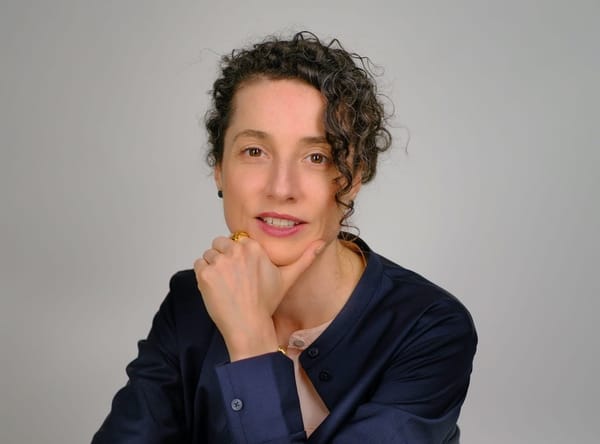
Carol Pierre is a social historian, cultural curator and dance enthusiast. She adopts an interdisciplinary approach to her research which focuses on migration, social movements, and community building. A passion for communicating people's histories is born from the desire to contextualize present-day socio-cultural and political realities with nuance and humanity.