Akram Khan’s Giselle: Ten Years Later, a Different Ballet That Has Grown Into Itself
By Will McGregor — The 19th-century village is gone. In its place: a concrete wall, factory light, and bodies that already know their place. Ten years on, Akram Khan's Giselle has grown into its own weight.

by Will McGregor
Akram Khan’s Giselle has been running for ten years now, and at the London Coliseum, it is not quite the same work it once was. Adolphe Adam’s Giselle has been part of the ballet world since 1841, inspired by folklore and shaped by romantic ideas. Many versions have come and gone, but Akram Khan’s is the one that is truly different. The work that has grown into its own weight. You have never seen this Giselle before.
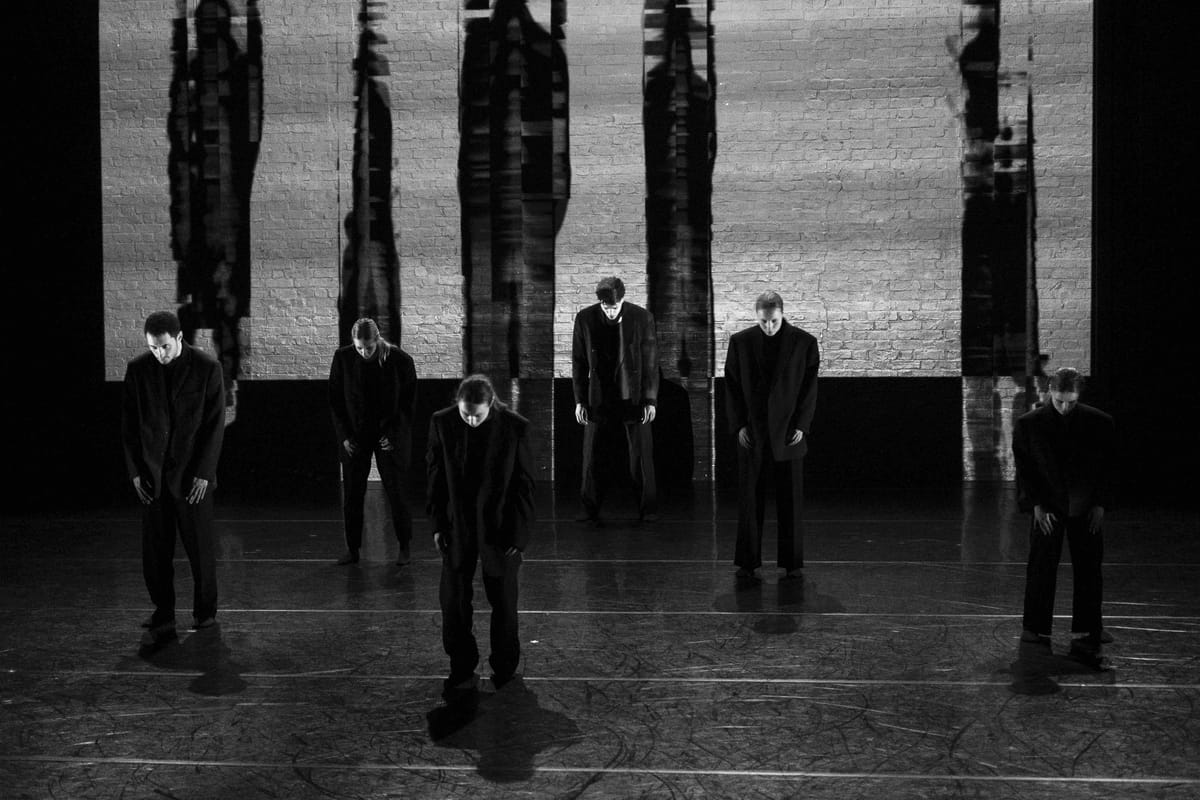
The opening image sets the tone, which is a vast concrete wall that cuts the stage in two. It turns slowly, dividing workers from those who control them. The 19th-century village has vanished. And in its place appears a factory floor, harsh light, bodies bent to labor. Tim Yip’s design confines the action purely.
Khan’s choreography avoids prettiness, coupling it with sound smoothly. The ensemble moves in tight formations, feet striking the floor with force, which catches the eye immediately. The music here gives weight to the anger running through the first act. This is not a romantic community but a tense one. The group often moves as a single unit, which makes any break from it feel dangerous.
Emily Suzuki’s Giselle draws the kind of raw, awestruck, breathless reaction that is usually reserved for ballet lovers who still breathe from the great icons of modern dance theatre — names like Pina Bausch or Sylvie Guillem. Her early scenes carry warmth, but there is always a sense of fragility underneath. When her trust collapses, there is no ornamental madness. Her body simply gives way. In the first act, Suzuki is like quicksilver: I don’t doubt she could do it all at twice the tempo and still look unhurried. Her incredible talent for dance is matched by her acting power. Suzuki’s Giselle is sweet and open, but with a sensitivity that feels almost dangerous. When everything falls apart, her pale face and trembling body leave the entire house in a heavy, stunned silence. Then, as she joins the ranks of the Outcasts, she becomes mesmerizing in a much darker way. She cuts through the air with a sharp, haunting precision, momentarily suspended like a question mark before the wall. Some purists might find her interpretation too stark or even too aggressive. But sitting that evening in the theatre, it was impossible to doubt that we were watching a definitive Giselle for a harder, truer world of our age. The industrial energy in the room was at its most visceral, and that pressure turned into a kind of collective appetite.
James Streeter's Albrecht is guarded and self-contained throughout the entire first act. He is performing the authority rather than owning it. His performance draws on a gritty fusion of classical Kathak and ballet, and it is this tension between styles that gives the production its restless, unresolved pulse. When the reckoning arrives, the performance opens up. Streeter flings himself down before Emma Hawes's Myrta in sweat-soaked exhaustion. Her command is so cold it barely needs a gesture, and only then does the full weight of his desperation become clear. The authority was always borrowed. Now it is gone.
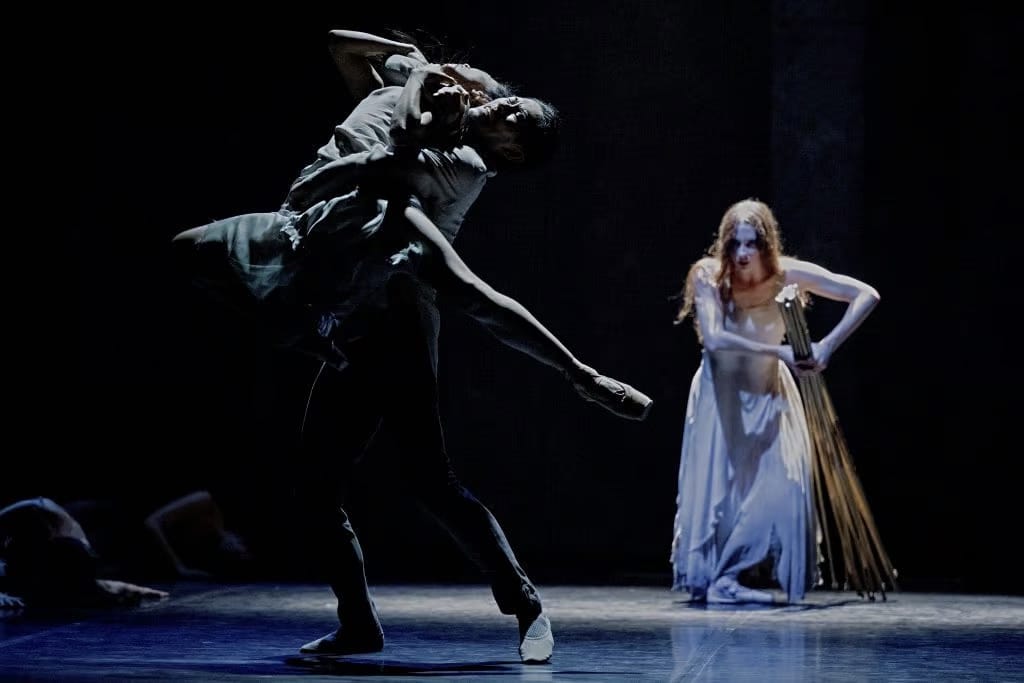
The second act shifts the tale’s mood. The Wilis are wronged workers, hair loose, long needles in hand, not pale spirits drifting through mist. Their lines are sharp, their presence controlled. Emma Hawes’s Myrta barely raises her voice, yet she undoubtedly dominates the stage and makes you shiver. And her hypnotic authority comes through her stillness. This very cold dominance was also mirrored in Isabelle Brouwers’s Bathilde. She mastered it with a glacial, distancing haughtiness. The performance eventually stops being something to watch and becomes something to survive. It leaves you physically tethered to the dancer’s exhaustion, a shared depletion that lingers long after the curtain falls.
Vincenzo Lamagna’s magical score moves between low mechanical rumble and fractured traces of Adolphe Adam’s original music. It is a well-balanced blend of acoustic and electronic elements. And the distorted past still remains there in the Coliseum walls. Maria Seletskaja’s conducting helps shape the performance’s atmosphere. The Philharmonic produced a harsh, thunderous, and even overwhelming sound in the first act, and then the music became gentler, intimate, and almost fragile.
The production indeed leans on the audience’s knowledge of the traditional Giselle, because some moments are left unspoken. Even so, the emotional path of Khan’s choreography is clear, and the tensions of class, power and betrayal are easy to understand. And just like that, Albrecht stands alone in front of the slowly turning wall. There is no one who comes back for him, and there is no forgiveness at all. The same wall that divided everyone at the beginning is still there, and it feels as though the world has closed in on him. The ending leaves a heavy but quiet silence behind.
I had already seen the 2018 recording of the original 2016 staging. Ten years later, this Giselle feels grown into itself. Less interested in making a statement, more assured in simply telling its story.
More from Will McGregor
 a Dance Mag
 a Dance Mag